

Start the conversation today: use simple, factual language, keep it calm, and make it ongoing. You don’t need a perfect speech. You just need to begin.
For younger children (ages 6–9): “Sometimes a person’s body releases a little blood each month. It’s completely normal and healthy. It’s called a period, and it happens to lots of people.”
For preteens and teens (ages 10+): “Your body is changing, and one of those changes is your period. I want you to know you can always ask me anything. Let’s talk about what to expect and what you’ll need.”
Three things to do right now:
- Say something today. Use either script above, even if it feels a little awkward. Starting is what matters.
- Check your supplies. Make sure pads or other products are somewhere easy to find at home.
- Name a trusted adult. Tell your child who they can go to at school or in the family if they need help.
Red flag: If your child soaks through a pad or tampon in under two hours, has severe pain that over-the-counter medicine doesn’t ease, or notices an unusual odor, contact a healthcare provider promptly.
Pro Tip: Keep a small period kit in the bathroom and point it out to your child before they need it. That one quiet gesture opens the door without requiring a formal “talk.”
Key Takeaways
Open, ongoing family conversations about menstrual health, started before the first period and supported by named trusted adults and accessible supplies, are the single most effective way to prepare a child with confidence and safety.
| Point | Details |
|---|---|
| Start before menarche | Begin simple conversations at ages 6–9, well before the first period typically arrives between ages 9–14. |
| Use short, repeated talks | Multiple brief conversations work better than one big talk; use everyday moments as natural openers. |
| Know the red flags | Seek medical care if your child soaks a pad in under two hours, has severe unrelieved pain, or notices unusual odor. |
| Include everyone | Fathers, brothers, and male caregivers benefit from basic period education; inclusion reduces stigma at home and school. |
| Themonthliesbox supports the conversation | The Amethyst Box pairs educational materials and starter supplies with affirmation cards, giving parents a ready-made toolkit for the first period. |
Table of Contents
- Why talking about periods in the family matters
- When should you start talking about periods?
- How do you start the conversation about periods?
- What should you actually teach your child about periods?
- When should you call a doctor about period symptoms?
- How do you build a real support system around your child?
- Where can families find free or low-cost menstrual products?
- What does the research say about better period conversations?
- A note from us: imperfect conversations still count
- The Amethyst Box makes the first period feel supported, not scary
- Sources
Why talking about periods in the family matters
Menstrual health is not just a hygiene topic. It’s a health signal, a confidence builder, and a safety net. When families discuss menstrual health openly, children are less likely to feel shame, more likely to report symptoms early, and better prepared to manage their own bodies.
Research indexed on PubMed confirms that families who under-discuss menstruation leave children more vulnerable to stigma, bullying, and delayed care. Shame around periods is learned, not natural, and families are the first place it can be unlearned.
Menstrual cycles also carry real health information. Irregular cycles, very heavy bleeding, or severe pain can point to conditions like anemia, thyroid issues, or endometriosis. A child who grows up hearing that periods are normal and worth paying attention to is far more likely to speak up when something feels wrong.
UNICEF recommends including boys and non-menstruating family members in these conversations. When brothers, fathers, and male caregivers understand menstruation, they respond with empathy rather than embarrassment, and that changes the whole atmosphere at home and at school.
Menstrual health awareness matters for everyone. According to the WHO, more than two out of three people who menstruate experience menstrual pain. That’s a majority, not an exception, and it’s a strong reason to normalize the conversation before the first period arrives.
When should you start talking about periods?
The short answer: earlier than you think, and more than once. A single “big talk” rarely works. Short, repeated conversations, woven into everyday moments, are what actually stick.
Toronto Public Health guidance notes that the first period typically arrives between ages 9 and 14, and that breast budding often precedes it by about two years. That means a child who shows early puberty signs at age 8 could be just a year or two away from menarche. Waiting until it happens is waiting too long.
KidsHealth (Nemours) recommends starting simple conversations as early as ages 6 or 7, answering questions directly and without drama. Children at that age are naturally curious and far less self-conscious than they’ll be at 12.
A practical communication timeline looks like this:
- Ages 6–9: Introduce the basics. Periods are normal, healthy, and happen to many people. Use correct terms: uterus, period, menstruation.
- Ages 9–12: Get practical. Talk about products, hygiene, what to do at school, and what a typical cycle feels like.
- Teens: Go deeper. Discuss cycle tracking, recognizing red flags, and how to talk to a doctor.
If a child asks a question before you expect it, answer it simply and honestly. Curiosity is a teachable moment. For more on when to start period talks, Themonthliesbox has a dedicated guide for ages 7–10.
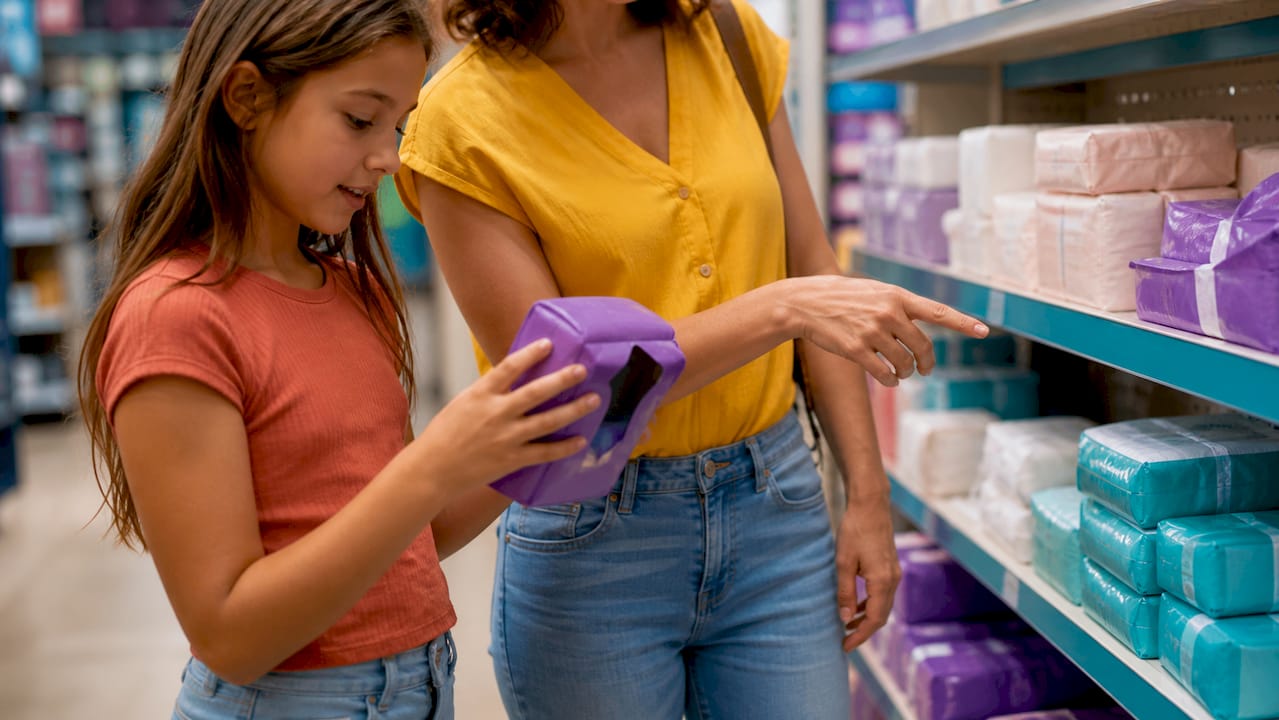
Pro Tip: Shopping for pads or period underwear together is one of the most natural conversation openers there is. It’s practical, low-pressure, and sends a clear message: this is normal, and we handle it together.
How do you start the conversation about periods?
The hardest part is usually the first sentence. Once you say something, the conversation tends to find its own footing. Here are scripts and starters organized by age and setting.
Conversation starters by age group
| Age group | Setting | Suggested opener | Follow-up |
|---|---|---|---|
| Young child (6–9) | Bedtime or bath time | “Did you know bodies have something called a period?” | “It’s healthy. Want to know what it is?” |
| Preteen (9–12) | Car ride or grocery run | “I want to make sure you know what to expect as your body changes.” | “Let’s talk about periods so you’re ready.” |
| Teen | One-on-one at home | “How are you feeling about everything going on with your body?” | “I’m here if you have questions, even the ones that feel weird to ask.” |
These openers work because they’re calm, short, and leave space for the child to respond. You’re not delivering a lecture. You’re opening a door.
A few clear dos and don’ts:
- Do use correct anatomical terms. “Uterus,” “vagina,” and “menstruation” are not embarrassing words. Using them normalizes them.
- Do let the child lead the pace. Answer what they ask, then pause.
- Don’t frame periods as something to dread or hide. Phrases like “the curse” or “that time of the month” carry shame without meaning to.
- Don’t over-explain in one sitting. A five-minute conversation is often more effective than a 30-minute one.
For parents who want more ready-to-use language, Themonthliesbox has a full first period conversation guide with scripts you can adapt right away.
Pro Tip: If your child shuts down or seems embarrassed, don’t push. Say, “That’s okay. I’ll leave some information in your room, and I’m always here when you’re ready.” Then follow through.
What should you actually teach your child about periods?
Once the conversation is open, here’s what to cover. You don’t need to cover it all at once.
Anatomy and cycle basics
The uterus sheds its lining each month when a pregnancy hasn’t occurred. That shedding is a period. A typical menstrual cycle varies among individuals, and bleeding duration also varies. Cycles can be irregular at first, especially in the first year or two after menarche, and that’s normal.
Menstrual products
There are several options, and personal preference matters. The main types are:
- Pads: Worn in underwear, absorbent, no insertion needed. A good starting point for most beginners.
- Tampons: Inserted internally. Require a little practice and comfort with one’s body.
- Menstrual cups: Reusable silicone cups worn internally. Eco-friendly and cost-effective long-term.
- Period underwear: Absorbent underwear worn alone or as backup. Comfortable and reusable.
No product is universally “best.” Let your child try what feels right and know they can switch. For a step-by-step guide on introducing menstrual products, Themonthliesbox walks parents through the process clearly.
Hygiene checklist
The CDC recommends the following for healthy menstrual hygiene:
- Change pads every 4–6 hours, or sooner if saturated.
- Change tampons every 4–8 hours; never leave one in overnight.
- Wash the vulva with warm water only. No scented soaps, sprays, or douches.
- Dispose of products in a trash bin, not the toilet.
- Track your cycle using a simple app or paper calendar.
Tracking periods is genuinely useful. It helps identify what’s normal for your child’s body and gives a clinician useful data if something seems off.
When should you call a doctor about period symptoms?
Most period symptoms are normal. Some are not. Knowing the difference is one of the most practical things a parent can learn.
Contact a healthcare provider if your child:
- Soaks through a pad or tampon in less than two hours, especially if this happens repeatedly.
- Has period pain so severe it keeps her home from school or doesn’t respond to ibuprofen or acetaminophen.
- Notices an unusual or strong odor that isn’t linked to hygiene habits.
- Has periods that are consistently shorter than 21 days or longer than 35 days after the first year.
- Has not started her period by age 15.
- Develops a fever during her period.
Mayo Clinic notes that severe or debilitating period pain can indicate endometriosis, a condition that affects many people and is often under-diagnosed because pain is normalized. Persistent pain is worth investigating, not just managing.
NIH family medicine guidance reinforces that menstrual health is a marker of overall health and deserves routine attention in primary care settings, not just when something goes wrong.
Before the appointment, record:
- Cycle length and how much it varies month to month.
- How many products your child uses per day and whether they’re fully saturated.
- Pain level on a 1–10 scale and whether it improves with OTC medication.
- Any other symptoms: nausea, dizziness, or fatigue during the period.
For urgent symptoms like a fever with a tampon in place (a potential sign of toxic shock syndrome), go to urgent care or an emergency room rather than waiting for a scheduled appointment.
How do you build a real support system around your child?
A good conversation is a start. A support system is what keeps a child feeling safe month after month.
Name the trusted adults
Norton Children’s recommends that parents help children identify multiple trusted adults, not just one, so there’s always someone available. Sit down with your child and name:
- A parent or caregiver at home.
- A school nurse or counselor.
- A relative (aunt, older cousin, grandmother) who is comfortable with the topic.
Write the names down somewhere your child can find them. Knowing who to go to removes the panic of not knowing.
Stock the supplies
Keep a small, discreet kit somewhere accessible: a few pads or tampons, a spare pair of underwear, and a travel-size pain reliever. A bathroom drawer works. So does a small pouch in a backpack. For guidance on supporting students at school, Themonthliesbox covers exactly what to pack and who to notify.
Include the boys
Fathers, brothers, and male caregivers are part of this too. A simple script for a dad or older brother: “Periods are a normal part of how some bodies work. If she ever needs help or supplies, be calm and supportive.” That’s it. No detailed biology required. Just the message that it’s not weird, and they’re part of the team.

Pro Tip: Normalize the word “period” in everyday conversation. When it comes up in a TV show or at the store, say something matter-of-fact. The more casually you use the word, the less charged it becomes for everyone.
Where can families find free or low-cost menstrual products?
Products can be a real barrier, and there’s no reason to navigate that alone.
Places to look:
- School nurse’s office: Many schools keep a supply of pads and tampons for students in need. Ask directly.
- Community health centers: Federally qualified health centers often distribute free products alongside other health services.
- Food banks and mutual aid networks: Many now include period products alongside food and hygiene items.
- 211 helpline: Dialing 211 connects families to local social services, including hygiene programs. It’s free and available in most of the United States.
- Public libraries and community centers: Some locations stock free products in restrooms or distribute them on request.
- Menstrual Hygiene Day campaigns: Observed on May 28 each year under the global #PeriodFriendlyWorld mission, this awareness day often surfaces local giveaways, donation drives, and community resources worth bookmarking.
On the product side, reusable options like menstrual cups and period underwear cost more upfront but save money over time. If disposables are the only option right now, store-brand pads are a practical, affordable starting point.
What does the research say about better period conversations?
The evidence is consistent: early, inclusive, and ongoing conversations produce better outcomes for children’s health and confidence.
The WHO recommends delivering accurate, age-appropriate menstrual education before the first period. Many people who menstruate experience menstrual pain, which means pain is common but not always normal in its severity. Heavy menstrual bleeding, when it occurs, raises the risk of iron deficiency, making nutritional awareness part of the conversation.
Statistic to know: Many people who menstruate experience menstrual pain, per WHO data. That prevalence makes early education and open family dialogue a health priority, not just a comfort measure.
If your child has consistently heavy periods, talk to a clinician about iron levels. Symptoms of iron deficiency include fatigue, difficulty concentrating, and pallor. A simple blood test can confirm whether supplementation or dietary changes are needed.
NCBI research on inclusive menstrual messaging supports moving away from gendered language. Conversations that include all family members, regardless of whether they menstruate, reduce stigma and build empathy across the household.
Evidence-based actions parents can take right now:
- Start conversations before puberty signs appear.
- Use correct anatomical terms consistently.
- Track cycles from the first period onward.
- Document symptoms before any healthcare visit.
- Include non-menstruating family members in basic education.
- Contact a clinician if red-flag symptoms appear.
A note from us: imperfect conversations still count
Here’s something worth saying plainly: you don’t have to get this perfectly right. No parent does. What matters is that you show up, say something, and keep the door open.
Awkward conversations are still conversations. A stumbled explanation is still an explanation. The child who hears “we can talk about this” even once, in a slightly bumbling way, is better off than the child who never hears it at all.
The families who talk about menstrual health openly don’t have a script memorized. They’ve just decided that their child’s comfort and confidence matter more than their own discomfort. That decision, made over and over in small moments, is what builds trust.
If you’re not sure where to start, start with the scripts at the top of this article. Then come back and read a little more. Then have another conversation. That’s the whole method, and it works.
The Amethyst Box makes the first period feel supported, not scary
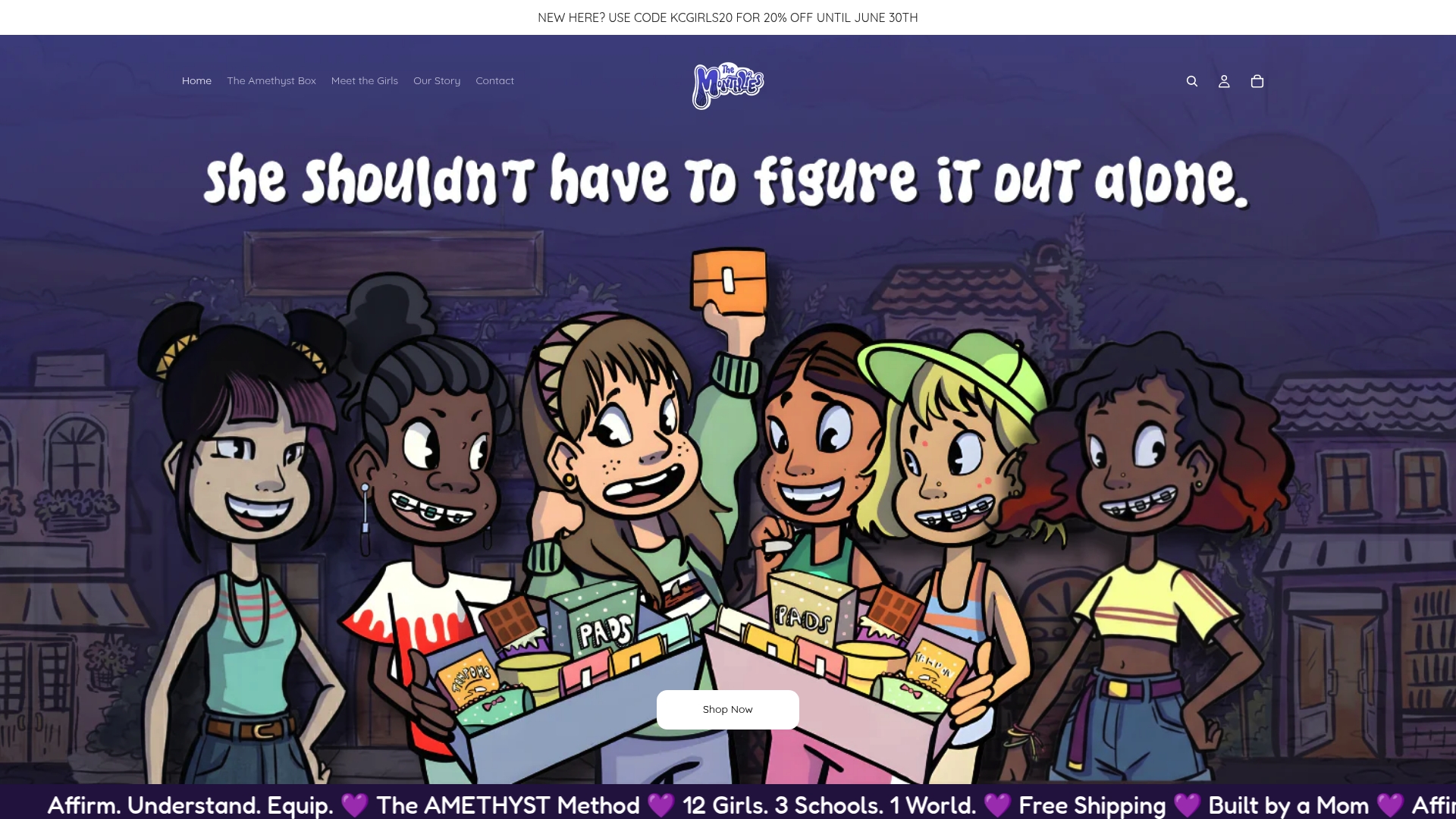
The Amethyst Box by Themonthliesbox was designed for exactly this moment. It’s a curated first-period kit built around the Amethyst Method: Affirm, Understand, and Equip. Inside, your daughter finds tween-sized period supplies, affirmation cards, educational materials written in age-appropriate language, and comfort items that make the whole experience feel like something to grow through, not dread.
Parents use it as a teachable moment: unbox it together, talk through each item, and let the kit do some of the explaining for you. The educational cards give you natural conversation starters, and the supplies mean she’s ready when the moment comes.
Ready to give her that confidence? Explore the Amethyst Box and find the kit that fits your family.
Sources
These trusted organizations offer accurate, age-appropriate information for parents and children:
- Menstrual health
- Talking about periods at home
- Discussing menstrual health in family medicine - PMC - NIH
- Menstrual Hygiene | CDC
- Endometriosis - Symptoms and causes - Mayo Clinic
This article is general information, not a substitute for advice from a qualified doctor. Consult a qualified healthcare professional about your own circumstances before acting on anything here.
0 comments