

There are seven main examples of period tracking methods, and the right one depends entirely on what you want to know. Calendar-based methods (including the Standard Days approach and CycleBeads) work well for predicting period timing with regular cycles. Basal body temperature (BBT) tracking confirms ovulation after it happens, making it best for fertility awareness. Cervical mucus observation gives real-time clues about your fertile window. Ovulation predictor kits (OPKs) detect the LH hormone surge roughly 24 hours before ovulation. The symptothermal method combines BBT and mucus for higher reliability. Apps and digital tools automate reminders and pattern recognition. And low-tech options like paper diaries or simple calendar marks are often enough for basic period prediction.
Here are three ways to start right now:
- Download a tracking app (Clue, Flo, or Kindara) and log today’s date and flow level.
- Set a morning alarm for tomorrow to take your BBT before getting out of bed.
- Write a short mucus note tonight: amount, texture, and color in one sentence.
Key Takeaways
The most reliable period tracking approach combines at least two methods, builds a three-month baseline, and matches the level of effort to your actual goal.
| Point | Details |
|---|---|
| Start with one method | Mark period start dates for three months before adding biomarkers or apps. |
| Match method to goal | Fertility tracking needs BBT and mucus; basic prediction needs only a calendar. |
| Combine for reliability | Symptothermal (BBT + mucus) reduces false positives and is the strongest FABM approach. |
| Watch for red flags | Heavy bleeding, missed periods, or severe pain warrant a clinician visit, not more tracking. |
| Themonthliesbox supports first-time trackers | The LavenHaven Care Package pairs period supplies with education and affirmation for tweens starting out. |
Table of Contents
- Why tracking your cycle is worth the effort
- Three real-world tracking routines you can start today
- Calendar-based methods: rhythm, Standard Days, and CycleBeads
- Basal body temperature: how to measure and read the shift
- Cervical mucus: what to watch for and how to log it
- Ovulation predictor kits and fertility monitors: how they work and what they cost
- Symptothermal method: combining markers for higher reliability
- Apps and digital tools: what they do, how they differ, and privacy notes
- Low-tech options: paper calendars, diaries, and simply remembering
- How accurate are these methods? Common mistakes and safety notes
- How to pick the right tracking method for your goals and lifestyle
- When to talk to a healthcare provider about menstrual changes
- Tracking after your first period: tips for parents and tweens
- Why starting simple is almost always the right call
- Themonthliesbox supports parents and first-time trackers
- Sources
Why tracking your cycle is worth the effort
People track their periods for very different reasons, and knowing yours makes choosing a method much easier. The most common goals are predicting when a period will arrive, timing intercourse to conceive, avoiding pregnancy using fertility awareness, spotting health changes early, and managing symptoms like mood shifts, cramps, or fatigue.
Beyond those practical goals, the menstrual cycle functions as a vital sign starting in adolescence, according to ACOG. Patterns in cycle length, flow, and symptoms can signal hormonal imbalances, thyroid issues, or conditions like PCOS long before other symptoms appear. That makes tracking genuinely useful for clinician conversations, not just personal curiosity.
Tracking also works on two timescales. Monthly logging catches what is happening right now. Quarterly reviews reveal trends, like a cycle that has been shortening over three months or pain that is getting worse.
Pro Tip: Decide your primary goal before picking a method. Someone trying to conceive needs different data than someone who just wants to know when to pack supplies for a trip.
Key benefits at a glance:
- Fertility timing and conception planning
- Contraception support (with proper training and caveats)
- Early detection of cycle irregularities
- Symptom and performance management across the month
- Preparation for clinical conversations with tracked data
Three real-world tracking routines you can start today
Not every routine needs to be complicated. Here are three examples of period tracking methods matched to different goals, each one practical enough to begin immediately.
1. Low-effort routine: the paper or phone calendar
Write “M” on the first day of your period. Add a dot for each additional flow day, and use one dot for light, two for moderate, three for heavy. That is the whole system. After three months, you will see your average cycle length and can predict your next period within a day or two.
Sample calendar entry: “March 3 — M (moderate). March 4 — •• (moderate). March 5 — • (light).”
2. Fertility-focused routine: mucus + OPK + BBT
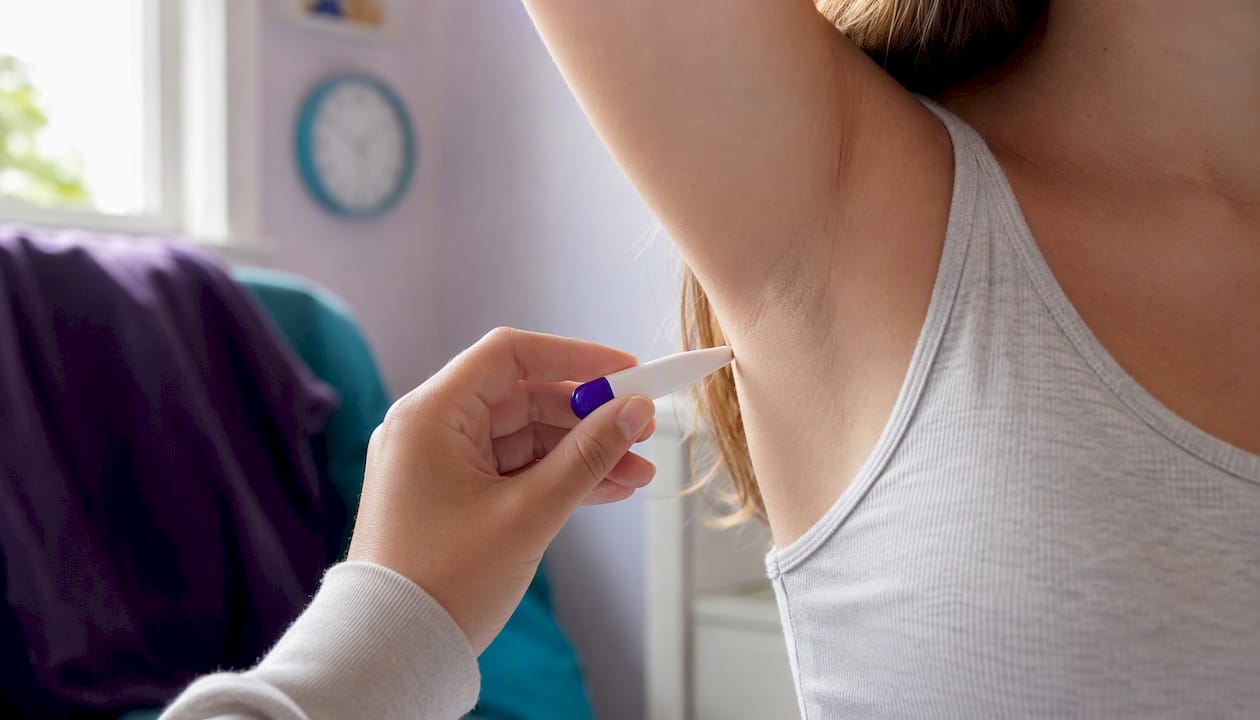
- Morning (before rising): Take BBT with a basal thermometer. Log the reading to the nearest tenth of a degree (e.g., 97.4°F).
- After first bathroom visit: Check cervical mucus. Note texture: dry, sticky, creamy, or clear and stretchy.
- Days 10–18 of your cycle: Use an OPK test strip. Note whether the test line is lighter or darker than the control line.
Sample BBT log row: “March 10 | 97.3°F | Creamy mucus | OPK negative.”
A sustained temperature rise across several consecutive days, combined with a mucus peak, confirms ovulation has passed.
3. Health-monitoring routine: app or spreadsheet
Log mood (1–5 scale), sleep hours, flow intensity, pain level, and one symptom note each day. Review the full month at the end of your cycle. After three months, patterns become visible: maybe energy dips on days 21–24, or headaches cluster around ovulation.
Sample app entry: “Day 18 | Mood: 3 | Sleep: 6 hrs | Flow: none | Pain: mild lower back | Note: bloated.”
Calendar-based methods: rhythm, Standard Days, and CycleBeads
The calendar method is the oldest period tracking technique, and it still works for people with predictable cycles. The core idea: mark day 1 of each period, track cycle lengths over several months, and use that data to estimate when your next fertile window will fall.
The Standard Days Method is a structured version designed for people whose cycles consistently fall between 26 and 32 days. It identifies days 8 through 19 of every cycle as potentially fertile. If your cycles fall outside that range, the method is not a reliable fit.
How the calendar calculation works:
- Track a sufficient number of cycles to establish a baseline, as shorter tracking periods produce unreliable predictions.
- Subtract 18 from your shortest cycle to find the first potentially fertile day.
- Subtract 11 from your longest cycle to find the last potentially fertile day.
- Example: Shortest cycle 27 days, longest 30 days → fertile window estimated as days 9 through 19.
CycleBeads is a physical, color-coded bead tool that applies the Standard Days rules without any math. You move a ring along the beads each day: brown beads represent lower-risk days, white beads represent the fertile window. It suits motivated users with regular cycles who prefer a tactile, screen-free method.
Important caveats:
- Calendar methods are retrospective. They predict based on past cycles, not current biology.
- Cycle variability increases the abstinence window and reduces reliability.
- Stress, illness, travel, and hormonal changes can shift ovulation timing unpredictably.
- Combine with at least one biomarker (mucus or BBT) to reduce risk.
Basal body temperature: how to measure and read the shift
BBT is your resting temperature measured before any movement in the morning. After ovulation, progesterone causes a small but consistent rise of roughly 0.2°F that persists until your next period. Tracking that shift tells you ovulation has occurred.
Daily measurement protocol:
- Take your temperature at the same time every morning, ideally within 30 minutes of your usual wake time.
- Use a basal thermometer (reads to the tenth of a degree, not a standard fever thermometer).
- Measure before getting out of bed, speaking, or drinking anything.
- Log the reading immediately, along with any notes that might affect the reading (late night, alcohol, illness).
A confirmed ovulation signal looks like three consecutive temperatures higher than the previous six days. Because BBT only confirms ovulation after it has happened, it is most useful for identifying the end of the fertile window rather than predicting its start. According to Johns Hopkins Medicine, ovulation typically occurs 12–14 days before the next period, and the fertile window ends within 12–24 hours after ovulation.
Pro Tip: Alcohol, poor sleep, fever, and shift work all distort BBT readings. Flag those days in your log rather than deleting them — the pattern over three or more months still tells a clear story even with occasional noise.
Cervical mucus: what to watch for and how to log it
Cervical mucus changes throughout the cycle in a predictable progression that reflects estrogen and progesterone levels. Learning to read those changes gives you a real-time fertility signal that no calendar calculation can match.
The four stages:
- Dry or absent: Just after your period. Low fertility.
- Sticky or crumbly: Early follicular phase. Still low fertility.
- Creamy or lotion-like: Approaching ovulation. Fertility rising.
- Clear, stretchy, egg-white consistency: Peak fertility. Ovulation is near or happening.
How to check and record:
- Check after urination each day. Use clean fingers or toilet paper.
- Note amount (none, little, moderate, a lot), consistency, and color.
- Record before any sexual activity, which can alter observations.
Sample log entries:
- “March 8 — Sticky, white, small amount.”
- “March 11 — Clear, very stretchy, moderate amount. Peak day.”
- “March 13 — Creamy, less stretchy. Post-peak.”
Key insight: The day of the most abundant, clearest, most stretchy mucus is called the “peak day” and is your highest-fertility signal. Fertility drops sharply in the days following peak day. Confusing semen, arousal fluid, or vaginal infections with fertile mucus is one of the most common mistakes — if you notice continuous discharge, an unusual odor, or itching, see a clinician before relying on mucus observations for family planning.
People with irregular cycles, those recovering from hormonal birth control, or those who have never observed their mucus before benefit most from a few months of observation before making decisions based on it.
Ovulation predictor kits and fertility monitors: how they work and what they cost
OPKs detect the luteinizing hormone (LH) surge in urine that precedes ovulation by roughly 24 hours. A positive result (test line as dark as or darker than the control line) signals that ovulation is likely within the next day or two. Johns Hopkins Medicine notes that OPKs are most useful when combined with other observations, and they may be less reliable with irregular cycles or certain medical conditions.
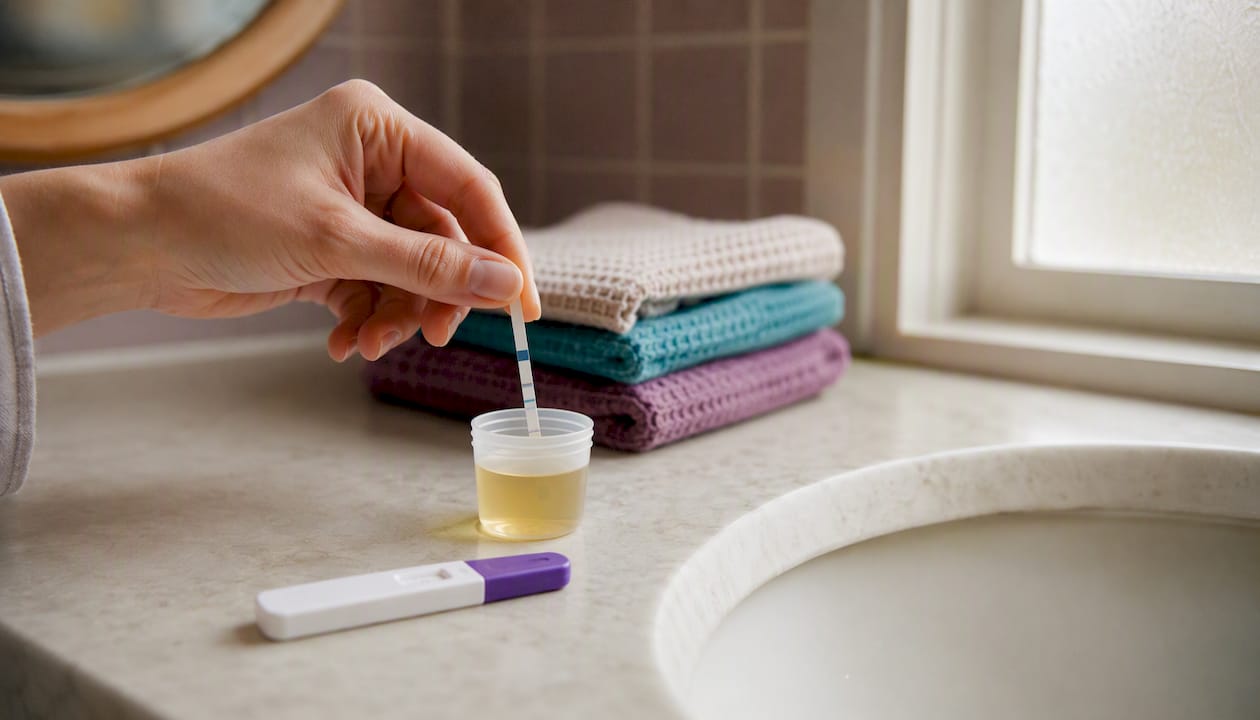
Clearblue is one well-known brand offering both basic LH test strips and advanced digital monitors that track both LH and estrogen to identify a broader fertile window. Basic test strips cost a few dollars each; digital monitors and their refill sticks carry a higher recurring cost.
Practical pros and cons:
- Clear, objective result — no interpretation of textures or temperatures required.
- Helpful when mucus patterns are unclear or BBT is inconsistent.
- Recurring cost of test sticks adds up, especially with longer or irregular cycles.
- PCOS can cause multiple LH surges without ovulation, producing false positives.
- A positive OPK does not confirm ovulation occurred — it signals the surge only.
For people trying to conceive who want a straightforward daily signal, OPKs paired with a free period and cycle tracker can simplify the process considerably.
Symptothermal method: combining markers for higher reliability
The symptothermal method uses two or more biomarkers together, typically BBT and cervical mucus, to both predict and confirm the fertile window. The combination reduces the false positives that come from relying on a single marker.
Per Planned Parenthood’s fertility awareness guidance, the protocol advises abstaining from intercourse (or using a barrier method) from the first fertile day identified by the calendar calculation until roughly 72 hours after both the temperature rise and the mucus peak have been confirmed.
Example combined protocol:
- Use the calendar calculation to identify the earliest possible fertile day.
- From that day, observe mucus daily and take BBT each morning.
- The post-ovulatory infertile phase begins after three consecutive elevated BBT readings AND the mucus has returned to sticky or dry.
| Marker | What it tells you | When it’s most useful |
|---|---|---|
| BBT rise | Confirms ovulation has passed | End of fertile window |
| Mucus peak | Signals peak fertility in real time | Approaching ovulation |
| Calendar calculation | Estimates fertile window start | Beginning of fertile window |
| Combined (symptothermal) | Confirms both start and end of window | Full cycle family planning |
Research published in PMC confirms that FABMs fall into biomarker-based categories, and that some symptothermal methods have published evidence for both achieving and avoiding pregnancy. For contraceptive use, proper instruction from a certified FABM educator is strongly recommended.
Apps and digital tools: what they do, how they differ, and privacy notes
Period and cycle tracking apps range from simple calendar tools to algorithm-driven predictors that incorporate biomarker inputs. A PMC study on menstrual tracking design found that people use a mix of six common methods including apps, digital calendars, paper diaries, bodily symptoms, birth-control cues, and remembering, and that many switch methods over time. Apps succeed when they fit existing habits and minimize friction.
App categories:
- Calendar-only: Predict based on average cycle length. Simple, low-effort, low precision.
- Algorithmic/AI prediction: Apps like Clue use machine learning across logged data to refine predictions. Flo offers symptom tracking with health insights.
- BBT-integrated: Kindara pairs with a Bluetooth thermometer for automated BBT logging.
- Hormone-linked: Natural Cycles has FDA clearance as a contraceptive app under specific conditions, using BBT input and a proprietary algorithm.
| App type | Best for | Biomarkers used | Accuracy caveat | Cost |
|---|---|---|---|---|
| Calendar-only | Basic period prediction | Cycle dates only | Low for fertile window | Free |
| Algorithmic (Clue, Flo) | Health monitoring, symptom patterns | Dates, symptoms, mood | Moderate; improves with more data | Free or paid tier |
| BBT-integrated (Kindara) | Fertility awareness | BBT, mucus, dates | Good with consistent input | Free app; thermometer cost |
| FDA-cleared (Natural Cycles) | Contraception (with caveats) | BBT, algorithm | Cleared under specific use conditions | Paid subscription |
Most apps that claim to predict the fertile window lack independent clinical validation, per PMC research on FABMs. Combining app predictions with manual biomarker observations is a practical strategy for anyone who needs precision.
Privacy checklist before choosing an app:
- Can you export your data?
- Does the app share data with third parties?
- Is the account linked to other services?
- Who owns your health data under the app’s terms?
Pro Tip: Read the privacy policy before entering sensitive health data. Some apps sell anonymized data to third parties. If privacy is a priority, a paper diary or a local-only spreadsheet carries zero data-sharing risk.
Low-tech options: paper calendars, diaries, and simply remembering
Sometimes the simplest method is the right one. A paper calendar, a small notebook, or even a reliable memory can be enough for someone with very regular cycles who just wants to predict their next period.
Simple notation system:
- M = first day of period
- • = light flow, •• = moderate, ••• = heavy
- ***** = suspected ovulation (based on mucus or mild cramping)
- S = spotting
Sample diary entry: “March 3 — M, moderate cramps, mood low. March 7 — last flow day. March 12 — * (clear mucus, mild twinge).”
Remembering works when cycles are consistent and the only goal is basic prediction. Once you want to track symptoms, fertility, or health trends, a written or digital record becomes necessary. Three months of written data is far more useful in a clinician’s office than three months of memory.
Pro Tip: For parents introducing tracking to a tween, a small private notebook with simple symbols is often more comfortable than an app. It keeps data off devices, requires no account, and gives her full control. Check out first period tracking guidance for parents and girls for age-appropriate templates.
How accurate are these methods? Common mistakes and safety notes
Accuracy varies widely across methods, and user consistency is often the biggest variable. Retrospective markers like BBT confirm ovulation after it happens. Predictive markers like mucus and OPKs signal it in advance. Calendar calculations estimate based on past patterns. None of them are perfect, and combining methods reduces the margin for error.
Common mistakes that reduce accuracy:
- Taking BBT at inconsistent times (even 30 minutes off can shift readings).
- Misreading mucus by confusing semen, arousal fluid, or infection discharge with fertile fluid.
- Using an unvalidated app as the sole method for contraception.
- Starting calendar calculations with fewer than six cycles of data.
- Ignoring cycle variability when applying the Standard Days rules.
Safety notes:
- FABMs used for contraception require proper instruction. Using them without training significantly increases the risk of unintended pregnancy.
- OPKs confirm an LH surge, not confirmed ovulation. A positive result without a subsequent BBT rise may indicate the surge occurred without ovulation.
- Irregular cycles reduce the reliability of calendar-based predictions. If your cycles vary by more than a few days, combine calendar data with at least one biomarker.
| Method | Strength | Key limitation |
|---|---|---|
| Calendar/Standard Days | Simple, no tools needed | Requires regular cycles; retrospective |
| BBT | Confirms ovulation reliably | Retrospective; sensitive to lifestyle disruption |
| Cervical mucus | Real-time fertility signal | Requires practice; easy to misread |
| OPKs | Objective LH detection | Recurring cost; false positives with PCOS |
| Symptothermal | Highest reliability among FABMs | Requires training and consistent daily effort |
| Apps (calendar-based) | Low effort, automated reminders | Most lack clinical validation for fertile window |
Review your tracking data quarterly. If predictions are consistently off by more than two or three days, consider adding a biomarker or consulting a clinician.
How to pick the right tracking method for your goals and lifestyle
The best method is the one you will actually use consistently. Start with these questions:
- What is my primary goal? Predicting periods, trying to conceive, avoiding pregnancy, or monitoring health?
- How regular are my cycles? Cycles that vary by more than a few days rule out calendar-only methods.
- How much daily effort am I willing to commit? BBT and mucus tracking require daily attention. An app requires a few taps.
- What is my budget? Apps range from free to paid subscriptions. OPKs have recurring test-stick costs. BBT thermometers are a one-time purchase.
- Do I have privacy concerns about apps? If yes, paper or local-only tools are better.
- Do I need clinical-grade precision? If avoiding pregnancy is the goal, symptothermal with certified instruction is the appropriate route.
Decision guide:
- Just predicting periods: Calendar app or paper calendar. Start with three months of dates.
- Trying to conceive: OPKs + mucus observation + BBT. Use an app like Kindara or Flo to log all three.
- Avoiding pregnancy naturally: Symptothermal method with certified FABM instruction.
- Health monitoring: App with symptom logging (Clue or Flo) plus quarterly review. Pair with cycle phase nutrition guidance to support your whole cycle.
- Low effort, basic awareness: Paper calendar with simple symbols.
Build a three-month baseline before relying on any method for decisions. Review health trends quarterly. Switch or combine methods if your goals change.
When to talk to a healthcare provider about menstrual changes
Tracking gives you data. A clinician helps you interpret it when something seems off. Bring three months of logged dates, symptom notes, BBT charts, and OPK results to any appointment about cycle concerns.
Red flags that warrant a clinician visit:
- Periods that are consistently very heavy (soaking through a pad or tampon every hour for several hours).
- Missed periods that are not explained by pregnancy, extreme stress, or significant weight change.
- Severe pain that disrupts daily activities.
- Sudden changes in cycle length or pattern after months of regularity.
- Signs of pregnancy complications (unusual bleeding, pain, or positive test with irregular symptoms).
- Symptoms that suggest hormonal disorders: unexplained hair loss, acne, weight changes, or fatigue alongside cycle changes.
ACOG recommends that menstrual cycle monitoring begin in adolescence as a standard health marker. For teens especially, early irregularities are worth documenting and discussing with a provider rather than waiting to see if they resolve.
Pro Tip: Before your appointment, print or screenshot three months of tracking data. A clinician can spot patterns in two minutes that would take you much longer to explain from memory.
Tracking after your first period: tips for parents and tweens
For a tween who has just had her first period, tracking does not need to be complicated or clinical. It needs to feel safe, private, and manageable. ACOG’s guidance frames the menstrual cycle as a vital sign from adolescence onward, which means starting simple tracking early builds a genuinely useful health habit.
Age-appropriate tracking options for tweens:
- A small private notebook with simple symbols (M, dots for flow, stars for cramps).
- A basic calendar app with no account required, used only for period start dates.
- A printable monthly template kept in a personal planner or journal.
For parents:
- Introduce tracking as a health habit, not a medical task. Keep the conversation light and practical.
- Respect her privacy. The data is hers. Your role is to support, not monitor.
- Early cycles are often irregular. Reassure her that variation is normal, and point her to resources like why first periods sometimes skip months for honest, age-appropriate context.
- If she experiences very heavy bleeding, severe pain, or goes more than three months without a period after her first, schedule a clinician visit.
Simple tween tracking template (printable or copyable):
| Date | Day of cycle | Flow (L/M/H) | Cramps (Y/N) | Mood note |
|---|---|---|---|---|
| March 3 | Day 1 | M | Y | Tired |
| March 4 | Day 2 | H | Y | Irritable |
| March 5 | Day 3 | M | N | Better |
Themonthliesbox’s Amethyst Method, built around affirm, understand, and equip, pairs naturally with this kind of early tracking. The approach builds confidence first, then adds practical tools, which is exactly the right order for a tween who is still figuring out what her body does. Explore how to track your cycle after your first period for a step-by-step guide written specifically for new trackers.
Why starting simple is almost always the right call
The most common reason people abandon tracking is that they try to do too much at once. They download an app, buy a BBT thermometer, order OPK strips, and commit to logging six data points a day. By week three, the habit collapses under its own weight.
Starting with one method, even just marking period start dates on a calendar, builds the consistency that every more advanced method depends on. A three-month baseline of reliable period dates is more useful than two weeks of perfect symptothermal data. Confidence comes from seeing patterns, and patterns only appear with time.
Incremental adoption also protects privacy. A paper calendar or a local spreadsheet shares nothing. Once you are comfortable with the habit, adding a biomarker or an app is a small step rather than an overwhelming commitment.
Themonthliesbox supports parents and first-time trackers
Preparing a daughter for her first period means more than stocking up on supplies. It means giving her the confidence to understand her body and the tools to track it from day one.

Themonthliesbox’s LavenHaven Care Package is a curated self-care starter kit designed for exactly this moment. It includes period supplies sized for tweens, educational materials, affirmation cards, and comfort items, all built around the Amethyst Method’s three phases: affirm, understand, and equip. Parents and gift-givers who want their daughter to feel supported and prepared, not caught off guard, will find everything they need in one thoughtful box.
The kit pairs naturally with the simple tracking templates in this article. Start her with a paper calendar and the LavenHaven Care Package, and she will have both the supplies and the confidence to grow through this season. Visit the product page to see what is inside and get it on its way to her.
Sources
These are the primary sources used throughout this article. Each one is worth bookmarking for deeper reading.
- Planned Parenthood — Fertility awareness
- Fertility Awareness-Based Methods for Women’s Health and Family Planning - PMC
- Calculating Your Monthly Fertility Window | Johns Hopkins Medicine
- Menstruation in girls and adolescents: using the menstrual cycle as a vital sign — ACOG
This article is general information, not a substitute for advice from a qualified doctor. Consult a qualified healthcare professional about your own circumstances before acting on anything here.
0 comments