

The American College of Obstetricians and Gynecologists (ACOG) recommends the first reproductive health visit happen between ages 13 and 15. This first appointment is almost always a conversation, not an exam, focused on education and comfort rather than procedures. Some situations call for an earlier visit, and we’ll walk through exactly which ones.
TL;DR:
- Most girls should have their first reproductive health visit between ages 13 and 15, focusing on education rather than physical exams or Pap tests.
- The initial appointment mainly involves discussions about puberty, menstrual health, hygiene, and consent, with internal exams rarely performed unless medically necessary.
- Early evaluation is advised if there is no breast development by age 14, no periods by age 16, severe menstrual pain, heavy bleeding, or urgent sexual health concerns.
- Preparing your daughter with simple language, practice conversations, and questions fosters comfort and ownership of her health, with routine care often manageable by a pediatrician or family doctor.
- A trusted healthcare provider’s relationship during this milestone sets the foundation for honest, ongoing reproductive healthcare throughout adolescence and beyond.
Table of Contents
- Why Doctors Recommend the First Gynecologist Visit Age of 13 to 15
- What Actually Happens at the First Visit
- When to See a Gynecologist Sooner Than the Typical Age Window
- How to Prepare Your Daughter for Her First Appointment
- Pediatrician, Family Doctor, or Gynecologist: Who Should You Call?
- A Parent’s Reminder: This Visit Is a Milestone, Not a Hurdle
- How The Monthlies Box Supports the Whole Visit, Before and After
- Sources
- FAQ
Why Doctors Recommend the First Gynecologist Visit Age of 13 to 15
The 13 to 15 window isn’t arbitrary. It’s the stretch when most girls are already noticing body changes, getting curious about periods, and quietly wondering if what’s happening to them is normal. ACOG’s guidance points to this age range because it gives clinicians a chance to step in with real answers before confusion turns into worry.
The visit at this stage centers on anticipatory guidance, meaning your daughter learns what to expect before it happens instead of scrambling to understand it after the fact. A pediatric or adolescent care provider will typically cover:
- What menstrual cycles look like and what counts as normal versus concerning
- How to talk about consent, boundaries, and body autonomy in age-appropriate terms
- Hygiene, cramps, and practical period-care basics
- A chance to build a rapport with a clinician she’ll feel comfortable seeing again
That last point matters more than most parents realize. A good adolescent gynecologic relationship is longitudinal, meaning this first visit plants the seed for years of comfortable, honest checkups, not a one-time hurdle to clear.
What Actually Happens at the First Visit
Here’s the part that eases most parents’ minds: this visit is not what you’re picturing. It’s overwhelmingly a talking appointment.
- Health history first. The clinician asks about periods, family history, growth, and any symptoms, mostly through conversation.
- Education, not examination. Expect discussion about puberty, cycles, and hygiene rather than a physical exam.
- Pelvic exam only if needed. Internal exams are rarely performed at a first visit and only when a specific medical reason calls for one.
- No Pap test yet. Pap tests are not recommended before age 21 regardless of when the first visit happens, so this isn’t on the agenda for a young teen.
- A little one-on-one time. Most visits include a stretch where the clinician talks with your daughter privately.
That private portion often surprises parents the most. One detail worth knowing: confidentiality rules during that one-on-one time are typically explained by the clinician up front, including what stays private and what gets shared, and those boundaries generally follow state-specific guidelines. It’s not about keeping secrets from you. It’s about giving her practice speaking up for herself in a medical setting, which is a skill she’ll need for the rest of her life.
When to See a Gynecologist Sooner Than the Typical Age Window
Some situations shouldn’t wait for the 13 to 15 window at all. If something feels off, earlier evaluation is the right call.
- No breast development by age 14, which can signal delayed puberty worth investigating.
- No period at all by age 16, another recognized threshold for evaluation.
- Menstrual pain severe enough to disrupt school, sleep, or normal activity.
- Bleeding heavy enough to soak through products quickly or last unusually long.
- Trouble using menstrual products due to anatomical concerns.
- Urgent questions about sexual health, exposure, or safety.
Mayo Clinic Health System notes that a visit can be appropriate well before age 13 when any of these show up. Don’t wait for a birthday to roll around. Call your pediatrician or a gynecologist directly and describe what you’re seeing.
How to Prepare Your Daughter for Her First Appointment
The way you introduce this visit shapes how she walks into the room. Keep the framing light and normal: “This is just a checkup to talk about the changes your body’s going through, like a dentist visit but for growing up.” Avoid words like “exam” or “gynecologist” if they’re going to spike her anxiety before you even leave the driveway.
A few practical things to bring:
- A written summary of her health history and any medications
- A short list of questions she (or you) want answered
- Insurance card and any referral paperwork your provider requires
Practice helps more than most parents expect. Try a quick role-play at home where she answers questions like “When was your last period?” or “Do you have any questions about your body?” out loud, so the real appointment doesn’t feel like the first time she’s said those words.
Pro Tip: Ask her, a day or two before the visit, what one question she’d want to ask if no adult were in the room. It often reveals exactly what she’s nervous about, and gives you a chance to address it before the appointment even starts.
Our conversation guide for parents has more scripted phrasing if you want extra backup before the big day.
Pediatrician, Family Doctor, or Gynecologist: Who Should You Call?
You don’t need a specialist for a routine first visit. A pediatrician or family medicine provider can typically handle:
- General puberty and menstrual education
- Common concerns like irregular periods or mild cramping
- Referrals when something needs a closer look
A pediatric or adolescent gynecologist becomes the better call when there’s a specific concern, like anatomical questions, suspected structural issues, or a gynecologic condition that needs specialized management. Cleveland Clinic’s guidance confirms that many routine adolescent needs stay well within a pediatrician’s scope. Comfort and continuity usually matter more than the title on the door, so start with whoever your daughter already trusts, and let that provider refer you onward if needed.
A Parent’s Reminder: This Visit Is a Milestone, Not a Hurdle
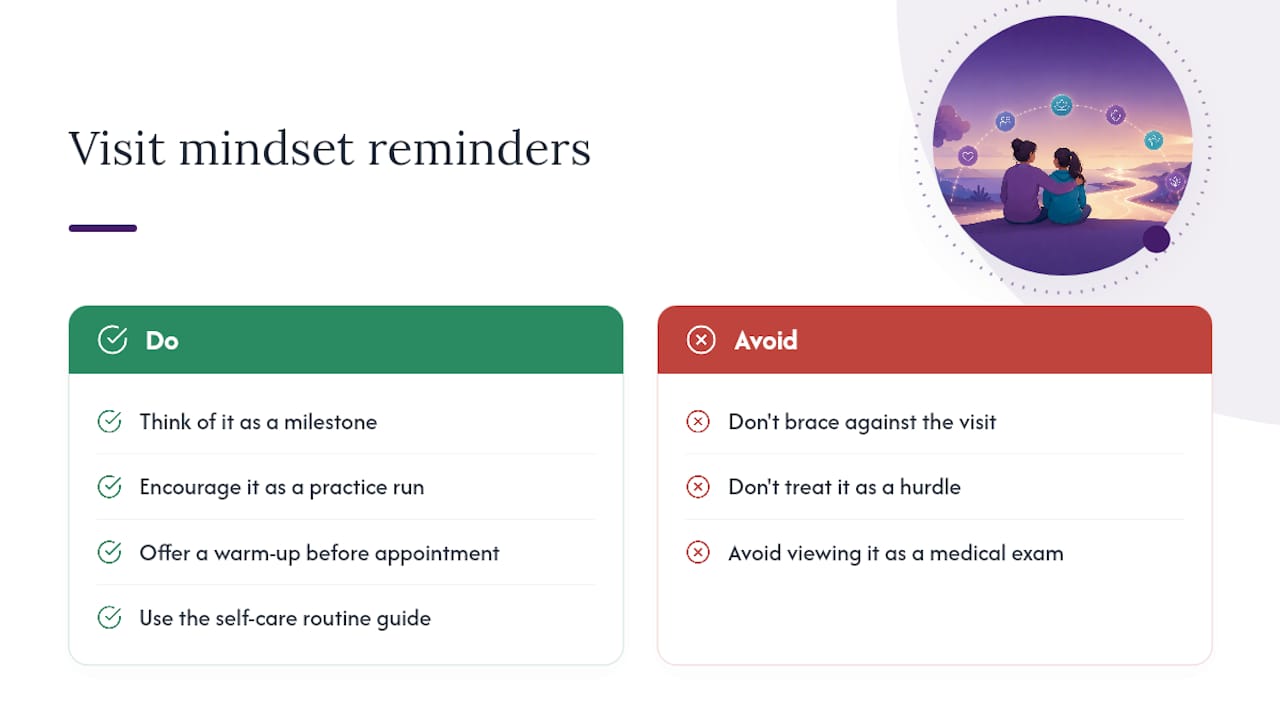
Your worry is normal, and so is hers. Most first visits are gentle, conversational, and over before either of you expects. Think of it less as a medical exam and more as your daughter’s first practice run at owning her own health story.
If you want a warm-up before the appointment, our self-care routine guide gives her small, confidence-building habits to try beforehand. This is her first step toward feeling in charge of her own body, not something to brace against.
— The
How The Monthlies Box Supports the Whole Visit, Before and After
Themonthliesbox built the Amethyst Box for exactly this moment: the stretch of time when a girl is asking questions faster than anyone can answer them. Inside, she’ll find affirmation cards to soften the nerves, educational materials that mirror what a clinician will cover, and practical supplies sized for a first period so nothing feels like a surprise later.

Some families use it the week before the appointment to open the conversation naturally. Others save it for after, as a comfort kit once the visit is behind her. Either way, it’s a supplement to good clinical guidance, not a replacement for it. If you’re looking for a gentle way to mark this growing-up milestone, explore the Amethyst Box and see which version fits her best, or check out the LavenHaven Care Package if she’d love a broader self-care starter kit alongside it.
This article is general information, not a substitute for advice from a qualified doctor. Consult a qualified healthcare professional about your own circumstances before acting on anything here.
Sources
- Initial reproductive health visit recommendation (ACOG) — PubMed entry
- Guidance on pelvic exams and Pap testing — PubMed entry
- Delayed puberty guidance — Children’s Hospital of Philadelphia (CHOP)
- The initial reproductive health visit — ACOG Committee Opinion (2020)
FAQ
Should a 13-year-old see a gynecologist?
Yes. ACOG recommends the first reproductive health visit between ages 13 and 15, mainly for education and building a comfortable clinician relationship, not for exams.
Does a 25-year-old virgin need to see a gynecologist?
Yes. Sexual activity isn’t a requirement for gynecologic care. Preventive visits cover menstrual health, screening needs, and general reproductive wellness regardless of sexual history.
Should I see a gynecologist at 20?
If you haven’t started routine gynecologic care yet, it’s reasonable to begin before Pap testing starts at age 21. Establishing care early makes that first screening feel far less unfamiliar.
Should a 70-year-old woman still see a gynecologist?
Yes. Gynecologic care continues after menopause to monitor changes, screen for conditions common in older age, and manage any new symptoms that come up.
What if my daughter doesn’t need a pelvic exam or Pap test yet?
That’s expected. Pelvic exams happen only when medically indicated, and Pap tests aren’t recommended before age 21 regardless of when her first visit takes place.
0 comments