

Menstrual clots are defined as small pieces of coagulated blood and uterine tissue that pass during menstruation. For most girls, seeing clots during a first period feels alarming, but first period clots explained simply are a normal part of how the body sheds its uterine lining. Clinically, clots smaller than about 25mm (roughly the size of a quarter) are considered typical. The first menstrual cycle, called menarche, often involves hormonal fluctuations that make flow irregular and sometimes clumpier than later cycles. Themonthliesbox is built to help girls and parents understand exactly these moments, turning confusion into confidence.
What causes menstrual clots during the first period?
Clots form because the body’s natural anticoagulants cannot always keep pace with rapid uterine lining shedding. Think of it like a traffic jam. When blood flows faster than the body can thin it out, it pools and coagulates before it exits. Clots represent temporary coagulation during heavy shedding days, not a sign of disease.
During menarche, hormonal signals are still finding their rhythm. Irregular hormonal changes cause erratic flow and sometimes heavier, clumpier bleeding with clots. This is especially true in the first year or two after a girl’s first period. The body is learning a new monthly process, and variability is part of that.

Menstrual fluid is a mixture of blood, tissue, and secretions, which naturally gives it a thicker, jelly-like appearance at times. Small clots around pea size are common and caused by blood and uterine tissue collecting together. The color can range from bright red to dark brown, depending on how quickly the blood moves through the body.
Here is what normal first period clots typically look like:
- Size: Smaller than a quarter (about 25mm or less)
- Color: Dark red, brown, or burgundy
- Texture: Jelly-like or gel-like in consistency
- Frequency: Most common on heavier flow days, usually days 1–3
- Amount: Occasional, not constant throughout the entire period
Pro Tip: If you are unsure about clot size, compare it to a coin. A dime is about 18mm and a quarter is about 25mm. Anything smaller than a quarter on a heavy day is generally within the normal range.
When should parents and teens be concerned about first period clots?
Size and flow rate are the two clearest signals to watch. Clots exceeding 25mm can indicate heavy menstrual bleeding, a condition that warrants a conversation with a healthcare provider. One large clot alone does not mean something is wrong, but repeated large clots paired with other symptoms do.
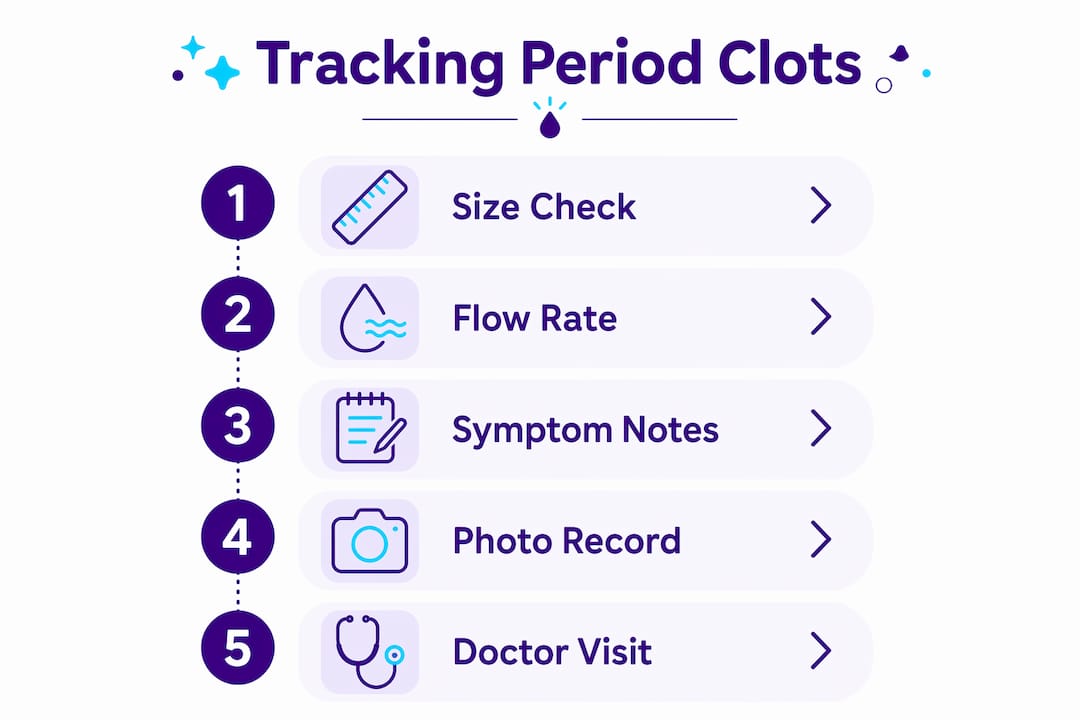
Flow rate matters just as much as clot size. Soaking through pads or tampons every 1–2 hours for several consecutive hours is a sign that bleeding is heavier than typical. A normal period involves a total blood loss of 30–80 ml over 3–7 days. When flow consistently exceeds that range, a doctor should evaluate it.
Clots should be assessed alongside other symptoms like severe pain, prolonged bleeding, or fatigue. These combinations tell a fuller story than clot size alone. The true measure of menstrual health is how much the period disrupts daily life, not just what it looks like.
Watch for these specific red flags and contact a healthcare provider if you notice them:
- Clots consistently larger than a quarter (25mm)
- Soaking through a pad or tampon every 1–2 hours for more than a few hours in a row
- Bleeding that lasts longer than 7 days
- Severe cramping that does not respond to over-the-counter pain relief
- Unusual fatigue, dizziness, or lightheadedness (possible signs of anemia)
- Fainting or feeling faint during a period
Irregular cycles during the first few years after menarche are still common and not automatically a concern. The key is watching for patterns, not reacting to a single unusual period. Keep notes and bring them to any medical appointment.
How to monitor and track first period clots and flow effectively
Tracking periods from the start empowers families and improves healthcare consultations. A written or digital record gives a doctor objective information that memory alone cannot provide. It also reduces anxiety because patterns become visible over time.
Tracking does not need to be complicated. A simple notebook or a notes app on a phone works well. The goal is consistency, not perfection. Here is what to record each cycle:
- Start date: The first day of bleeding
- End date: The last day of any bleeding
- Flow level: Light, medium, or heavy for each day
- Clot observations: Approximate size (pea, dime, quarter) and how many
- Symptoms: Cramping, mood changes, fatigue, or nausea
- Pad or tampon usage: How many per day and how saturated
Providing specific histories on clot size, frequency, associated symptoms, and pad soaking rates helps doctors distinguish normal from abnormal. This kind of detail makes medical appointments more productive and gives families peace of mind between visits.
The coin comparison method works well for clot sizing. A pea is roughly 8mm, a dime is about 18mm, and a quarter is about 25mm. Using these everyday objects removes the guesswork and gives consistent reference points across cycles.
Pro Tip: Take a photo if a clot looks unusually large. You do not need to show it to anyone unless you visit a doctor, but having a visual record removes the pressure of trying to describe it accurately later.
Parent and child communication matters here. Keep the conversation calm and factual. Phrases like “let’s write that down so we remember” normalize tracking without adding fear. Themonthliesbox encourages this kind of open, supportive dialogue as part of its Amethyst Method, which guides families through the affirm, understand, and equip phases of puberty preparation. Learning about first period tracking together is one of the most practical things a parent and daughter can do.
What to expect in future periods after the first clotting experience
Cycles often take time to settle into a predictable pattern. Cycles can take up to 6 years to become regular after menarche, so irregularity in early periods is completely normal. That includes variation in clot size, flow heaviness, and cycle length from month to month.
As hormonal balance improves, clot size and frequency often decrease. The body becomes more efficient at regulating flow, and the anticoagulant system catches up with the shedding process. Most girls notice their periods becoming more predictable within 2–3 years of their first cycle.
The table below shows what typical progression looks like over the first few years:
| Time After Menarche | Cycle Pattern | Clot Expectation |
|---|---|---|
| Year 1 | Highly irregular, variable flow | Small to medium clots common |
| Years 2–3 | Gradually more regular | Clots less frequent, smaller |
| Years 4–5 | More consistent cycle length | Occasional small clots only |
| Year 6 and beyond | Generally regular | Clots rare unless flow is heavy |
Irregular clots may continue occasionally, and that is not automatically a problem. The pattern to watch for is a sudden change, not gradual variation. If clots that were small and infrequent suddenly become large and frequent, that shift deserves attention.
Understanding why first periods vary in heaviness and clotting helps families stay calm through the early years. Patience and consistent tracking are the two most useful tools during this time. Open dialogue between parent and child makes the whole process feel less isolating.
Key Takeaways
Menstrual clots during a first period are normal when smaller than 25mm, but consistent large clots paired with heavy flow, severe pain, or fatigue require medical evaluation.
| Point | Details |
|---|---|
| Normal clot size | Clots smaller than a quarter (25mm) are typical, especially on heavy flow days. |
| Red flag symptoms | Soaking pads every 1–2 hours, clots over 25mm, or bleeding beyond 7 days needs medical review. |
| Cycles take time | Periods can take up to 6 years to regulate after menarche, so early irregularity is expected. |
| Track consistently | Recording clot size, flow level, and symptoms each cycle improves medical consultations and reduces worry. |
| Life disruption matters | The clearest sign of a problem is when a period interferes with daily activities, not clot presence alone. |
What I’ve learned from watching girls grow through their first periods
Most of the fear around first period clots comes from not knowing what to expect. When a girl sees something unfamiliar in the toilet or on her pad, her first instinct is panic. That reaction is completely understandable. But panic fades fast when she has clear information and a parent who responds calmly.
What I have seen consistently is that the girls who feel most confident are the ones whose parents talked about periods before they started. Not in a clinical, textbook way. In a “this is normal, here is what it looks like, here is what we do” way. That kind of preparation changes everything.
The clot conversation is one of the most skipped parts of period education. Most resources cover flow and cramps, but clots get left out. That gap leaves girls thinking something is wrong when it is not. Filling that gap early, before the first period arrives, is one of the most practical things a parent can do.
Monitoring without panic is a skill. It means writing things down, staying curious, and knowing the specific signs that actually warrant a call to the doctor. It does not mean checking every pad with anxiety. Tracking cycle patterns over time gives families real data and real confidence.
Themonthliesbox was built for exactly this kind of moment. The Amethyst Method, with its affirm, understand, and equip phases, gives families a structure for navigating puberty without fear. Every girl deserves to feel supported through these changes, not surprised by them.
— The
The Amethyst Box: built for this exact moment
When a girl gets her first period and sees something unexpected, having the right supplies and information on hand makes a real difference.

The Monthlies Amethyst Box is designed specifically for first periods. It includes practical period supplies, educational materials, and affirmations that help girls feel prepared rather than caught off guard. For families who want a compact option for school or travel, the On-The-Go Kit keeps essentials close at all times. Both are built around the idea that a girl’s first period experience should feel supported, not stressful. Themonthliesbox makes that possible.
FAQ
Are blood clots normal during a first period?
Yes. Small clots are common during early cycles because hormonal fluctuations cause variable flow and the body’s anticoagulants cannot always keep up. Clots smaller than a quarter are generally considered normal.
What does a normal period clot look like?
Normal clots are dark red or brown, jelly-like in texture, and smaller than 25mm. They appear most often on the heaviest flow days, typically the first 1–3 days of a period.
When should I take my daughter to a doctor about period clots?
Seek medical advice if clots are consistently larger than a quarter, if she soaks through a pad every 1–2 hours for several hours, or if she experiences severe pain, dizziness, or unusual fatigue alongside heavy bleeding.
How long will irregular periods with clots last?
Cycles can take up to 6 years to become regular after the first period. Clot frequency and size typically decrease as hormonal balance improves over time.
What is the best way to track first period clots?
Record the start and end date of each period, daily flow level, clot size using coin comparisons, and any symptoms like pain or fatigue. This information is valuable for healthcare consultations and helps identify patterns over time.
0 comments