

A girl’s first menstrual period, known medically as menarche, typically lasts up to 7 days and may be light and spotty or heavier than expected. First period duration explained simply means understanding that two to seven days is the normal range, and that cycles will likely be irregular for the first one to two years. As a parent, knowing this upfront removes a lot of the guesswork. You are not looking for a textbook pattern. You are looking for what is manageable and safe.
How does first period duration compare to later cycles?
First periods and established menstrual cycles behave very differently. Understanding those differences helps you set realistic expectations for your daughter and for yourself.
A first menstrual period commonly lasts about five days, though anywhere from two to seven days falls within the normal range. The flow may be light enough to barely notice, or it may be moderate from the start. Either pattern is completely normal. What surprises many parents is that the first period is often shorter or lighter than the periods that follow.
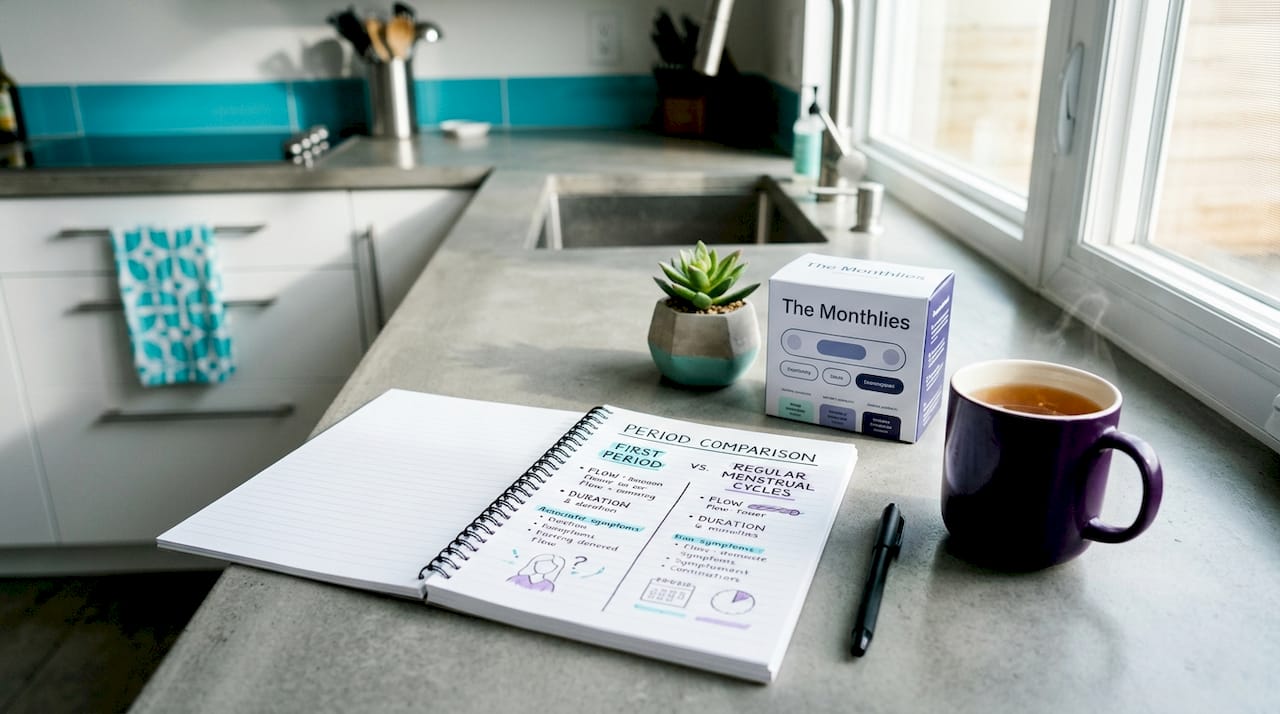
After the first one to two years, menstrual cycles typically settle into a more predictable rhythm. Regular cycle length averages 21 to 35 days once hormones mature. Early on, however, cycles can range anywhere from 21 to 45 days between periods. That wide range is not a warning sign. It reflects a body that is still calibrating.
The table below shows the key differences between a first period and a regular established period.
| Feature | First period | Regular period (after 1 to 2 years) |
|---|---|---|
| Duration | 2 to 7 days | 1 to 7 days |
| Cycle length | 21 to 45 days | 21 to 35 days |
| Flow intensity | Light to moderate, often spotty | More consistent and predictable |
| Regularity | Frequently irregular | Generally regular |
| Hormone status | Immature hormonal axis | Mature hormonal cycle |
The biggest takeaway here is that irregularity is the norm early on, not a problem to solve. Give her body time to find its rhythm.
What factors influence first period length and flow?
Several physical and biological factors shape how long a first period lasts and how heavy the flow is. None of them are within your daughter’s control, which is worth communicating to her directly.
The primary driver is hormonal. Early cycles are often anovulatory, meaning the body releases hormones but does not yet release an egg. This happens because the hypothalamo-pituitary-ovarian axis, the hormonal communication system between the brain and ovaries, is still maturing. Irregular bleeding patterns are a direct result of this immature system, not a sign that something is wrong.
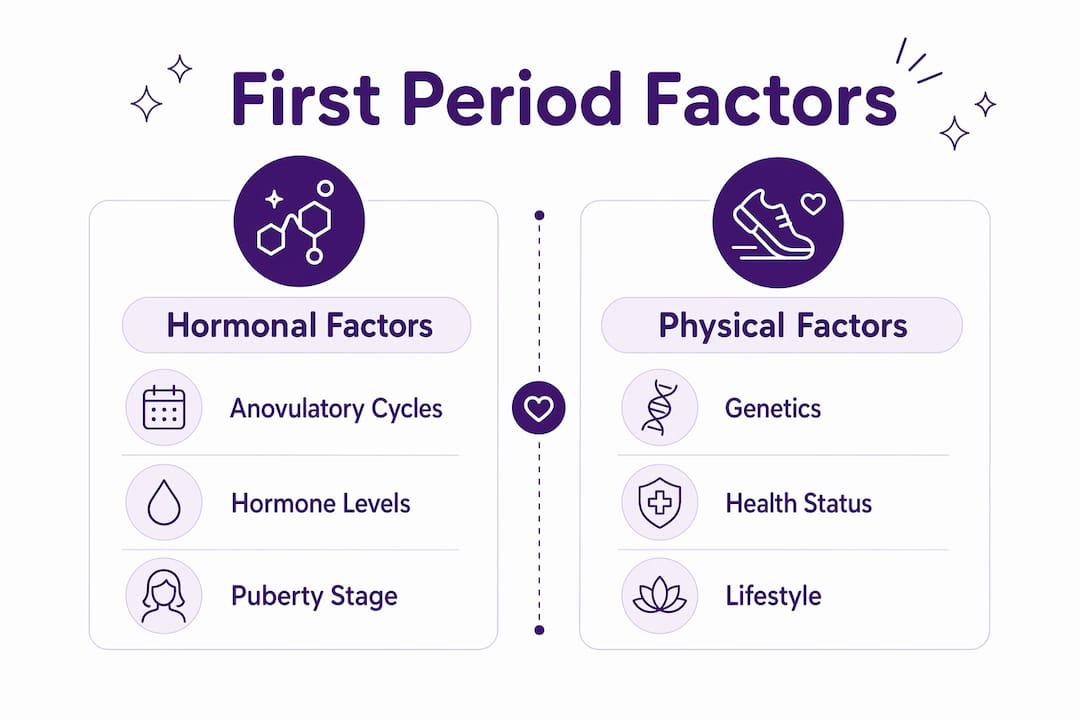
Puberty timing also plays a role. First periods arrive on average around age 12, though anywhere from age 10 to 15 is considered normal. Girls who begin breast development earlier tend to reach menarche sooner. The sequence of puberty milestones, including breast development, pubic hair growth, and a growth spurt, typically precedes the first period by two to three years.
Other factors that influence timing and flow include:
- Genetics. A mother’s menstrual history is often a reliable predictor of her daughter’s pattern.
- Body weight and nutrition. Both very low body weight and obesity can affect hormone levels and cycle regularity.
- Stress and physical activity. Intense athletic training or significant emotional stress can delay or disrupt early cycles.
- Underlying health conditions. Thyroid disorders and polycystic ovary syndrome (PCOS) can affect cycle length and flow, though these are typically identified over time rather than at the first period.
Pro Tip: Ask your daughter’s pediatrician about her puberty timeline at her next checkup. Knowing where she is in the developmental sequence helps you anticipate menarche and prepare her with confidence rather than surprise.
Understanding hormonal development during puberty gives you a clearer picture of why her first few cycles may look nothing like what you experienced as an adult.
When should parents be concerned about first period duration?
Most first periods fall well within the normal range. But there are specific signs that warrant a call or visit to your daughter’s doctor. Knowing these red flags in advance means you will recognize them quickly if they appear.
Consult a doctor if any of the following apply:
- Her period lasts longer than 7 days.
- She soaks through a pad or tampon every hour for several consecutive hours.
- She experiences severe pain that stops her from going to school or doing normal activities.
- Her first period arrives before age 8.
- She has not had a first period by age 15.
- She bleeds more than once in a single month.
Heavy bleeding and severe pain that limit daily activities are not something to wait out. Painful periods, known medically as dysmenorrhea, can require gynecological care and should not be dismissed as “just part of it.”
The most useful framework here is functional assessment. Doctors evaluate bleeding severity not just by counting days, but by pad soaking and symptom impact. A period that lasts six days but allows your daughter to go to school, sleep normally, and manage her flow with standard products is very different from one that lasts four days but leaves her unable to function. Both the duration and the effect on daily life matter.
Pro Tip: Start a simple period log from day one. Note the start date, end date, and how many pads or tampons she uses each day. This record is genuinely useful at a doctor’s appointment and removes guesswork from any future conversations about her cycle.
You can also read more about first period red flags and when to involve a healthcare provider on the Themonthliesbox blog.
How can parents support their daughters through a first period?
Preparation is the most powerful thing you can offer. Girls who understand what to expect before menarche report less anxiety and more confidence when it actually arrives. That preparation starts with you.
Early cycle irregularity is normal. The key is whether symptoms are manageable and not severe. Framing this for your daughter, before her first period arrives, takes the fear out of the unknown. She does not need a perfect cycle. She needs to feel supported through an imperfect one.
Here is what practical support looks like:
- Build a starter kit together. Include pads in different absorbencies (light and regular), a spare pair of underwear, unscented wipes, and a small pain reliever like ibuprofen if age-appropriate. A period self-care routine helps her feel prepared rather than caught off guard.
- Introduce menstrual hygiene products gradually. Pads are the most accessible starting point for most girls. Tampons and menstrual cups can be introduced later, when she feels ready and comfortable.
- Talk about emotions, not just logistics. Some girls feel relieved when their period arrives. Others feel anxious, embarrassed, or overwhelmed. All of those responses are valid. Emotional responses to menarche deserve as much attention as the physical ones.
- Teach her to track her cycle. A simple notebook or a period-tracking app works well. Tracking start dates, end dates, and flow intensity builds self-awareness and makes doctor visits more productive.
- Keep the conversation open. Let her know she can come to you with questions, concerns, or just to talk. One conversation is not enough. Check in regularly, especially in the first few months.
- Ask her pediatrician about the HPV vaccine. The first period is a natural milestone to confirm vaccination status. Preventive care for teens includes reproductive health, and this is a good time to review it.
Parents who approach menstrual education with warmth and practical tools set their daughters up for a smoother adjustment. The goal is not to make periods feel like no big deal. The goal is to make your daughter feel like she can handle them, because she can.
Key takeaways
A first period typically lasts two to seven days, with irregular cycles and variable flow being completely normal for the first one to two years after menarche.
| Point | Details |
|---|---|
| Normal duration range | A first period lasts two to seven days; shorter or lighter than expected is common. |
| Cycle irregularity is expected | Cycles can range 21 to 45 days apart and may stay unpredictable for up to two years. |
| Hormones drive variability | An immature hormonal axis causes anovulatory cycles and inconsistent flow in early periods. |
| Red flags to watch for | Seek medical care if bleeding exceeds 7 days, soaks a pad hourly, or causes severe pain. |
| Preparation reduces anxiety | Building a starter kit and tracking cycles from day one supports confidence and health. |
What I have learned from watching families navigate this milestone
From where I sit at Themonthliesbox, the most common parental mistake is not being underprepared with products. It is being underprepared with language. Parents often wait until after menarche to have the conversation, and by then, the moment has already passed them by.
The families who handle this milestone best are the ones who start talking early. Not one big talk. Small, consistent conversations that normalize menstruation as a healthy part of growing up. When a girl already knows what a period is, what it feels like, and what to do when it arrives, the first period becomes something she can manage rather than something that happens to her.
I also want to push back gently on the idea that “irregular” means “wrong.” So many parents come to us worried because their daughter’s second period arrived six weeks after her first, or because the flow was barely there. Irregular cycles in the first two years are the biological norm. The hypothalamo-pituitary-ovarian axis takes time to mature. That is not a flaw. It is development doing exactly what it should.
What I encourage every parent to focus on is function, not frequency. Is she comfortable enough to go to school? Is she managing her flow without distress? Is she coming to you with questions? Those are the real indicators that things are going well. Count the days, yes. But weigh them against how she is actually doing.
— The
Practical tools to help your daughter feel ready
At Themonthliesbox, we built our products around one belief: every girl deserves to feel prepared, not panicked, when her first period arrives. The LavenHaven Care Package is a self-care starter kit designed specifically for early menstruation. It includes practical hygiene supplies alongside comfort items and affirming materials that speak directly to how a girl feels during this transition, not just what she needs physically.
For families who want a fuller experience, the Amethyst Box combines first period education with self-care products built around the Amethyst Method: affirm, understand, and equip. It is the kind of thoughtful, character-led preparation that turns a potentially stressful milestone into something a girl can feel genuinely good about.
FAQ
How long does a first period usually last?
A first period typically lasts up to 7 days, with most girls experiencing around five days of bleeding. Shorter or lighter periods are also common and completely normal.
Is it normal for a first period to be very light or spotty?
Yes. Early periods can be light and spotty or heavier depending on the individual. Both patterns fall within the normal range for menarche.
When will my daughter’s period become regular?
Most girls see their cycles stabilize within two to three years after their first period. Until then, cycles ranging from 21 to 45 days apart are expected and not a cause for concern.
What signs mean I should take my daughter to a doctor?
Seek medical advice if her period lasts more than 7 days, she soaks a pad every hour for several hours, or she has severe pain limiting daily activities. A period before age 8 or no period by age 15 also warrants evaluation.
How many pads does a girl typically need each day during her first period?
Most girls need three to six pad changes per day during their period. Having a mix of light and regular absorbency pads on hand covers most scenarios during those early, unpredictable cycles.
0 comments