

The best first period kit combines disposable pads, period underwear, gentle wipes, disposal bags, spare underwear, a heat option for cramps, and a short educational booklet — everything your daughter needs to feel ready, not rattled. Themonthliesbox’s Amethyst Box is the purchase-ready option that meets every item on this list, curated specifically for tweens. If you want to act right now, here’s what to pull together this week:
- Disposable pads (mini and regular sizes, 4–6 total)
- Panty liners (3–4 for light days or spotting)
- Period underwear (1–2 pairs, teen-fit or stretch)
- Spare underwear (1–2 pairs)
- Gentle or flushable wipes (travel-sized pack)
- Disposable bags for used products (3–4 small sealable bags)
- Heat patch or microwavable pack for cramps
- Small discreet pouch to hold everything
- Affirmation card or short educational booklet
Reusable period underwear can last up to two years with proper care, making it one of the smartest investments in any starter kit. Themonthliesbox designed the Amethyst Box around exactly this list, so you don’t have to piece it together from scratch.
Table of Contents
- What goes in a complete first period kit?
- Why each item matters and how to use it
- DIY kit vs. ready-made kit: which one is right for you?
- How do you choose the right products for a tween?
- How to pack a school-ready pouch
- How to present the kit and talk about her first period
- Step-by-step first-day checklist
- What does a first period kit cost in the U.S.?
- Why emotional support is as important as the supplies
- Key Takeaways
- Why I believe the kit conversation matters more than the kit itself
- The Amethyst Box has everything on this checklist
- Useful sources and further reading
What goes in a complete first period kit?
A solid kit covers three scenarios: home, school, and travel. The counts matter as much as the items.
| Kit Type | Pads/Liners | Period Underwear | Spare Underwear | Disposal Bags | Wipes | Heat Option |
|---|---|---|---|---|---|---|
| School pouch | 3–4 | 1 pair | 1 pair | 2–3 | 4–6 wipes | 1 stick-on patch |
| Home starter kit | 6–8 | 2–3 pairs | 2 pairs | 4–5 | Full pack | Microwavable pack |
| Travel/weekend kit | 4–5 | 1–2 pairs | 1–2 pairs | 3–4 | Travel pack | 1–2 patches |
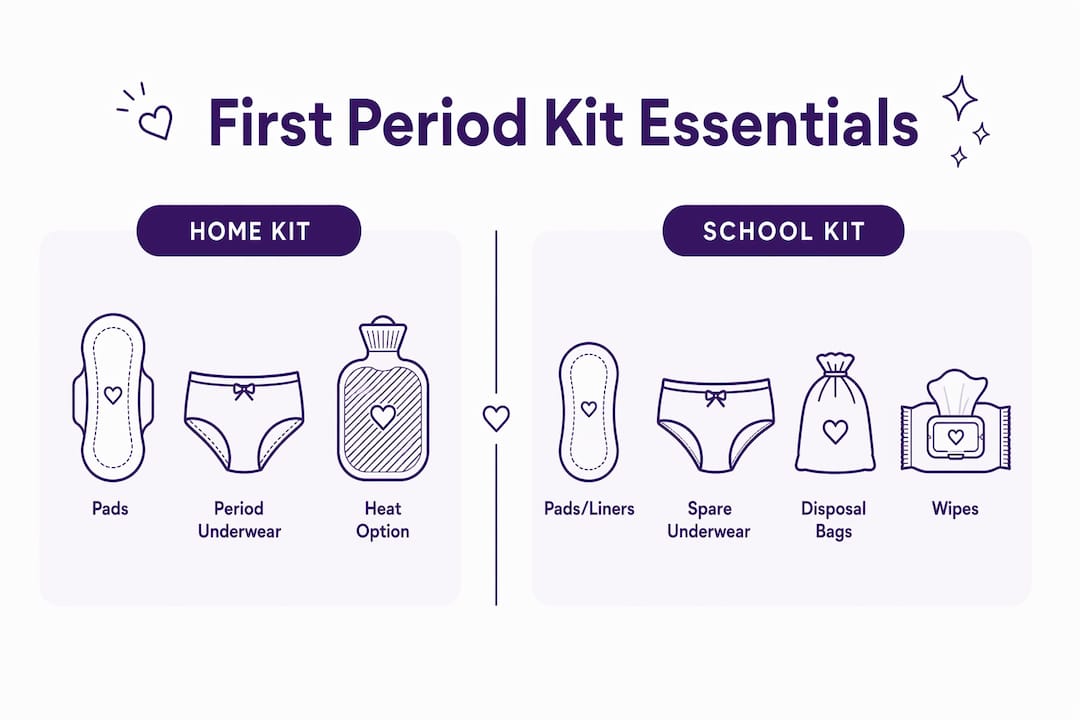
For the school pouch, keep it lean. Several pads or liners, one pair of period underwear or a spare, a couple of disposal bags, and some wipes fit neatly into a small zip pouch that slides into any backpack without drawing attention. The home kit is more generous — this is where you keep the full supply, the microwavable heat pack, and the booklet.
Full checklist for a home starter kit:
- Disposable pads in mini, regular, and overnight sizes to cover light to heavy flow days
- Panty liners for spotting or the tail end of a cycle
- Period underwear: a few pairs, teen-fit or stretch designs that accommodate growth
- Spare underwear: a couple of pairs kept clean and folded
- Discreet zip pouch or small wet bag
- Disposable sealable bags for used products
- Gentle or flushable wipes (fragrance-free)
- Heat patch (stick-on, air-activated) and/or microwavable heat pack
- Small mirror or anatomy guide card
- Affirmation card and educational booklet
- One small comfort item (a favorite snack, lip balm, or a note from you)
For a deeper look at what to include in the school pouch specifically, the period bag must-haves guide on Themonthliesbox walks through each item with practical notes.
Why each item matters and how to use it
Understanding what each item does helps you explain it to your daughter clearly and confidently.
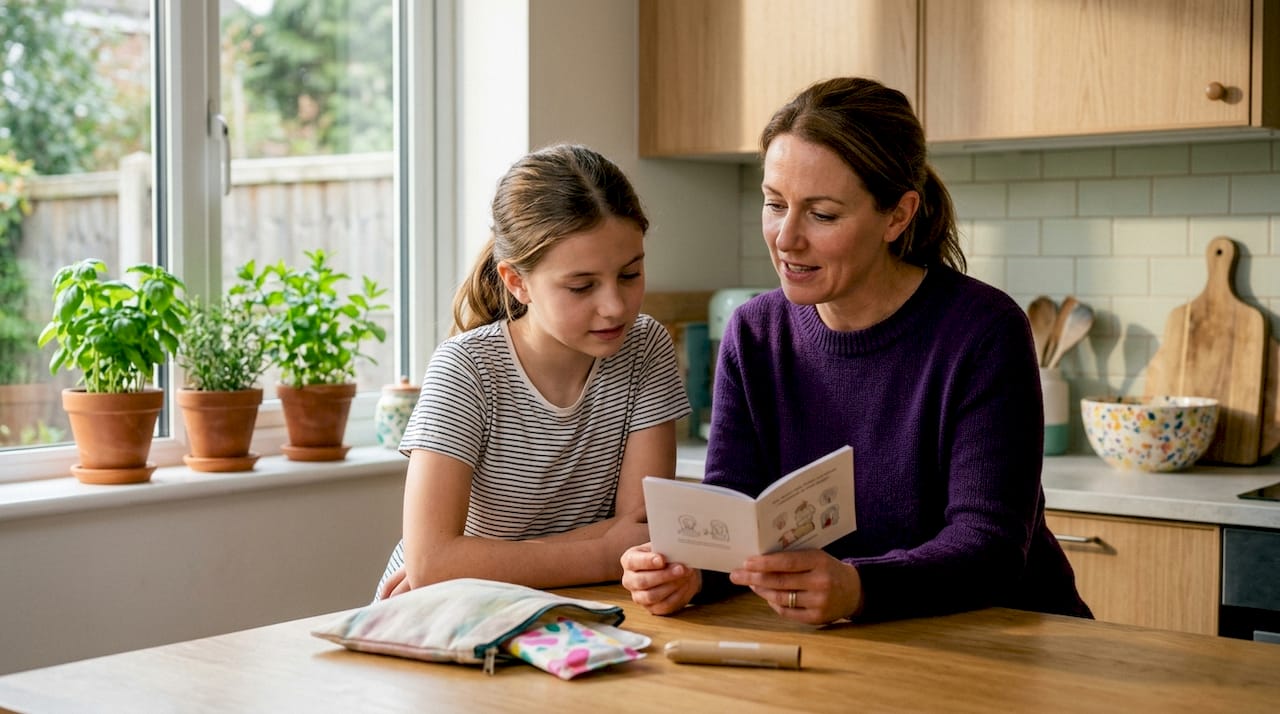
Disposable pads are the easiest starting point. They attach to the inside of underwear with an adhesive strip, require no insertion, and come in sizes from mini to overnight. Show your daughter how to peel the backing, center the pad in her underwear, and press the wings down if the pad has them.
Panty liners are thinner than pads and work well for spotting, the first and last days of a cycle, or as backup when wearing period underwear. They’re a low-profile option for school days when flow is light.
Period underwear looks and feels like regular underwear but has a built-in absorbent layer. Health experts recommend starting with pads or period underwear for the first cycle because they’re simpler and less invasive than tampons or cups. A mixed approach works well for many families: one or two pairs of period underwear for daily confidence, plus a few pads tucked in the school pouch for backup.
Spare underwear is purely practical. Pack a clean pair in a small bag inside the school pouch so she can change discreetly if needed.
Disposal bags are small sealable bags (think sandwich-bag size or smaller) used to wrap used pads before placing them in the trash. They keep things hygienic and odor-free.
Gentle wipes help with freshening up between changes, especially at school. Choose fragrance-free options to avoid irritating sensitive skin.
Heat patches deserve a special mention. Air-activated heat patches provide hours of cramp relief without needing a microwave, which makes them genuinely school-friendly. Stick-on patches go directly on clothing over the lower abdomen.
The booklet and affirmation cards are not extras. Kits that include a pediatrician-reviewed guide improve both parental confidence and a child’s readiness. A short, friendly booklet answers the “why is this happening?” questions your daughter might feel too shy to ask out loud.
Pro Tip: Run a practice session before her period starts. Let her try on the period underwear, practice placing a pad, and see where everything lives in her pouch. Practice routines at home significantly reduce anxiety and leaks when the real moment arrives.
Including a simple hands-free mirror or anatomical diagram also helps teens build body familiarity in a private, non-judgmental way — and it makes introducing internal products later much easier if she chooses that path.
DIY kit vs. ready-made kit: which one is right for you?
Both options work. The right choice depends on your timeline, your daughter’s preferences, and how much you want to personalize.
| DIY Kit | Ready-Made Kit | |
|---|---|---|
| Cost | Often lower upfront | Higher upfront, but curated |
| Personalization | High — add family favorites | Limited to what’s included |
| Convenience | Requires sourcing multiple items | One purchase, ships complete |
| Educational materials | Must source separately | Often included and reviewed |
| Presentation | You create it | Gift-ready packaging |
| Timing | Flexible | Dependent on shipping |
A DIY kit makes sense when you already have some supplies on hand, want to include a specific product your daughter loves, or need something assembled tonight. A ready-made kit like the Amethyst Box is the better call when you want pediatrician-reviewed educational materials, a gift-ready presentation, and the confidence that nothing important was left out.
Pro Tip: If you go the DIY route, the one item most parents forget is a pediatrician-reviewed booklet. A pad and a pair of period underwear are easy to find at any drugstore — a quality educational guide is not. Source that first.
If you’re building a DIY kit, make sure it includes: a pediatrician-reviewed booklet, at least two pad sizes (mini and regular), one pair of teen-fit period underwear, a heat option, a discreet pouch, and disposal bags.
How do you choose the right products for a tween?
Fit and sensitivity matter more than brand names here. Early cycles are usually light, so you don’t need heavy-absorbency products to start.
Selection checklist:
- Period underwear: Choose teen-fit or stretch designs. Products designed for teen bodies reduce bulk and improve comfort compared with standard adult sizing.
- Pads: Start with mini or regular absorbency. Overnight pads can wait until you know her flow.
- Wipes: Fragrance-free only. Scented products can irritate sensitive skin and disrupt the body’s natural balance.
- Heat patches: Stick-on, air-activated patches are the school-friendly choice. They don’t require a microwave and fit discreetly under clothing.
- Pouch: Small enough to fit in a backpack pocket without being obvious.
Starting with pads or period underwear gives a young girl time to understand her body and her cycle before adding the complexity of internal products. Tampons and menstrual cups are great options — but they’re a conversation for later, when she’s curious and comfortable. Rushing that step doesn’t help anyone.
Red flags to avoid: overly bulky adult-sized pads that bunch or shift on a small frame; scented pads or liners that promise “freshness” but often cause irritation; period underwear labeled only in adult sizing with no stretch or teen-fit option.
When she’s ready to learn about internal products, the guide on how to introduce menstrual products walks through that conversation step by step.
How to pack a school-ready pouch
The school pouch has one job: give her everything she needs to handle her period quietly and confidently without leaving class for more than a few minutes.
What to pack:
- 3–4 pads or liners (mix of mini and regular)
- 1 pair of period underwear or 1 pair of spare underwear in a small zip bag
- 2–3 small sealable disposal bags
- 4–6 fragrance-free wipes
- 1 stick-on heat patch (air-activated, no microwave needed)
- A small note with your phone number and a reassuring message
Discreet disposal at school:
- Wrap the used pad in toilet paper or place it in a sealable disposal bag.
- Place the wrapped pad in the bathroom’s disposal bin (usually on the wall inside the stall).
- If no bin is available, seal the bag and place it in the bottom of her backpack until she reaches a trash can.
- Wash hands thoroughly after every change.
Providing sealable bags and a discreet pouch lowers stress and reduces the chance of improper disposal. Encourage her to keep the pouch in a consistent spot in her backpack so she’s never searching for it.
School policy tip: Check whether your school allows heat patches in class. Some schools require a nurse’s note for any wearable item. It’s worth leaving a backup supply of pads and liners with the school nurse so she always has a safety net, even if the pouch gets left at home.
How to present the kit and talk about her first period
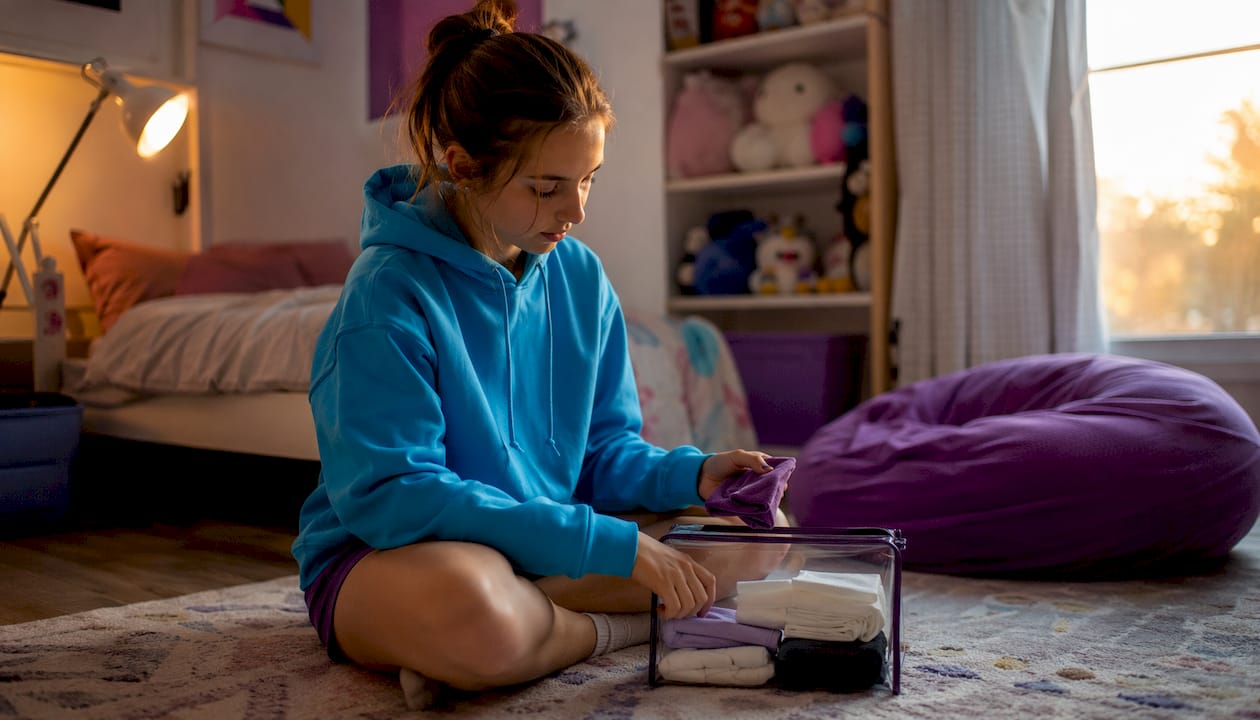
The conversation matters as much as the kit itself. Framing the first period as a milestone rather than a medical event sets the tone for how she’ll feel about her body for years.
Two ways to open the conversation:
- Private framing: “I put together something just for you. It has everything you’ll need when your period starts, and I want to show you how it all works so you feel ready.”
- Celebratory framing: “This is a big deal, and I wanted to mark it. You’re growing up, and I’m proud of you. Let’s go through this together.”
Presentation ideas:
- Give the kit a few months before her expected first period — not the morning after it starts.
- Let her pick the pouch color or add one comfort item she loves.
- Include a handwritten note or affirmation card inside the kit.
- Keep the conversation short and open-ended. End with: “You can always ask me anything.”
Experts recommend positioning the kit as a celebratory or empowerment tool and involving the girl in the process. That involvement builds ownership. When she helped choose the pouch, she’s more likely to actually use it.
Pro Tip: Pair the practical items with an affirmation card that says something simple and true: “You are ready. You are supported. You’ve got this.” It takes thirty seconds to read and can shift her entire emotional response to the moment.
For creative presentation ideas, the surprise period kit presentation guide on Themonthliesbox has low-pressure scripts and small ritual ideas that feel special without being overwhelming.
Step-by-step first-day checklist
Whether it happens at home or at school, having a clear sequence removes the panic.
At home:
- Stay calm and reassure her this is completely normal.
- Get the kit and show her where everything is.
- Help her place the pad correctly or put on period underwear.
- Offer a heat patch or microwavable pack for cramps if she needs it.
- Show her how to wrap and dispose of used products.
- Check in after the first change and answer any questions.
At school:
- Go to the nearest restroom.
- If she doesn’t have her pouch, ask a friend, a teacher, or the school nurse for a pad.
- Change into spare underwear or period underwear if available.
- Use a disposal bag to wrap the used pad before placing it in the bin.
- Text or call a parent or caregiver if she needs support or wants to come home.
- Apply a heat patch if cramps start.
Quick leak troubleshooting:
- A small leak on underwear is normal, especially on the first day. Spare underwear in the pouch handles this.
- If the leak reaches outer clothing, a tied sweatshirt around the waist buys time until she can change.
- After a leak, check pad placement. The pad should sit centered in the underwear, not shifted to one side.
The supporting your daughter’s first period guide covers the emotional side of the first day in more detail, including what to say and what to avoid.
What does a first period kit cost in the U.S.?
Building a kit yourself costs roughly $30–$60 depending on the brands you choose. A ready-made curated kit typically runs higher but saves you the sourcing time and includes educational materials you’d otherwise need to find separately.
Approximate individual item costs (U.S. retail):
- Disposable pads (box of 20–30): $6–$10
- Panty liners (box of 30–40): $4–$7
- Period underwear (per pair, teen-fit): $15–$30
- Stick-on heat patches (box of 3–5): $6–$10
- Small zip pouch or wet bag: $5–$12
- Wipes (travel pack): $3–$5
Where to buy: National drugstores (CVS, Walgreens, Rite Aid), big-box retailers (Target, Walmart), and DTC brands online all carry the individual items. For a complete, gift-ready kit with educational materials included, Themonthliesbox’s Amethyst Box is the purchase-ready option that meets the full checklist.
Reusable period underwear is where the long-term savings show up. A pair that lasts up to two years with proper care costs far less per cycle than disposables over the same period. Starting with three to five machine-washable pairs covers a full cycle comfortably. Cold rinse after use and air drying extend the lifespan significantly.
Why emotional support is as important as the supplies
The physical kit is only half the picture. How a girl feels about her first period shapes how she’ll talk about her body, her health, and her needs for years to come.
Themonthliesbox built the Amethyst Method around three phases that work together:
- Affirm: Affirmation cards and a supportive booklet help her feel seen and confident before the first period arrives.
- Understand: Educational materials explain the biology clearly and calmly, answering the questions she might be too shy to ask.
- Equip: Practical supplies sized for tweens give her the tools to handle her period independently.
A kit without education is just a bag of supplies. A kit without supplies is just a booklet. The Amethyst Method pairs both because confidence comes from understanding and being prepared.
Kits that include pediatrician-reviewed materials improve both parental confidence and a child’s readiness. The Amethyst Box includes affirmation cards, an educational booklet, period underwear, disposable pads, liners, wipes, disposal bags, a heat option, and a discreet pouch — every item on the checklist in this article.
For parents who want to go deeper on the education side, the guide on why girls need period education explains what the research says about early, positive period education and its long-term effects on confidence.
Key Takeaways
A complete first period kit pairs practical supplies with emotional preparation — the combination is what actually builds confidence.
| Point | Details |
|---|---|
| Pack the right counts | School pouch needs 3–4 pads/liners, 1 pair of period underwear or spare underwear, 2–3 disposal bags, and wipes. |
| Start with pads or period underwear | Health experts recommend these for first cycles; introduce tampons or cups later when she’s ready and curious. |
| Reusable underwear saves money | With proper care, period underwear lasts up to two years — start with 3–5 machine-washable pairs to cover a full cycle. |
| Practice before the first period | A short at-home trial run with the kit reduces anxiety and leak rates when the real moment arrives. |
| Themonthliesbox Amethyst Box | Includes every checklist item plus affirmation cards and an educational booklet — ready to give as-is. |
Why I believe the kit conversation matters more than the kit itself
Most parents focus on getting the right products — and that matters. But the moment you hand your daughter a kit, you’re also telling her something about how you see her body and her growing up. A bag of pads handed over quietly sends one message. A thoughtfully assembled kit with a note inside, a conversation, and a small celebration sends a completely different one.
The brands and products in this space have gotten much better at the practical side. What still gets underestimated is the emotional architecture around the kit. The affirmation card that seems like a nice extra? It’s often the thing she remembers. The practice session that feels awkward to suggest? It’s what prevents the panic at school. The booklet she might not read right away? She’ll come back to it.
Puberty is something to grow through, not just survive. The kit is the starting point. The conversation you build around it is what stays with her.
The Amethyst Box has everything on this checklist
The Amethyst Box from Themonthliesbox was designed specifically for this moment. It includes period underwear sized for tweens, disposable pads, panty liners, gentle wipes, disposal bags, a stick-on heat patch, a discreet on-the-go pouch, affirmation cards, and an educational booklet. Every item on the checklist in this article is covered. No sourcing, no guessing, no missing pieces.
It arrives gift-ready, which means you can give it as-is with a note tucked inside. For caregivers who want a complete, confidence-building kit without spending an afternoon at three different stores, it’s the straightforward choice. If you want to add an ongoing self-care element, the LavenHaven Care Package pairs well as a follow-up gift after the first period.
Visit the Amethyst Box product page to see exactly what’s included and place your order.
Useful sources and further reading
- The Amethyst Box — Themonthliesbox: The product page with a full item breakdown; useful for confirming what’s included before you buy.
- Period bag must-haves — Themonthliesbox: A practical packing list for the school pouch with item-by-item notes.
- What to pack in a period bag — Themonthliesbox: Detailed parent-facing guidance on counts, sizes, and school-ready supplies.
- Surprise period kit presentation ideas — Themonthliesbox: Low-pressure scripts and small ritual ideas for presenting the kit.
- Emotional responses to the first period — Themonthliesbox: Advice on emotional support and what to say in the days after.
- NHS — Starting periods: A clear, medically reviewed overview of what to expect when periods begin; useful background reading for parents.
- FDA — Menstrual products: The FDA’s guidance on the safety and regulation of menstrual products sold in the U.S.
0 comments