

Choosing the right first period product options for your daughter can feel like standing in a very long aisle with no map. There are pads, tampons, menstrual cups, period underwear, and more. Each product comes with its own set of pros, cons, and questions. Menstrual hygiene management is the broader term used by health professionals, and it covers everything from product choice to hygiene routines. This guide breaks down every major option clearly, helps you build a practical first period kit, and gives you the confidence to prepare your daughter before that first day arrives.
Table of Contents
- Key takeaways
- 1. Key criteria for choosing first period products
- 2. External period products: pads, liners, and period underwear
- 3. Internal period product options for young first-time users
- 4. Side-by-side comparison of period care products
- 5. Tailored recommendations based on lifestyle and readiness
- My honest take on preparing for a first period
- How Themonthliesbox can help you prepare with confidence
- FAQ
Key takeaways
| Point | Details |
|---|---|
| Start with external products | Pads and period underwear are the simplest starting option for beginners and require no internal placement. |
| Build a two-part kit | A home kit plus a school go-bag covers your daughter wherever she is when her period starts. |
| Change pads every 4 to 6 hours | Following the recommended changing interval keeps hygiene on track and prevents discomfort. |
| Reusable options save money | Period underwear and menstrual cups reduce long-term costs, which matter since annual spending can reach $230 per year. |
| Match products to her lifestyle | Active girls who swim or play sports may need different solutions than girls who prefer low-maintenance everyday options. |
1. Key criteria for choosing first period products
Before picking a specific product, it helps to think through a few practical factors. Every girl is different, and what works beautifully for one may feel uncomfortable or inconvenient for another.
Here are the most important things to weigh:
- Comfort and ease of use. For a first-time user, the learning curve matters. Products that require internal placement take practice. Starting external avoids that stress entirely.
- Hygiene and changing frequency. Young girls at school may not always remember to change products. Simpler options with clear signals, like a wet or heavy feeling, are easier to manage.
- Budget. Annual spending on period products can range between $83 and $230. Reusable products cost more upfront but pay off over time.
- Activity level. Does she swim competitively? Play soccer or gymnastics? Products need to keep up with her schedule, not slow her down.
- Environmental preferences. Some families prioritize sustainability. Reusable menstrual products like cups and period underwear are gaining steady popularity among eco-conscious users.
- Kit readiness. Building a first period kit should cover two situations: home and school. Each location needs its own set of supplies.
Pro Tip: Set up two separate kits: a full home kit stocked with several product types plus a discreet school pouch with two or three pads, clean underwear, and a small ziplock bag for accidents. Keeping them separate means she is always covered, no matter where she is.
Thinking through these criteria upfront saves you from buying the wrong things and helps your daughter feel supported rather than overwhelmed. You can also explore first period gift ideas that go beyond just supplies and address the emotional side of preparation too.
2. External period products: pads, liners, and period underwear
External products sit outside the body and collect menstrual flow after it leaves. They are the most recommended starting point for first-time menstruators because they require no internal placement and are straightforward to use.
Sanitary pads are the go-to first menstrual product for most girls. They come in different sizes and absorbency levels, from light to overnight. Pads are widely recommended as the lowest-stress option for beginners. They stick to the inside of underwear and are easy to check and replace. Young girls should change their pad every 4 to 6 hours to stay hygienic and comfortable.
Key pad options to know:
- Regular pads for average flow days
- Overnight pads for heavier flow or sleeping
- Ultra-thin pads for lighter days when discretion matters
- Winged pads for extra side protection against leaks
Panty liners are thinner than pads and best used during lighter days, toward the end of a period, or as backup protection when trying a tampon for the first time. They are not designed for heavy flow.
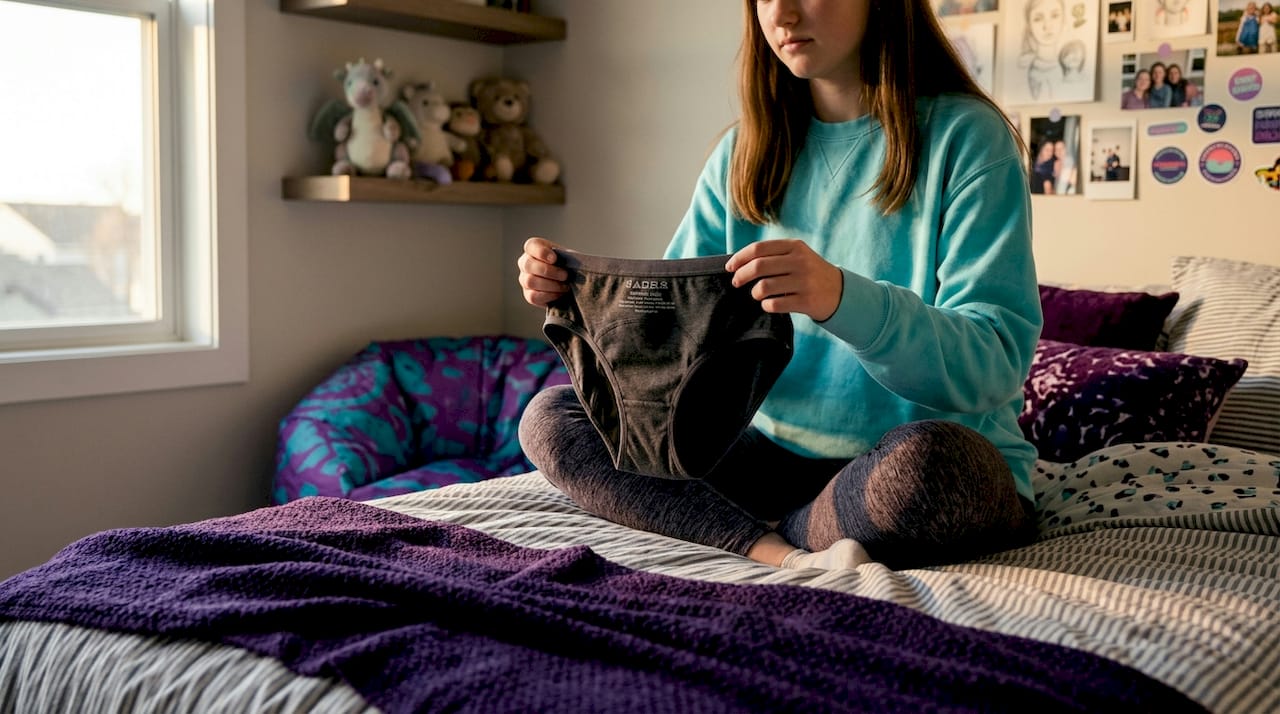
Period underwear is a strong option for girls who dislike the feel of pads or want something more seamless under clothes. They look like regular underwear but have an absorbent, leak-resistant layer built in. They can be worn alone on light days or as backup with other products. The upfront cost is higher, but they are washable and reusable, which makes them a smart long-term investment.
3. Internal period product options for young first-time users
Internal products are placed inside the vaginal canal to collect or absorb flow before it exits the body. They are not always the right first choice, but they are worth understanding because some situations genuinely call for them.
Here is an overview of the three main types:
- Tampons are cylindrical absorbent products inserted into the vaginal canal. They come in applicator and non-applicator styles, with applicators generally being easier for beginners. Light or slim sizes are best to start. Some girls feel confident using tampons early on, while others prefer to wait. There is no age rule, only readiness.
- Menstrual cups are small, flexible, bell-shaped cups made of medical-grade silicone. They sit inside the vaginal canal and collect flow rather than absorbing it. They can be worn for up to 12 hours and are reusable for years, which makes them extremely cost-effective. Fit matters deeply for cups since sizing depends on anatomy. Online quizzes can help narrow down the right size for a first-time user.
- Menstrual discs are a newer option that sits at the base of the cervix. They can be worn during sex, which is less relevant for first-time users, but they also tend to work well for girls with heavier flow.
When internal products make the most sense:
- Swimming or water sports where pads are not practical
- Physical activities where external products shift or bunch
Pro Tip: Before trying a menstrual cup, look for an online cup sizing quiz. Many reputable period health sites offer them for free. If your daughter is unsure or uncomfortable, consult her pediatrician first. Starting with tampons before moving to a cup is a reasonable progression for many girls.
For girls who swim, tampons and cups offer more security than pads because they collect flow internally. This is a practical reason to introduce internal products when the time feels right.
4. Side-by-side comparison of period care products
Sometimes a clear comparison is worth more than paragraphs of explanation. Here is how the main period product choices stack up across the factors that matter most for a first-time user.
| Product | Ease of use | Comfort | Cost | Change frequency | Eco-friendly |
|---|---|---|---|---|---|
| Pads | Very easy | Moderate | Low per use | Every 4 to 6 hours | No (disposable) |
| Panty liners | Very easy | High | Very low | Every 4 to 8 hours | No (disposable) |
| Period underwear | Easy | High | High upfront, low long-term | Every 8 to 12 hours | Yes (reusable) |
| Tampons | Moderate | High when fitted | Low per use | Every 4 to 8 hours | No (disposable) |
| Menstrual cups | Learning curve | High when fitted | High upfront, very low long-term | Every 8 to 12 hours | Yes (reusable) |
| Menstrual discs | Moderate | High | Moderate | Every 12 hours | No (disposable) |
A few things stand out in this comparison. Pads win on simplicity and low starting cost, which makes them the natural first menstrual product for most girls. Period underwear and menstrual cups require more of an upfront investment but dramatically lower costs over time. For families where affordability is a real concern, 25% of lower-income households struggle to afford period products regularly, which makes reusables worth serious consideration from the start.
School suitability also matters. Pads and liners are the easiest to change discreetly in a school bathroom. Tampons take more practice. Cups require more time and access to a sink, which can be harder to manage between classes.
5. Tailored recommendations based on lifestyle and readiness
Not every girl needs the same first period supplies. Once you understand the options, you can match the right products to your daughter’s specific life.
Here is how to think through it by situation:
- Active girls who swim or play sports. Start by building comfort with pads for regular days. Introduce tampons or a menstrual cup specifically for swim practice or game days so she never has to sit out.
- Girls who prefer low-maintenance solutions. Period underwear is ideal. One pair handles light-to-moderate flow, nothing to wrap, nothing to toss, just change at home.
- Budget-conscious families. Start with disposable pads and add one or two pairs of period underwear or a menstrual cup within the first few months. The transition pays off quickly.
- Girls who feel anxious about her period starting at school. A small emergency kit with a spare pair of underwear, two pads, and a small ziplock bag reduces anxiety and helps her feel prepared. Pack it in her backpack now, not after her period starts.
- Girls who need ongoing confidence building. Pair the physical supplies with open conversations. Research on managing periods at school shows that feeling emotionally prepared matters just as much as having the right products on hand.
Encourage your daughter to share her preferences. She may surprise you. Some girls are eager to try tampons right away; others want to stick with pads for months. Both are completely fine. Your role is to give her options and let her feel heard.
My honest take on preparing for a first period
I have seen a lot of parents walk into this process focused entirely on the products. They buy a variety pack of pads, tuck it under the bathroom sink, and call it done. I get it. Picking the right thing feels like the most tangible step you can take. But what I have learned, talking with families who have been through this, is that the product itself matters far less than the feeling your daughter has going into it.
When she feels like someone actually thought about her, not just the logistics, everything goes more smoothly. Starting simple with pads or period underwear is almost always the right call. Not because internal options are scary, but because removing unnecessary learning curves from an already new experience just makes sense.
The mistake I see most often is parents either overthinking it or underthinking it. Overthinking leads to buying fifteen different products and overwhelming a ten-year-old. Underthinking means she gets one box of pads and no conversation. The sweet spot is a small, thoughtful kit paired with a calm, honest talk about what to expect.
One thing I would push back on is the idea that period underwear is only for older girls. A lot of pre-teens actually find them much easier and less stressful than pads right from the start. The self-care routine that builds around using and washing period underwear can become something she feels proud of, not burdened by.
Trust your daughter to tell you what feels right for her. Ask her. She has opinions.
— Themonthliesbox
How Themonthliesbox can help you prepare with confidence
Preparing for a first period does not have to mean standing in a drugstore aisle trying to figure it out alone. Themonthliesbox has already done the thinking for you.
The Amethyst Box is a thoughtfully curated first period experience that combines practical supplies, affirmations, and educational materials into one meaningful gift. If you want something your daughter can carry with her everywhere, the On-The-Go Kit is a compact, school-ready kit with everything she needs for managing her period away from home. For the full self-care experience, the LavenHaven Care Package gives her comfort, confidence, and the feeling that she is truly supported. Every product is chosen with her in mind, and with you in mind too.
FAQ
What is the best first period product for a beginner?
Pads are the most recommended starting option because they are easy to use and require no internal placement. Period underwear is another excellent choice for girls who prefer a more seamless experience.
How often should a young girl change her pad?
Young menstruators should change their pad every 4 to 6 hours to maintain hygiene and prevent irritation, even on lighter flow days.
Can a first-time menstruator use a tampon or menstrual cup?
Yes, with the right guidance and comfort level. Applicator tampons in slim sizes are the easiest internal option to start with. Menstrual cups require attention to fit, and online sizing quizzes can help find the right match.
What should go in a first period school kit?
A good school kit includes two to three pads, a spare pair of underwear, a small ziplock bag for soiled items, and a few wipes. A well-packed school kit has been shown to reduce anxiety and help girls handle unexpected starts with confidence.
Are reusable period products a good choice for young girls?
Reusable options like period underwear and menstrual cups are practical and cost-effective over time. They are a strong fit for environmentally conscious families and for girls who want fewer trips to the store each month.
0 comments