

The first time you handle your first period overnight, the goal is simple: stay comfortable, stay protected, and wake up without a mess. Overnight menstrual care is a skill, and like any skill, it gets easier once you know the steps. Early cycles are unpredictable, which means preparation matters more than timing. This guide covers the right products, the right timing, and a step-by-step routine so that neither you nor your daughter has to figure this out alone in the middle of the night.
How to handle your first period overnight: products that actually work
The two most beginner-friendly options for overnight period protection are overnight pads and period underwear. Both are external, easy to use, and forgiving for first-timers still learning their flow.
Overnight pads vs. period underwear: a quick comparison
| Feature | Overnight pads | Period underwear |
|---|---|---|
| Length | Longer than day pads, covers more surface area | Extended gusset for full coverage |
| Absorbency | High, designed for 6 to 8 hours | High, ideal for heavier overnight flow |
| Ease of use | Peel and stick, disposable | Reusable, wash and repeat |
| Best for | First-timers who want simplicity | Girls comfortable with a snug fit |
| Backup option | Easy to layer with period underwear | Can be worn alone or with a pad |
Overnight pads are the most common starting point. Look for pads labeled “overnight” or “maxi” with a longer back panel. That extra length matters because flow shifts toward the back when you lie down. First period tips from experienced parents consistently point to longer pads as the single most effective upgrade from regular day pads.
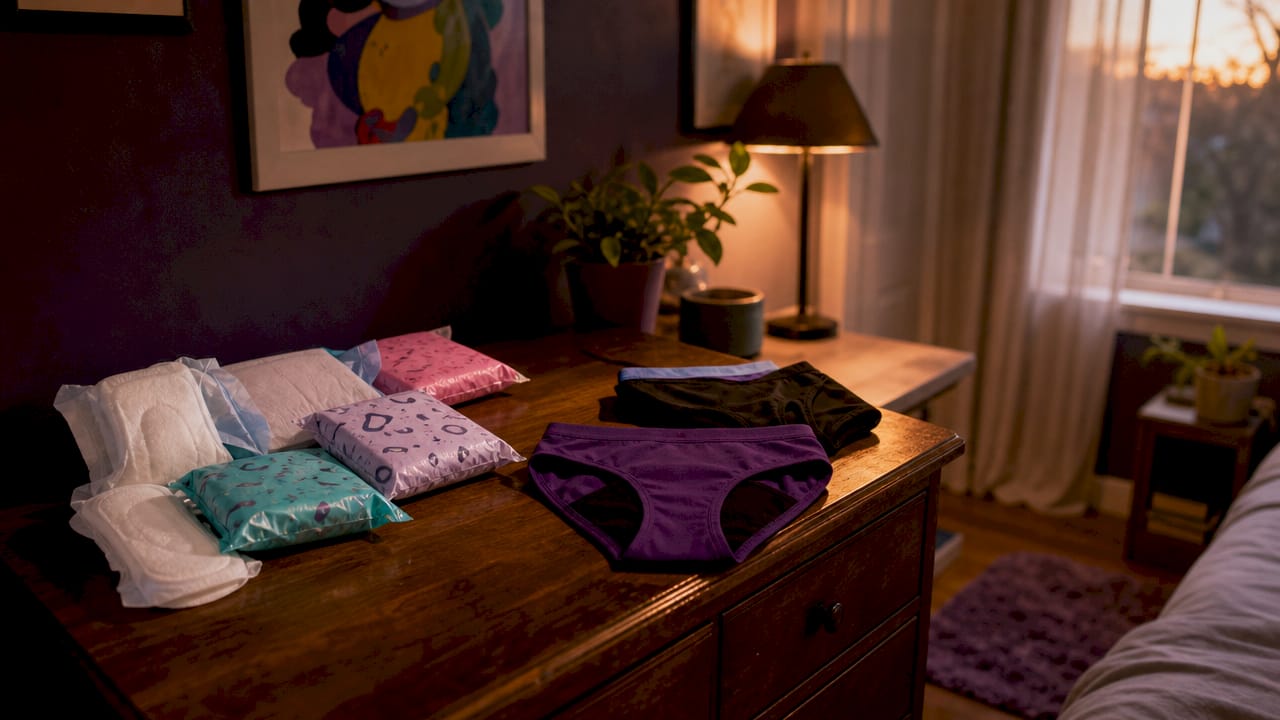
Period underwear from brands like Saalt offers a second layer of confidence. They look like regular underwear but hold fluid without leaking. For a first period, pairing a light overnight pad inside period underwear gives double protection and serious peace of mind.
A few things to keep on hand:
- At least two overnight pads per night (one to wear, one as backup)
- A small zip bag for used pad disposal
- Unscented wipes for quick cleanups
- A change of underwear within easy reach
Pro Tip: Place your backup supplies on your nightstand or in a small basket near your bed before you go to sleep. Reaching for them in the dark is much easier than searching a drawer.
What time should you change your pad before bed?
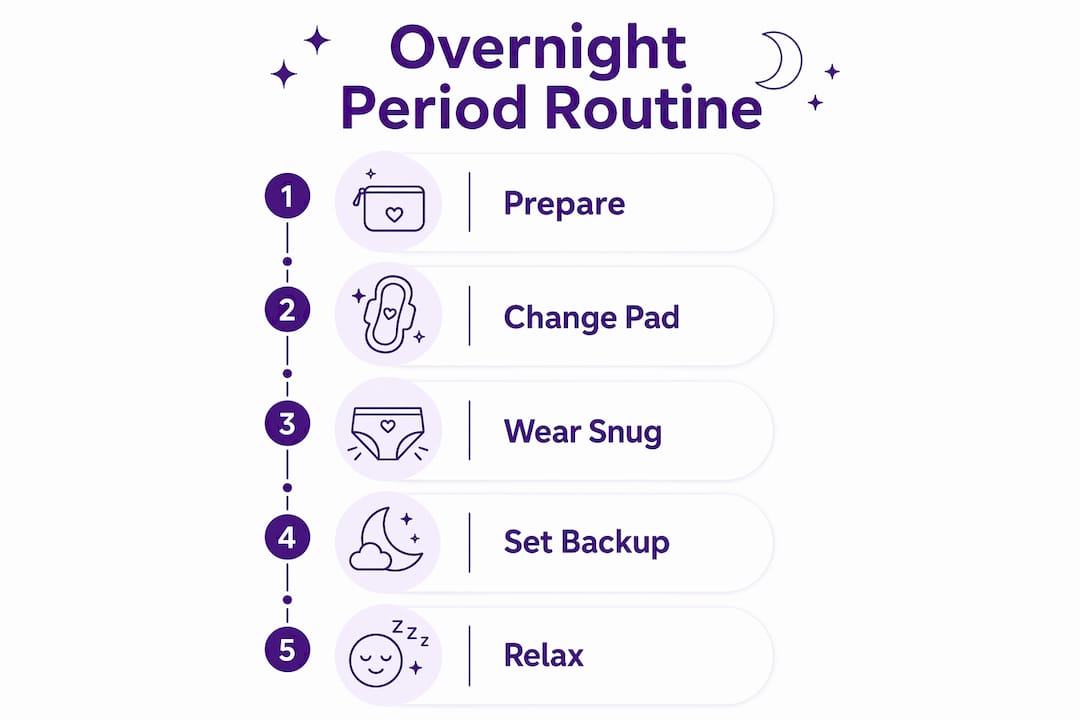
Timing is the most overlooked part of overnight period protection. Changing to a fresh pad right before sleep maximizes the pad’s full absorbency for the entire night. A pad put on at 7 p.m. and worn until midnight has already used several hours of its capacity before you even close your eyes.
Think of it like starting a countdown. The moment you put on a fresh pad, the clock begins. You want that clock to start as close to sleep as possible, not hours earlier.
Placement also matters based on how you sleep:
- Back sleepers: Center the pad slightly toward the back for the best coverage.
- Side sleepers: Make sure the pad extends far enough toward the back. Side sleeping shifts flow, so a longer pad is especially important.
- Stomach sleepers: Position the pad slightly forward. A longer front panel helps here.
Clothing choices affect how well the pad stays in place. Snug, high-waisted cotton underwear holds the pad firmly against the body. Loose boxers or silky fabrics let the pad shift, which is one of the most common causes of leaks. Cotton pajama pants add another layer of stability.
Pro Tip: Avoid wearing a pad for more than 3 to 4 hours before bed. If you put one on after school, change it again right before you lie down.
Your step-by-step overnight routine for the first period
A consistent routine removes the guesswork and reduces first period anxiety. Here is a practical checklist to follow from bedtime to morning.
Before bed:
- Use the bathroom and wash your hands.
- Remove your current pad and wrap it in toilet paper or the wrapper from the new one.
- Apply a fresh overnight pad, checking placement based on your sleep position.
- Put on snug cotton underwear and comfortable pajamas.
- Set a backup pad, wipes, and a clean pair of underwear on your nightstand.
- Place a dark-colored towel under your sheet if you want extra protection for your mattress.
If you wake up during the night:
- Check your pad. If it feels full or uncomfortable, change it.
- Change pads every 3 hours or sooner on heavier flow days. This is especially true for the first two days of a period, which tend to be the heaviest.
- Keep the lights low and move calmly. There is no emergency here, just a normal body process.
Morning routine:
- Change your pad first thing after waking up.
- Rinse with warm water if needed. Unscented soap is fine for external cleaning.
- Check your pajamas and sheets. If there is a small stain, cold water removes it faster than hot water.
Overnight comfort for cramps:
| Discomfort | What helps |
|---|---|
| Mild cramps | Heating pad on low, placed on the lower abdomen |
| Bloating | Loose pajamas, light stretching before bed |
| Restlessness | Calm music, dim lighting, a familiar routine |
| Anxiety | Talking to a parent, reading, or journaling before sleep |
First periods are often light initially but can include heavier overnight flow without warning. Preparing for the heavier scenario means you are never caught off guard.
Common mistakes that cause overnight leaks
Most overnight leaks are not random. They follow predictable patterns, and fixing them is straightforward once you know what to look for.
The most common mistakes:
- Using a regular day pad instead of an overnight pad. Day pads are shorter and less absorbent. They are not designed for lying down.
- Putting on a pad hours before bed and not changing it at bedtime.
- Wearing loose or slippery underwear that lets the pad shift.
- Skipping the backup supplies on the nightstand.
- Ignoring discomfort and hoping it resolves by morning.
Effective overnight protection depends more on timing, fit, and product design than absorbency numbers alone. A highly absorbent pad placed incorrectly or worn too long still leaks.
First period anxiety is real, and it can make small problems feel enormous at 2 a.m. The most grounding thing to remember is that a leak is not a failure. It is information. It tells you to try a longer pad, change your underwear choice, or adjust your timing. Every girl figures this out through a little trial and error.
“If bleeding soaks through a pad every hour for several hours, or if your period lasts longer than 7 days, that is worth a conversation with a doctor.” — Carilion Clinic
Most first periods do not require medical attention. But knowing the line between normal and worth checking gives both girls and parents confidence.
How parents can support their daughters through the first overnight period
The most effective thing a parent can do is stay calm and be practical. Calm, practical communication reassures young girls and builds the confidence they need to manage their first period overnight without fear.
Start before the period arrives. Assemble a small overnight kit together. Walk through the steps of applying a pad, choosing underwear, and setting up the nightstand. Practicing once in a low-stakes moment means the real night feels familiar, not frightening.
What parents can do right now:
- Stock the bathroom with overnight pads and period underwear before the first period starts.
- Show your daughter where supplies are kept and how to use them.
- Talk through the overnight routine so she knows what to expect.
- Let her know she can wake you up if she needs help. No question is too small.
- Check in gently the morning after. Ask how she slept, not just whether she leaked.
Tailor the conversation to your daughter’s comfort level. Some girls want detailed instructions. Others want a quick overview and space to figure it out. Both responses are normal. Signs your daughter’s period is approaching can help you time these conversations well before the first night arrives.
Pro Tip: Write out the overnight steps on a small card and tape it inside the bathroom cabinet. Having a reference she can read privately removes the pressure of remembering everything in the moment.
If your daughter reports soaking through protection repeatedly, experiences severe pain, or seems very distressed, those are signals to consult a pediatrician. Most first periods are manageable at home, but parental awareness is the safety net.
Key takeaways
Handling the first period overnight comes down to three things: the right product, the right timing, and a calm, prepared routine.
| Point | Details |
|---|---|
| Choose overnight-specific products | Overnight pads and period underwear offer the length and absorbency needed for sleeping. |
| Time your pad change at bedtime | Apply a fresh pad right before sleep to maximize absorbency through the night. |
| Set up your nightstand in advance | Keep a backup pad, wipes, and clean underwear within arm’s reach before you lie down. |
| Clothing fit prevents leaks | Snug, high-waisted cotton underwear holds pads in place and reduces overnight shifting. |
| Parents: practice the routine early | Walking through the steps before the first period arrives reduces anxiety significantly. |
What I’ve learned about the first overnight period
Here is something I want to say directly: the first overnight period is almost never as bad as the anticipation of it. The worry is usually bigger than the event. That does not mean it is easy. It means the preparation you do beforehand does most of the heavy lifting.
What I have seen, again and again, is that girls who feel informed feel calm. And girls who feel calm handle the unexpected so much better. A small leak at 3 a.m. is manageable when you already know where your backup pad is and what to do next. It becomes a crisis only when everything is a surprise.
I also want to say this to parents: your energy sets the tone. If you approach this with quiet confidence and practical readiness, your daughter will mirror that. You do not need to have all the answers. You just need to be present and prepared enough to say, “We’ve got this covered.”
Coping with first menstruation is not about being perfect. It is about being ready enough. And ready enough is absolutely within reach for every girl and every family.
— The Monthlies
Get your daughter ready with the right kit
The overnight period routine is so much easier when everything is already in one place. Themonthliesbox created the Amethyst Box specifically for girls approaching their first period. It includes practical overnight supplies, affirmations, and educational materials built around the Amethyst Method: affirm, understand, and equip.

For girls who need supplies on the go or want a portable backup kit, the On-The-Go Kit keeps overnight essentials organized and ready wherever she is. Both options take the guesswork out of preparation and give girls and parents a confident starting point. Welcome to LavenHaven. We’ve been waiting for you.
FAQ
What is the best pad for overnight period protection?
Overnight pads labeled “maxi” or “overnight” with a longer back panel are the best starting point. Pairing them with period underwear from brands like Saalt adds extra security for heavier flow nights.
How often should you change a pad overnight?
Change pads every 3 hours or sooner if the pad feels full. On the first two days of a period, flow tends to be heavier, so checking once during the night is a good habit.
What should I do if my period starts for the first time at night?
Stay calm, apply an overnight pad, and put on snug cotton underwear. If you do not have overnight pads, a regular pad folded slightly toward the back works as a short-term option until morning.
How can parents help with overnight period anxiety?
Calm, practical support makes the biggest difference. Walk through the routine together before the first period arrives, keep supplies stocked, and let your daughter know she can ask for help at any hour.
When should overnight bleeding be a concern?
Seek medical advice if bleeding soaks through a pad every hour for several consecutive hours, or if the period lasts longer than 7 days. Most first periods are light and manageable, but heavy or prolonged bleeding warrants a doctor’s visit.
0 comments