

Introducing menstrual products to your daughter is one of the most practical and loving things you can do before her first period arrives. The average first period comes between ages 12 and 13, though anywhere from 8 to 16 is completely normal. Menstrual bleeding typically lasts 3 to 7 days, and cycles can range from 21 to 45 days. Starting with the right products, the right words, and the right timing makes all the difference. This guide gives you a clear, step-by-step path through product options, kit building, and the conversations that help your daughter feel confident and ready.
When is the right time to introduce menstrual products to your daughter?
The right time to start is earlier than most parents expect. Experts recommend beginning conversations about periods around ages 8 or 9, well before the first period arrives. Starting early gives your daughter time to absorb information gradually, ask questions, and build comfort at her own pace.
Readiness is not just about age. Watch for physical signs like breast development or pubic hair growth, which typically appear 2 to 3 years before the first period. Emotional readiness matters too. If your daughter is asking questions about bodies or periods, that curiosity is a green light to go deeper.
The biggest mistake parents make is treating this as a one-time “big talk.” Multiple conversations over time normalize menstruation far more effectively than a single sit-down. Each short, relaxed conversation builds on the last. Think of it less like a lecture and more like a running dialogue that grows with her.
- Start with simple body basics around age 8 or 9
- Introduce the word “period” naturally in everyday conversation
- Answer questions honestly and without embarrassment
- Revisit the topic as she gets closer to puberty
Pro Tip: Keep a period-themed book on her shelf, like a puberty guide written for girls. It gives her a private way to explore questions she might feel shy asking out loud.
Normalizing menstruation early reduces anxiety significantly. Girls who feel informed before their first period report feeling less scared and more in control. That confidence starts with you.
What menstrual product options are best for a daughter’s first period?
Pads and period underwear are the best starting products for most girls. They are external, easy to use, and require no body insertion. Pads should be changed every 3 to 4 hours, which is a simple habit to build. Period underwear works like regular underwear and absorbs flow without any additional product, making it a great backup or standalone option.
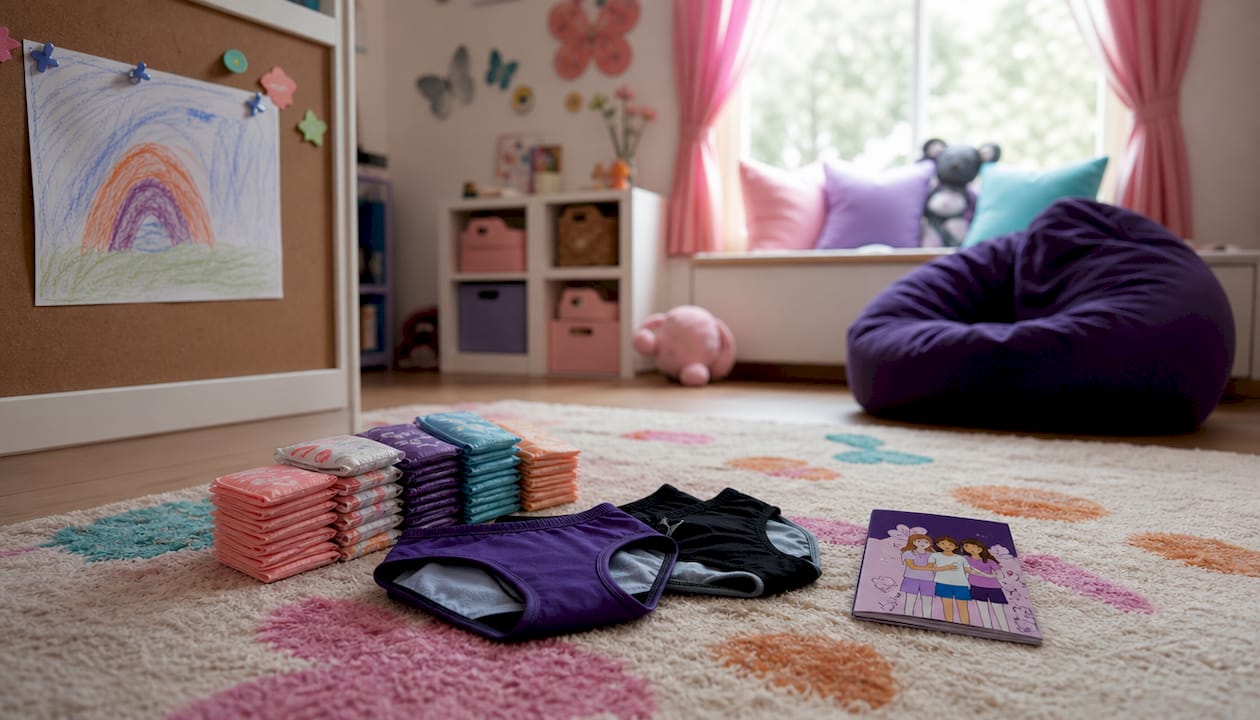
External products: where to start
Pads come in a range of absorbency levels, from light panty liners to overnight pads. For a first period, a regular absorbency pad is the most practical choice. Period underwear ranges in price from $10 to $45 per pair and is reusable, making it a cost-effective long-term option. Starting with a mix of both gives your daughter flexibility and a backup plan.
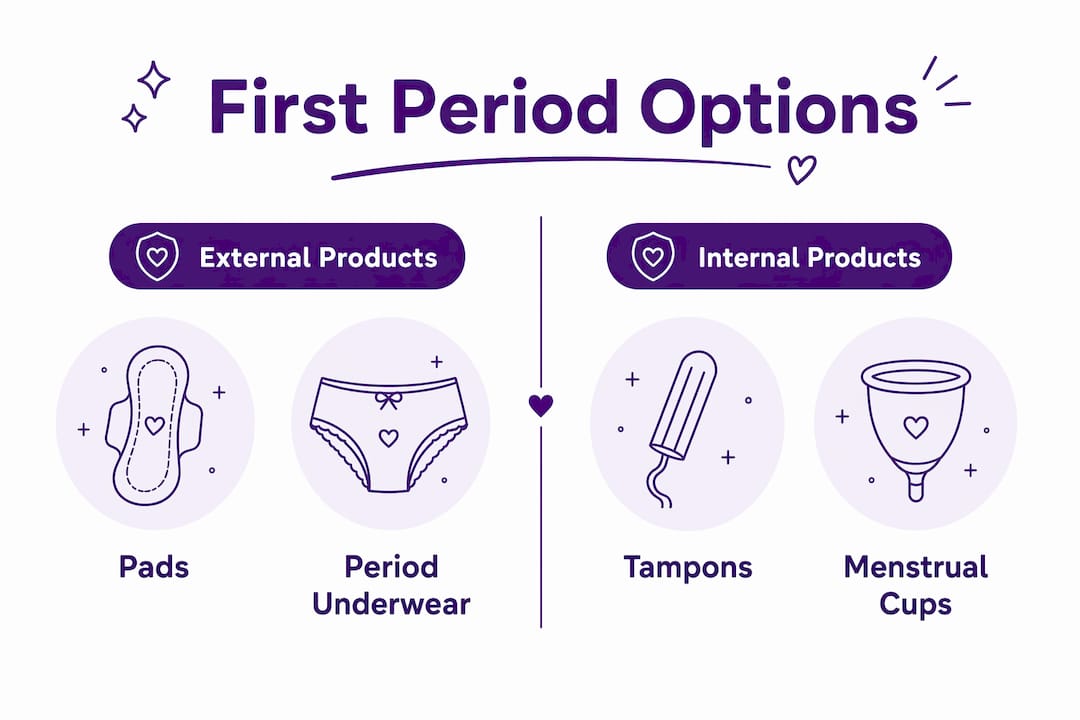
Internal products: when to consider them
Tampons and menstrual cups are internal products that require more body awareness and comfort. Gynecologists are clear that the best product is the one your daughter feels confident using. There is no rush to introduce tampons or cups. When you do, choose slim or “light” absorbency tampons as a starting point. Tampons should be changed every 4 to 8 hours.
| Product | Best for | Key consideration |
|---|---|---|
| Pads | First period beginners | Change every 3–4 hours |
| Period underwear | Backup or standalone use | Reusable, $10–$45 per pair |
| Slim tampons | Girls ready for internal products | Change every 4–8 hours |
| Menstrual cups | Older teens with body confidence | Requires practice and comfort |
- Choose regular absorbency pads for the first period
- Add period underwear as a reliable backup
- Wait until your daughter asks about tampons before introducing them
- Never pressure her to use a product she is not ready for
Pro Tip: Let your daughter hold and examine each product before her period arrives. Familiarity removes fear. A pad she has already touched feels far less intimidating when she actually needs it.
For a deeper look at first period product options, Themonthliesbox has a full 2026 guide written specifically for parents navigating this decision.
How to build a practical period kit for school and home
A good period kit is simple, discreet, and ready before she needs it. Emergency kits work best when they fit in a backpack side pocket without drawing attention. Bulky kits create social anxiety. A small, water-resistant pouch keeps everything contained and easy to grab.
What to pack in her kit
A school kit needs just a few items to cover the basics:
- 2 to 3 pads or panty liners (panty liners cost roughly $7 per box)
- One pair of spare underwear in a small zip bag
- Individually wrapped hygiene wipes
- A small, discreet pouch in a neutral color
Keep a more complete kit at home with a wider range of absorbency options, pain relief like ibuprofen if age-appropriate, and a heating pad for cramps. The home kit is her comfort base. The school kit is her safety net.
Personalizing the kit
Ask your daughter what she wants in her kit. Her input matters. Some girls prefer unscented products. Others want a specific pad brand they have already tried. Letting her choose builds ownership and confidence. A kit she helped build is a kit she will actually use.
| Kit type | Key items | Goal |
|---|---|---|
| School kit | 2–3 pads, spare underwear, wipes, small pouch | Discreet, compact, ready for emergencies |
| Home kit | Full pad range, pain relief, heating pad | Comfort and full cycle management |
The Monthlies On-The-Go Kit from Themonthliesbox is designed exactly for this purpose. It is compact, thoughtfully packed, and built for young girls who need period essentials without the bulk.
How can you support your daughter’s comfort with menstrual products?
Supporting your daughter means meeting her where she is, not where you think she should be. Body familiarity is the foundation of confidence with any menstrual product, especially internal ones. Encourage her to use a mirror to look at her vulva before her period arrives. This is not awkward. It is practical, and it removes the mystery that makes internal products feel scary.
Here is a simple progression for building comfort over time:
- Start with external products like pads during her first few cycles
- Introduce the idea of tampons or cups only when she expresses interest
- Encourage her to practice tampon insertion on a non-period day to reduce pressure
- Suggest using a water-based lubricant during practice to ease the process
- Respond to mistakes or discomfort with calm reassurance, not correction
Practicing insertion outside of her period removes the stress of “getting it right” while bleeding. It is a low-stakes way to build technique and confidence. Many girls find that one or two practice attempts are all they need before feeling ready.
Pro Tip: If she tries a tampon and it feels uncomfortable, do not push her to try again right away. Comfort builds at its own pace. A girl who feels supported through a setback is far more likely to try again than one who feels pressured.
The goal is not to rush her through every product option. The goal is to help her feel capable and supported at every stage. A self-care routine for pre-teen girls can also help her build healthy habits around her cycle before it even begins.
Key Takeaways
The most effective way to introduce menstrual products to your daughter is to start early, follow her lead on product readiness, and keep the conversation ongoing rather than treating it as a single event.
| Point | Details |
|---|---|
| Start conversations early | Begin talking about periods around ages 8 or 9, before physical signs appear. |
| Lead with external products | Pads and period underwear are the best first products for beginners. |
| Build a discreet kit | A compact, water-resistant pouch with 2–3 pads and spare underwear covers school emergencies. |
| Follow her comfort level | Never push internal products before she is ready; confidence matters more than product type. |
| Practice builds readiness | Practicing tampon use on non-period days reduces anxiety and improves technique. |
What I’ve learned about preparing girls for their first period
Parents often tell me they waited too long because they did not want to “scare” their daughter. That instinct comes from love, but it usually backfires. Girls who learn about periods after they start feel caught off guard. Girls who learn before feel prepared. The difference in how they experience that first period is significant.
The other thing I have seen again and again is parents defaulting to the product they personally use. That is understandable, but your daughter is not you. She may prefer period underwear over pads. She may want to try a menstrual cup at 14. She may never want to use tampons at all. All of those choices are valid. Your job is to give her options and let her find what works for her body.
What I believe most strongly is this: the product matters far less than the conversation around it. A daughter who knows she can come to you with questions, discomfort, or confusion is a daughter who will navigate her period with confidence. That trust is built in small moments, not big talks. Start those moments now, and you will both be ready when the time comes.
— The
Themonthliesbox makes first period prep feel supported
Pulling together the right products, the right words, and the right timing is a lot to manage on your own. Themonthliesbox was built to make that easier for parents and daughters alike.
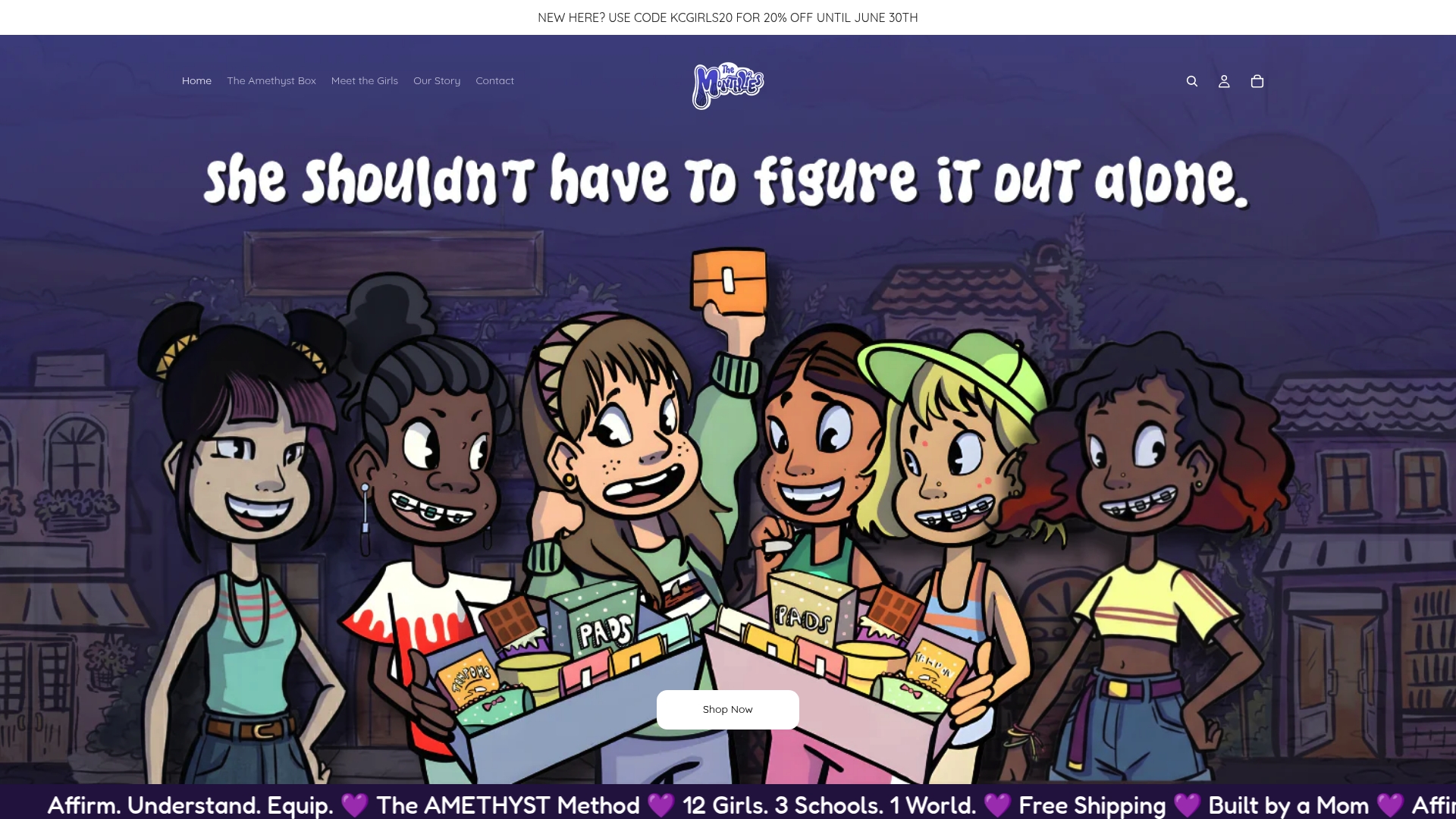
The Amethyst Box from Themonthliesbox is a first period kit designed around the Amethyst Method: affirm, understand, and equip. It combines practical period supplies with affirmations and educational materials that open the door to real conversation. Every item is chosen to help your daughter feel confident, not caught off guard. If you want to give her something that covers both the practical and the emotional side of her first period, the Amethyst Box is the place to start.
FAQ
What age should I start talking to my daughter about periods?
Experts recommend starting conversations around ages 8 or 9, before physical puberty signs appear. Early, ongoing dialogue reduces anxiety and builds trust over time.
What is the best first menstrual product for a young girl?
Pads and period underwear are the recommended starting products because they are external and easy to use. Gynecologists advise introducing tampons or cups only when a girl feels ready and asks about them.
How often should my daughter change her pad?
Pads should be changed every 3 to 4 hours during normal flow. Changing more frequently is fine and helps maintain comfort and hygiene.
How do I help my daughter feel less embarrassed about periods at school?
A small, discreet pouch that fits in a backpack side pocket keeps her kit private and easy to access. Keeping the kit simple, with just 2 to 3 pads, spare underwear, and wipes, reduces bulk and social anxiety.
When should I consult a doctor about my daughter’s period?
Consult a doctor if your daughter has not started her period by age 15. A medical evaluation can rule out any underlying health concerns and provide reassurance for both of you.
0 comments