

Most menstrual odor is normal — try these three things now to reduce it: change your period product regularly, wash the vulva with warm water only, and switch to breathable underwear or an internal option like a cup. A metallic or musky smell is just blood meeting normal vaginal bacteria. But a fishy, rotten, or persistent odor, especially paired with itching, unusual discharge, pain, or fever, is a signal to see a clinician.
TL;DR:
- Using menstrual cups or discs can reduce odor by limiting blood exposure to air, unlike pads that sit against the skin and trap heat.
- Persistent foul or fishy odor, along with symptoms like itching or unusual discharge, indicates the need for medical evaluation rather than hygiene adjustments.
- Proper timing in changing products every 3 to 4 hours for pads and every 8 to 12 hours for cups prevents trapped moisture that causes odor buildup.
- Scented products, douching, or internal washes disrupt vaginal pH and protective bacteria, often worsening odor rather than improving it.
- Heavy activity or hot weather increases sweat, requiring more frequent product changes and prompt external rinsing to control odor effectively.
Table of Contents
- Menstrual Odor Control: Your Priority Checklist This Cycle
- Why Does Period Blood Smell, and When Does It Mean Infection?
- Does Your Period Product Choice Affect Odor?
- Are Scented Products and Douching Making Odor Worse?
- When Should You See a Doctor About Period Odor?
- Can Diet and Hydration Change How Your Period Smells?
- Do Home Remedies Actually Help With Period Odor?
- Can Probiotics Help With Vaginal and Menstrual Odor?
- How Do Heat and Exercise Affect Period Odor?
- Talking to Your Daughter About Period Smell Without the Shame
- Ready for Any Period? What The Monthlies Puts in Your Kit
- Sources
Menstrual Odor Control: Your Priority Checklist This Cycle
You don’t need a complicated routine to keep menstrual odor in check. You need the right actions, done at the right time. Here’s the order that actually moves the needle:
- Change pads every 3 to 4 hours and tampons every 4 to 8 hours, never longer, according to CDC guidance on menstrual hygiene. Trapped moisture is what turns a mild smell into a noticeable one.
- Empty and rinse a menstrual cup every 8 to 12 hours, and change period underwear at least once a day, more often on heavy days.
- If you forgot a tampon for longer than 8 hours, remove it right away and watch for a strong, foul odor or fever, both signs you should call a doctor.
- Wear breathable cotton underwear and avoid tight synthetic fabrics that trap heat and sweat against the skin.
- Pack a small wet bag with a spare pad, wipes, and clean underwear so a heavy-flow surprise at school or work doesn’t turn into an all-day worry.
Pro Tip: Set a phone alarm for product changes during the first heavy days of your period. Odor control is almost always a timing problem, not a hygiene failure.
Heavy flow days sometimes call for doubling up, like a tampon plus a thin pad as backup. That’s normal and doesn’t mean something is wrong. It just means your body is asking for more frequent check ins.
Why Does Period Blood Smell, and When Does It Mean Infection?
Blood itself doesn’t have a strong smell. What you notice is blood oxidizing as it hits air, mixing with sweat, and interacting with the bacteria that live in the vagina naturally. That’s a normal, self-cleaning process, not evidence of poor hygiene.
The Cleveland Clinic explains that most menstrual odor falls into this harmless category. But certain smells point somewhere specific:
- A fishy odor often signals bacterial vaginosis, an imbalance in vaginal bacteria that’s common and treatable.
- A rotten or very foul smell can mean retained material, like a forgotten tampon.
- Yeast infections don’t usually cause a strong odor at all. Instead, watch for thick discharge, itching, and irritation.
- Sweat, certain medications like antibiotics, and hormonal shifts across your cycle can all shift how strong or different your natural scent is day to day.
One insight worth sitting with: chasing a completely scentless body is the wrong goal. The vagina maintains its own bacterial balance, and trying to eliminate all scent through washing or products usually backfires by disrupting that balance instead of protecting it.
Does Your Period Product Choice Affect Odor?
It does, more than most people realize. The mechanism is simple: air exposure speeds up oxidation, and oxidation is what produces that metallic smell.
- Menstrual cups and discs collect flow internally, limiting air contact, which is why many people notice less odor with these products compared to pads, according to HealthPartners. Learn more about care and fit in our complete guide to menstrual cups.
- Pads and liners sit against skin and expose blood to air continuously, which is exactly why changing frequency matters more than which brand you buy.
- Period underwear needs proper laundering, cold water rinse first, then a regular wash cycle, to prevent buildup that causes odor over time, per Planned Parenthood’s product guidance.
- On heavy days, combining a cup with a thin backup pad or period underwear covers both leak prevention and odor control at once.
- Switch products immediately if you notice ongoing irritation, unusual pain with insertion, or a smell that doesn’t improve after changing and washing. That’s a body signal worth listening to, not pushing through.
Curious how the major categories stack up? Our breakdown of menstrual product types walks through the practical tradeoffs.
Are Scented Products and Douching Making Odor Worse?
Yes, and this is one of the most common mistakes people make trying to solve a problem that scented products actually cause. Douching and scented sprays disrupt the vagina’s natural pH and strip away protective bacteria, which raises infection risk rather than lowering it, according to the CDC.
Here’s what actually helps:
- Wash the external vulva only, using warm water and, if needed, a mild unscented soap. Skip internal washing entirely.
- Stay hydrated and limit smoking, both of which support healthier vaginal bacteria balance over time.
- Choose breathable cotton underwear over synthetic blends, especially overnight.
- Hold off on probiotics or big dietary shifts as a first move. They may support balance for some people, but the evidence is early, and they’re not a substitute for proper hygiene basics.
Pro Tip: If a product claims it will make you smell like flowers, that’s a warning sign, not a benefit. A healthy vagina has its own natural scent, and masking it usually creates more irritation than it solves.
When Should You See a Doctor About Period Odor?
Most odor questions resolve with better timing and product habits. But certain signs mean it’s time for an actual exam, not another hygiene tweak.
- Fishy or very foul odor that persists despite regular product changes and washing.
- Abnormal discharge, unusual color, texture, or amount, alongside the smell.
- Itching, burning, or pelvic pain, especially if it’s new or worsening.
- Fever, which combined with foul odor can signal a retained tampon needing urgent removal.
A clinician typically starts with a history and pelvic exam, then tests vaginal fluid, checking pH, looking for clue cells, and running a KOH test for fishy odor, to pinpoint the cause. Bacterial vaginosis usually clears with antibiotics; yeast infections respond to antifungals. Both are common, treatable, and not a reflection of hygiene habits, as Healthline notes.
Can Diet and Hydration Change How Your Period Smells?
Hydration plays a bigger role than most people expect. When you’re dehydrated, sweat and vaginal secretions become more concentrated, which can intensify any smell that’s already present. Drinking enough water throughout your cycle, not just during your period, helps keep those secretions at a more neutral baseline.
Diet’s influence is real but often overstated online. Strong-smelling foods like garlic, onions, and certain spices can subtly affect body odor generally, including sweat, but there’s no solid evidence they change vaginal or menstrual odor in a dramatic way. Where diet matters more is indirectly: heavily processed foods and excess sugar can contribute to yeast overgrowth in some people, which affects vaginal health, though not usually through smell alone.
Caffeine and alcohol both have mild dehydrating effects, so cutting back slightly during your period, especially on heavy flow days, supports the same hydration goal as drinking more water. None of this replaces proper hygiene timing. Think of diet and hydration as supporting factors that make your baseline healthier, not a fix for an odor problem that’s actually about product changes or infection.
Do Home Remedies Actually Help With Period Odor?
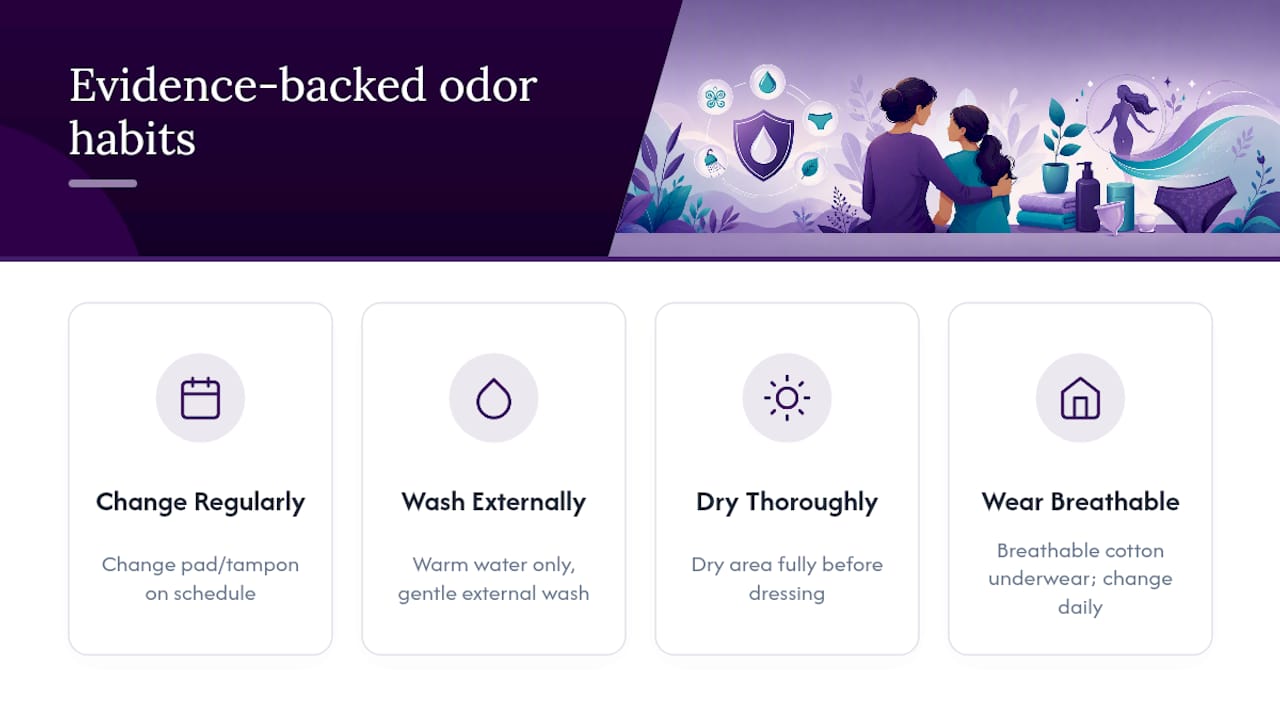
Some do, cautiously. Most don’t, and a few actively cause harm. The safest and most effective home approach isn’t a product at all, it’s a habit: thorough external washing with warm water, followed by fully drying the area before dressing. Moisture left behind in skin folds is an underrated cause of the “sweaty” or oniony smells that changing your pad or tampon alone won’t fix, according to the Cleveland Clinic.
Breathable cotton underwear, changed daily, works better than any spray or wipe on the market. Loose clothing during your period, especially at night, gives skin more airflow and less trapped heat.
What to skip entirely: apple cider vinegar rinses, baking soda soaks, essential oil applications, and any “feminine wash” marketed as deodorizing. None of these are backed by strong evidence, and several carry real risk of irritation or pH disruption. Tea tree oil in particular, sometimes recommended online for its antibacterial properties, can cause significant skin irritation when applied to sensitive vulvar tissue without heavy dilution.
If you want a remedy that’s actually evidence-backed, it’s the boring one: change products on schedule, wash with warm water only, dry thoroughly, and wear breathable fabric. That’s the whole list.
Can Probiotics Help With Vaginal and Menstrual Odor?
The evidence is promising but still developing, not a proven fix. Probiotics, particularly strains of Lactobacillus, are being studied for their role in maintaining the vaginal bacterial balance that keeps odor-causing overgrowth in check. The theory makes sense: bacterial vaginosis involves an imbalance where protective bacteria are outnumbered, and probiotics aim to restore that balance.
In practice, results vary a lot person to person, and probiotics work better as a supportive habit than a treatment for an active infection. If you already have symptoms like fishy odor, abnormal discharge, or itching, a probiotic supplement isn’t a substitute for seeing a clinician and getting appropriately treated with antibiotics or antifungals.
Where probiotics might genuinely help is in the maintenance phase, after an infection has cleared, as one part of keeping vaginal flora balanced going forward. Oral supplements and certain yogurt strains are the most commonly discussed sources, though quality and strain concentration vary widely between products. There’s no harm in trying them as a general wellness habit, but treat any odor claim from a probiotic brand with a healthy dose of skepticism until you’ve ruled out an underlying issue with a proper exam.
How Do Heat and Exercise Affect Period Odor?
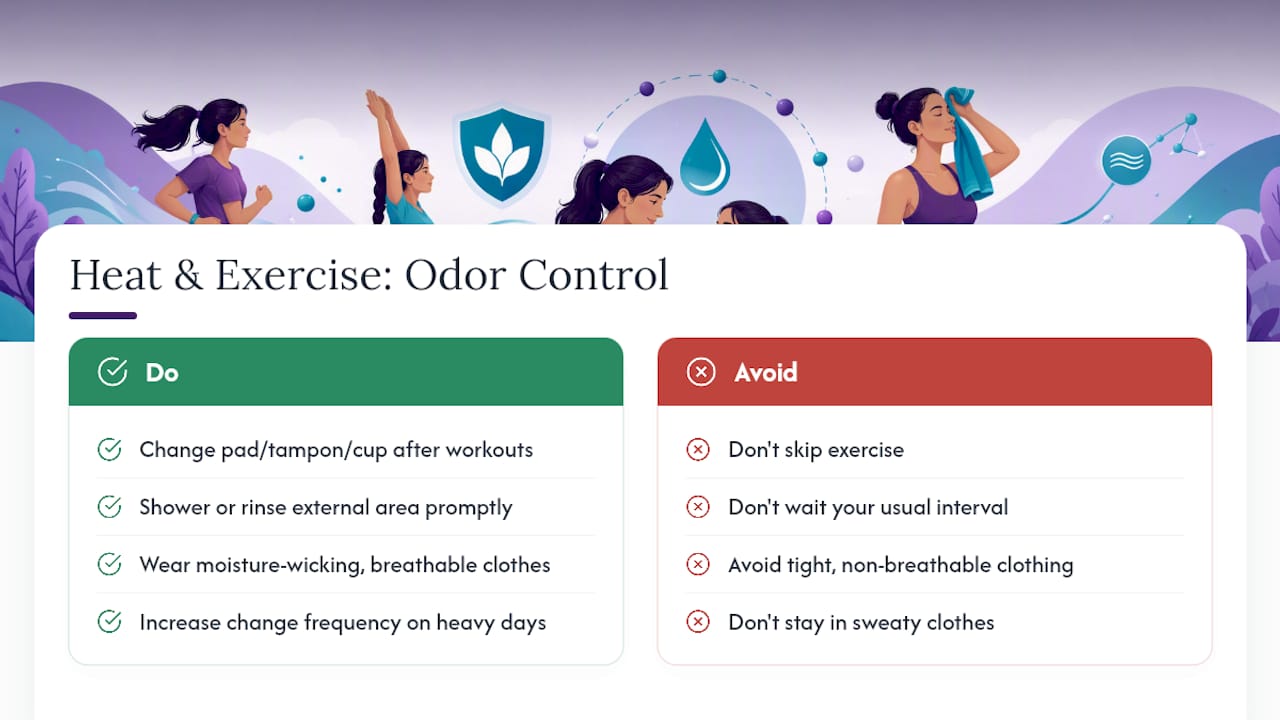
Sweat is the multiplier most people overlook. Heat and physical activity both increase sweat production, and sweat mixing with menstrual blood and normal bacteria creates a stronger scent than either factor alone. This is purely mechanical, not a hygiene failure, but it does mean your usual product schedule may need to tighten up during hot weather or workout days.
Exercise specifically increases blood flow and body temperature, which can make period blood seem heavier or more noticeable in smell right after a workout. The fix isn’t to skip exercise. It’s to plan around it: change your pad, tampon, or cup shortly after intense activity rather than waiting for your usual interval, and shower or at least rinse the external area as soon as you reasonably can.
Humid climates and tight athletic wear compound the same problem by trapping moisture against skin longer. Choosing moisture-wicking, breathable fabric for workouts during your period, and changing out of sweaty clothes promptly afterward, does more for odor control than any product switch. If you’re someone who exercises daily, building a slightly more frequent change schedule into heavy-activity days, rather than sticking to a flat “every few hours” rule, keeps you ahead of the problem instead of reacting to it.
Talking to Your Daughter About Period Smell Without the Shame
A little odor is normal, and saying so plainly, without hedging, is the most useful thing a parent can tell a nervous first-period kid. This is where a puberty preparation method earns its keep: affirm that her body is doing something healthy, help her understand the basic why behind the smell, then equip her with the habits and supplies that make it manageable.
A short script works better than a lecture: “That smell is just blood meeting normal bacteria, it happens to everyone. Changing your pad every few hours keeps it barely noticeable.” Pair that sentence with a working plan, not just words. Our first period hygiene guide offers more scripts like this one.
— The
Ready for Any Period? What The Monthlies Puts in Your Kit
A care package was built around exactly the habits this article covers, because knowing what to do only helps if the right supplies are actually in reach when a period starts. Unlike a single pack of pads grabbed at the last minute, the kit pairs practical supplies with the affirmations and education that make a first period feel manageable instead of alarming.
The LavenHaven Care Package includes starter period supplies, comfort items, and age-appropriate educational materials built on the Amethyst Method, so a girl isn’t just handed a pad and left to figure out the rest. For days away from home, the On-The-Go Kit keeps compact supplies and self-care essentials ready for a quick change at school or on a trip, exactly the kind of preparedness that keeps odor in check when a change can’t wait.
These kits support good habits. They don’t replace medical care. If you or your daughter notice the red-flag symptoms covered earlier, fishy odor, unusual discharge, pain, or fever, a clinician visit comes first. For everything else, start with the LavenHaven Care Package and give her the practical head start every first period deserves.
Sources
- Healthy Habits: Menstrual hygiene | CDC
- Vaginal odor: types, causes, diagnosis & treatment | Cleveland Clinic
- Why does my period smell? Causes and what to do | Healthline
0 comments