

A period bag is a preparedness kit containing the menstrual products, hygiene supplies, and comfort items a young girl needs to handle her first period with confidence. The right period bag must-haves list goes beyond just pads. It covers spare underwear, wipes, disposal solutions, pain relief, and a pouch that feels personal and easy to use. Research shows 47% of menstruators rely primarily on pads, making them the clear starting point for any first-period kit. Putting this bag together before her period arrives is one of the most practical things you can do as a parent.
1. What hygiene products belong in a first period bag?
Pads are the most beginner-friendly menstrual product available. They attach directly to underwear, require no internal insertion, and come in a range of absorbencies. Experts recommend packing 2–3 pads of varying absorbency: one regular, one heavy-flow, and one panty liner. That variety covers the unpredictable flow patterns common in the first few years of menstruation.
56% of users aged 18–19 rely on pads for emergencies, which confirms pads as the right anchor product for a young girl’s kit. Panty liners are especially useful at the start and end of a cycle, when flow is lightest. 43% of menstruators use panty liners at these lighter stages, so including one or two in the bag makes practical sense.
Tampons are an option for some girls, but they require more instruction and comfort with internal use. They are not the right first choice for most beginners. Period underwear and reusable pads are worth knowing about as sustainable alternatives, though they work better once a girl understands her flow pattern. For a first-period kit, keep the focus on disposable pads and liners.
| Product | Best for | Beginner-friendly? |
|---|---|---|
| Regular pad | Moderate flow days | Yes |
| Heavy-flow pad | Heavier days or overnight | Yes |
| Panty liner | Light days, spotting | Yes |
| Tampon | Active days, swimming | Requires practice |
| Period underwear | Backup or light days | Yes, with guidance |
Pro Tip: Pack pads in two absorbency levels from the start. First periods are unpredictable, and having options prevents the panic of running out or using the wrong product.
2. Practical accessories to include for comfort and hygiene
The hygiene accessories in a period bag matter just as much as the menstrual products themselves. Unscented wipes are the most practical addition. They allow a girl to clean up during a pad change without needing access to a sink. Hand sanitizer in a travel-sized bottle keeps hands clean before and after handling products, especially in school bathrooms.
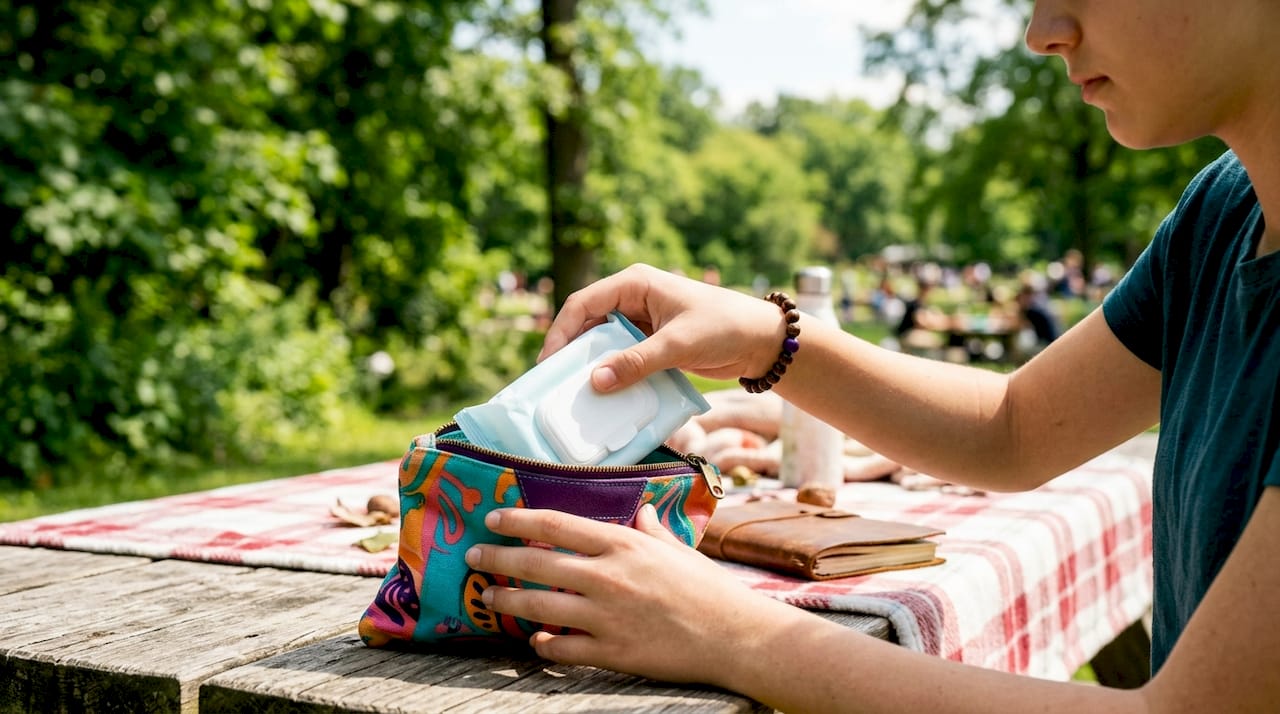
Disposal is an area many parents overlook. Disposable bags or wet bags help store used products discreetly, which matters in public restrooms where bins are not always within reach of the stall. A small zip-lock bag or a dedicated scented disposal bag works well. Wet bags are reusable and seal odors, making them a practical long-term choice.
Spare underwear is non-negotiable. Leaks happen, especially in the first few periods when flow is hard to predict. A stain remover pen or a small bar of soap gives her a way to treat stained clothing before it sets. These small additions prevent embarrassment and build real confidence.
Pain relief deserves a spot in the kit too. Stick-on heat patches are a discreet, non-pill option that works well in school settings where taking medication may require nurse involvement. For girls who can take over-the-counter pain relievers, a small sealed packet of ibuprofen or acetaminophen is worth including, with clear instructions from a parent or guardian.
Here is a practical accessories checklist for the bag:
- Unscented wipes (travel pack)
- Travel-sized hand sanitizer
- Disposable scented bags or a small wet bag
- Spare underwear (one pair, sealed in a zip-lock)
- Stain remover pen or mini soap bar
- Stick-on heat patches (2–3)
- Optional: small packet of pain reliever with dosage note
Pro Tip: Choose unscented wipes specifically. Scented products can irritate sensitive skin and disrupt the body’s natural balance. Plain, fragrance-free wipes do the job without the risk.
3. How to organize and maintain a period bag for school and travel
Organization is what turns a bag of supplies into a kit that actually gets used. The two-pouch system is the most practical approach. A small, discreet pouch holds the daily school essentials: two pads, a liner, wipes, and a disposal bag. A larger pouch or cosmetic bag holds the full supply for travel, overnight stays, or longer outings.
The small school pouch should fit inside a backpack pocket without drawing attention. Many girls feel self-conscious about carrying period supplies in front of classmates. A plain, zippered pouch or a small pencil case works perfectly. The goal is easy access without the need to dig through a full bag. You can find more guidance on school period kit setup to help your daughter feel prepared and confident at school.
Maintenance is simple but easy to forget. Check the bag every two to three weeks and replace anything used. Set a reminder on your phone if that helps. Pads have a shelf life of several years when stored properly, so keeping extras in the bag is never wasteful.
A few practical organization tips:
- Restock the small pouch every Sunday evening as part of a weekly routine
- Keep the larger travel kit in a consistent spot at home so it is always findable
- Label the inside of the bag with your contact number in case it gets left somewhere
- Replace heat patches and wipes first, as these are used most often
Choosing the bag based on her personality matters more than most parents expect. A girl who loves bright colors may feel more comfortable with a bold floral pouch. A girl who prefers discretion may want something that looks like a regular pencil case. The bag she actually wants to carry is the bag she will use.
4. Customizing the kit with optional items and sustainable alternatives
A period bag does not have to be purely functional. Confidence-building comfort items like a small piece of chocolate, a lip balm, or a hair tie make the kit feel personal and reassuring. These additions signal to a girl that her comfort matters, not just her hygiene. That emotional layer is worth including.
Sustainable options are worth introducing once she has a few cycles of experience. A low-waste period kit built around period underwear and reusable pads reduces both waste and long-term cost. Biodegradable disposal bags are an easy swap that requires no change in routine. Menstrual cups are an option for older teens who are comfortable with internal products, but they are not the right starting point for most young girls.
For parents who want to explore eco-friendly period kit items, the transition works best when introduced gradually. Start with one reusable item alongside familiar disposable products. Let her decide what she prefers after trying both. Forcing a switch before she is ready creates stress rather than confidence.
Optional additions worth considering:
- Lip balm or small lotion for comfort
- Hair tie or mini comb
- A small note of encouragement from you
- Biodegradable disposal bags
- Period underwear as a backup layer
- A small journal or affirmation card
The best period kit is the one she feels good about carrying. Personalization is not a luxury. It is what makes the kit something she will actually use when she needs it most.
Key takeaways
A well-built period bag combines the right menstrual products, practical hygiene accessories, and personal comfort items to give a young girl real confidence from her very first period.
| Point | Details |
|---|---|
| Start with pads and liners | Pack one regular, one heavy-flow pad, and one liner to cover unpredictable first flows. |
| Add hygiene accessories | Include unscented wipes, hand sanitizer, disposal bags, and spare underwear for every outing. |
| Use the two-pouch system | A small daily pouch and a larger travel kit balance convenience with full preparedness. |
| Personalize the bag | Choose a pouch style she likes and add comfort items so she feels supported, not just supplied. |
| Restock regularly | Check and refill the bag every two to three weeks to avoid running out at the wrong moment. |
What I’ve learned about building a period bag that actually works
Most period bag advice focuses entirely on products. The part that gets skipped is the emotional design of the kit. A bag that looks clinical or embarrassing will sit at the bottom of a backpack, unused, exactly when it is needed most.
The girls who feel most prepared are not the ones with the most products. They are the ones whose bags feel like theirs. That means a pouch in a color she chose, a lip balm she picked out, and maybe a small note from you tucked inside. Those details cost almost nothing. Their impact is real.
Parents often ask how many products to include. The honest answer is: more than you think, less than you fear. Two pads, a liner, wipes, a disposal bag, and spare underwear cover the vast majority of first-period situations. You do not need to pack for every scenario. You need to pack for the most likely ones.
The first period product options available today are genuinely better than what most of us grew up with. Pads are thinner, more absorbent, and more comfortable. Heat patches are discreet and effective. Period underwear works as a real backup. Use that progress. Build a kit that reflects it.
One last thing: talk to her about the bag before she needs it. Walk her through each item. Tell her what it is for and how to use it. That five-minute conversation does more for her confidence than any product you include.
— Themonthliesbox
Themonthliesbox has the first-period kit covered
Putting together a period bag from scratch takes time, research, and a lot of second-guessing. Themonthliesbox does that work for you.
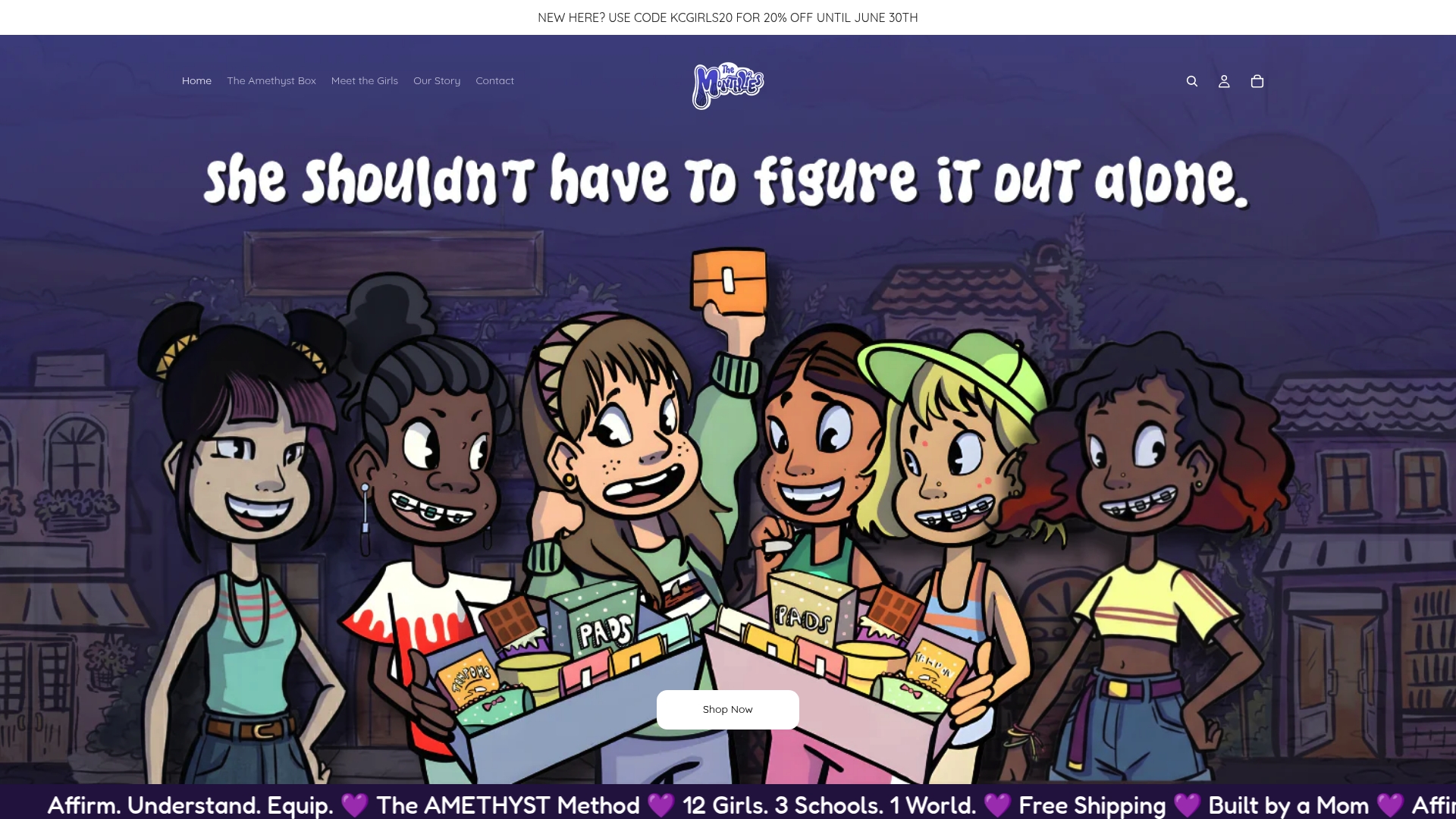
The Amethyst Box is built specifically for girls starting their first period. It combines practical period supplies with affirmations, educational materials, and comfort items, all curated around the Amethyst Method: affirm, understand, and equip. For parents who want a ready-to-go option, the On-The-Go Kit packs period and self-care essentials into a compact, travel-friendly format. Both are designed to make her feel supported from day one, not just supplied.
FAQ
What should go in a period bag for a first period?
A first-period bag should include 2–3 pads of varying absorbency, a panty liner, unscented wipes, hand sanitizer, a disposal bag, and spare underwear. Comfort items like a lip balm or heat patch are a helpful addition.
How often should a period bag be restocked?
Check and restock the bag every two to three weeks. Replace used pads, liners, wipes, and disposal bags so the kit is always ready before her next cycle.
Are tampons appropriate for a first-period kit?
Tampons are not the recommended starting point for most young girls. Pads are simpler, require no internal insertion, and are used by the majority of young menstruators during their first years.
What is the best type of bag to use for a period kit?
A small zippered pouch works well for a daily school kit. Choose a style she feels comfortable carrying, whether that is a bright pattern or a plain pencil case, since she is more likely to use a bag she actually likes.
Can a period bag include sustainable products?
Yes. Biodegradable disposal bags are an easy first swap. Period underwear works well as a backup layer. Reusable pads and menstrual cups are better introduced after she has a few cycles of experience with disposable products.
0 comments