

Pack a heat source, absorbent protection, an OTC pain reliever, comfortable clothing, hygiene wipes with disposal bags, and a calming item like ginger tea or lavender oil. Heat handles cramps, protection handles leaks, the pain reliever backs up the heat, soft clothing and socks ease bloating discomfort, wipes keep you clean on the go, and the calming item helps with the mood dip and restless sleep that come with hormone shifts. A curated option like The Monthlies Amethyst Box bundles most of this for you if you’d rather not shop piece by piece.
TL;DR:
- Heat sources like heating pads or patches provide effective relief for cramps, but should never be used on high or when wet to prevent burns.
- Combining heat therapy with NSAIDs or magnesium lotion enhances comfort, especially for severe pain and muscle tension.
- Items like period underwear, cups, and backup protection are essential for managing heavy flow and preventing leaks during overnight or on-the-go days.
- Hygiene practices such as regular product changes, sanitizing reusable items, and avoiding scented products are vital to prevent irritation and infection.
- Curated kits like The Monthlies Amethyst Box simplify first-period preparation and offer a tailored combination of supplies, education, and reassurance.
Table of Contents
- The Best Period Comfort Items and How to Use Them
- How to Build a Period Comfort Kit You’ll Actually Use
- Which Items to Prioritize Based on Your Main Symptom
- Hygiene Rules That Actually Prevent Irritation and Infection
- Why a Curated First-Period Kit Eases the Learning Curve
- A Note on Making This Personal
- The Monthlies Makes Assembly Optional
- Sources
The Best Period Comfort Items and How to Use Them
Cramps, bloating, mood swings, and leak anxiety rarely show up one at a time. The items below cover all four, and each one earns its spot in a bag or bedside drawer for a specific reason.
-
Cordless heating pad or belt. Wraps around your lower abdomen and delivers hours of adjustable heat without a cord tethering you to the couch. Best for home use during the worst cramp days. Keep it on the low or medium setting against bare skin, never high, to avoid burns. Store it charged so it’s ready the morning your period starts.
-
Microwaveable flaxseed pad. Heats in 60 to 90 seconds and holds warmth longer than a standard gel pack. Best for overnight use since it molds to your body. Never microwave it wet or for more than the package states. Keep it in a drawer near your bed, not buried in a closet.
-
Disposable heat patches. Thin, adhesive, and hidden underclothing, making them the most packable heat option available. Best for school, work, or travel days when a bulky pad won’t fit in a bag. Apply directly to clothing rather than bare skin if the patch runs hot. Toss a few in your backpack or purse so you’re never without one.
-
TENS device. A small unit that sends mild electrical pulses to interrupt pain signals, an option worth trying if heat alone isn’t cutting it. Best for cramps that don’t respond fully to heat or medication. Skip it if you have a pacemaker or are pregnant, and check with a doctor first if you’re unsure. Store it with its pads sealed so they stay sticky.
-
Topical magnesium lotion. Rubbed into the abdomen or lower back, it’s popular for easing tension and supporting sleep. Best applied at night. Patch test on your inner arm first since some people react to topical magnesium. Keep the tube capped tightly; it dries out fast if left open.
-
OTC pain relievers. Ibuprofen and similar NSAIDs remain a standard, effective option for period pain. Heat therapy compares favorably with ibuprofen for many people, which is why pairing the two often works better than either alone. Always follow the label’s dosing and timing. Pack a small labeled travel pack, not a full bottle, for your bag.
-
Period underwear. Built-in absorbent layers make it reliable as backup protection or your main line of defense on lighter days. Best for overnight use or pairing with a cup. Rinse in cold water before a regular wash cycle. Keep two or three pairs in rotation so one is always clean.
-
Menstrual cup or disc. Collects rather than absorbs, and can be worn longer than a pad or tampon between changes. Cleaning and wear-time recommendations vary by product, so read the insert. Best for anyone wanting fewer bathroom trips during the day. Store it in its breathable pouch, never a sealed plastic bag.
-
Unscented wipes and resealable disposal bags. Scented versions can irritate sensitive skin, so unscented is the safer default. Best for school bathrooms and travel stops without proper disposal bins. Keep a small stack of both in every bag you carry.
-
Ginger or peppermint tea. Ginger has documented anti-nausea and digestive benefits that make it genuinely useful for bloating, not just a comfort ritual. Best sipped warm in the morning or after meals. Keep tea bags in your desk drawer or bag for easy access.
-
Digestive enzyme or ginger supplement. A capsule form for when brewing tea isn’t practical. Best for midday bloating relief. Follow label dosing and check with a doctor if you take other medication regularly.
-
Dark chocolate, 70% or higher. Satisfies a craving while delivering magnesium, which may help with mood and muscle tension. Best as an afternoon pick-me-up. Keep a small stash where it won’t melt.
-
Comfy socks or leggings. Soft, non-restrictive clothing reduces the physical irritation that bloating and cramping already cause. Best for home days and travel.
-
Lavender essential oil. Diluted in a carrier oil or diffused, it’s a common relaxation aid for winding down before bed. Never apply undiluted oil directly to skin. Keep the bottle capped and away from direct sunlight to preserve its scent.
Pro Tip: Test any new topical product, heat patch, or supplement on a normal day first, not the first day of a heavy flow when you’re already managing enough.
How to Build a Period Comfort Kit You’ll Actually Use
A starter kit fits in a purse or backpack, and a full kit lives at your bedside for the days you’re not going anywhere.
Starter kit (on-the-go):
- Two to three pads, tampons, or a menstrual cup
- One disposable heat patch
- Travel-size pain reliever pack
- Unscented wipes and a resealable disposal bag
- Spare underwear
Full kit (bedside):
- Heating pad or flaxseed pad
- Magnesium lotion and lavender oil
- Ginger tea and dark chocolate
- Comfy socks and a weighted lap blanket or heavy throw
- Backup period underwear
Use a small waterproof pouch for supplies and a separate zippered pouch for medication so nothing gets crushed or contaminated. Color coding pouches works well for teens keeping period bag must-haves organized between school and home. Restock every month right after your period ends, and wash reusable cups and period underwear per the manufacturer’s instructions between cycles. If you use an FSA or HSA, many pads, tampons, cups, and period underwear qualify as eligible expenses, so check your plan before checkout on a curated kit.
Which Items to Prioritize Based on Your Main Symptom
Buying everything at once wastes money. Match items to your worst symptom first.
-
Cramps: Start with a heat patch or heating belt, add topical magnesium at night, and keep NSAIDs on hand for breakthrough pain. A TENS device is worth trying only if heat and medication together still fall short.
-
Bloating and digestion: Ginger tea or a ginger supplement, loose comfortable clothing, and steady water intake do more than any pill alone.
-
Sleep and mood: A weighted lap blanket, magnesium lotion, dark chocolate, and diluted lavender oil work together to ease the evening slump.
-
Heavy flow: Period underwear as backup, higher-absorbency pads overnight, and a labeled overnight bag near your bed prevent 2 a.m. scrambling.
-
On-the-go days: Compact heat patches, a cup or tampons, and a leak-proof pouch with spare underwear keep you covered without extra bulk.
Hygiene Rules That Actually Prevent Irritation and Infection
Comfort items only help if the basics are covered. The CDC recommends changing disposable products regularly, cleaning reusable items per instructions, and avoiding scented products since fragrance can disrupt natural pH balance and cause irritation.
- Change tampons, pads, cups, or discs on the schedule your product’s label recommends, generally every 4 to 8 hours for disposables.
- If you have an IUD, ask your doctor before switching to a menstrual cup, since some cups can interfere with the strings.
- Rinse and sanitize reusable cups between cycles exactly as the manufacturer directs, not just with a quick water rinse.
- Check any heat patch or pad for warmth before applying it directly to skin, and never sleep with a plugged-in heating pad running all night.
- Don’t combine NSAIDs with diuretics or other medications without checking with a doctor first, since the combination can strain kidney function.
Why a Curated First-Period Kit Eases the Learning Curve
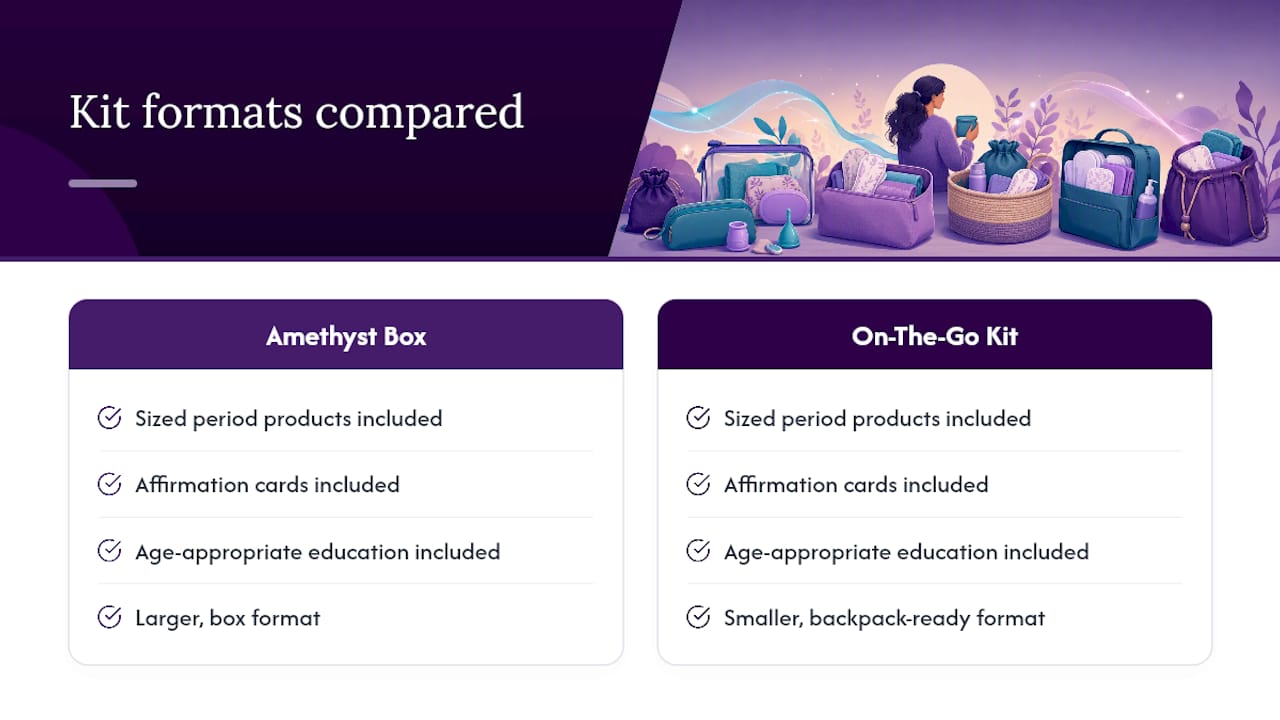
Assembling all of this from scratch is doable, but it’s a lot to figure out during someone’s first period, especially for a tween who’s already nervous. The Amethyst Method is built around three phases: affirm, understand, and equip, so a girl gets emotional reassurance alongside the practical supplies. The Amethyst Box pairs sized period products with affirmation cards and age-appropriate education, while the On-The-Go Kit covers the same territory in a smaller, backpack-ready format. Parents get a done-for-you option; girls get a kit that explains itself instead of just showing up.
A Note on Making This Personal
Comfort during your period isn’t one-size-fits-all, and it shouldn’t be. What eases your cramps might do nothing for your best friend, and that’s fine. Build your first kit from the basics, then adjust as you learn your own patterns. If you’d rather skip the trial and error, a ready-made kit gives you a solid starting point to tweak from there.
— The
The Monthlies Makes Assembly Optional
You don’t have to piece together twelve items from six different stores to build a period comfort kit that works. Themonthliesbox is the shortcut for parents and gift-givers who want a first-period kit that’s already thought through, from education cards to sized supplies to comfort extras, packed into one box instead of a scavenger hunt.
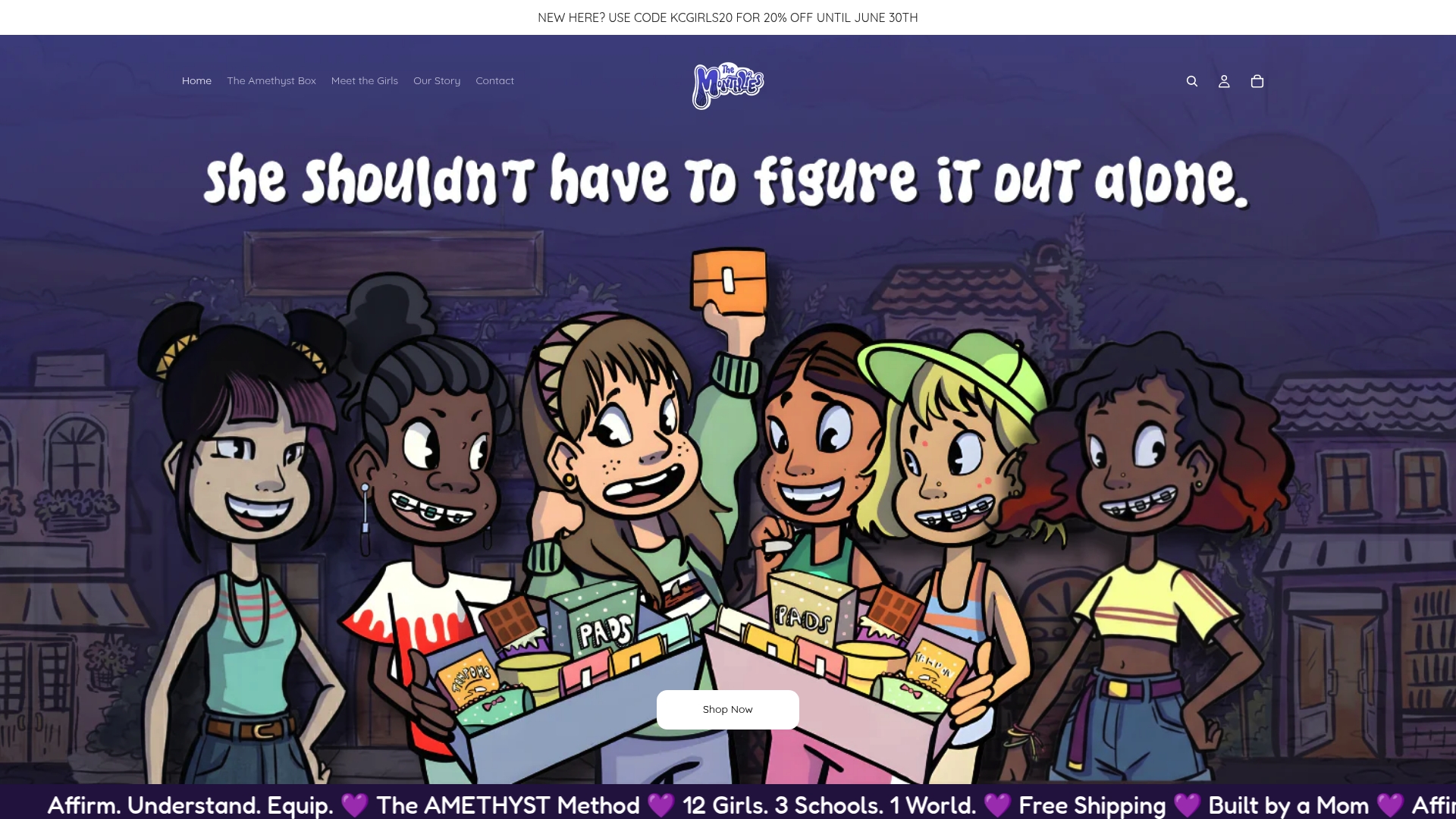
The Amethyst Box is built specifically for a girl’s first period, combining the Amethyst Method’s affirm, understand, and equip phases with practical supplies sized for tweens. If she’s already had her first period and just needs something portable for school or sports, the On-The-Go Kit covers the same essentials in a compact, grab-and-go format. Parents who want to stock up for two girls, or gift a friend alongside their own daughter, can save with the Bestie Bundle. Head to Themonthliesbox to see which box fits where your daughter is right now.
Sources
- CDC — Menstrual hygiene
- Planned Parenthood — What are menstrual hygiene products
- PMC — Research on ginger and digestive/anti-nausea effects
0 comments