

Three moves help reduce most overnight leaks: use a fresh, high-coverage overnight pad, tampon, cup, or period underwear right before bed, add a backup layer like period underwear on heavy nights, and sleep on your side with a towel or mattress protector underneath. If you’re still soaking through protection frequently, it’s important to check in with a clinician rather than just trying a bigger pad.
TL;DR:
- Using a fresh overnight product and a backup layer minimizes leaks, especially during heavy flow nights or long sleep periods over eight hours.
- Proper product placement and sleep position, such as sleeping on your side and securing snug underwear, significantly reduce the risk of nighttime leaks.
- Pairing internal products like cups or tampons with backup protection, or layering pads with underwear, effectively manages heavy flow during the night.
- Tracking flow patterns over multiple cycles helps predict heavy nights, allowing proactive protection adjustments before leaks occur.
- Preparing with dark sleepwear, waterproof protectors, and extra supplies during trips or camping minimizes leak stress and facilitates quick cleanup.
Table of Contents
- Overnight Protection Options for Preventing Period Leaks at Night
- Getting Your Bed Ready: Placement, Underwear, and Sleep Position
- Layering Products for Heavy Nights
- What to Do If You Wake Up to a Leak
- Tracking Leaks and Knowing When to See a Clinician
- Easing Cramps So You Move Less at Night
- Tracking Your Flow to Predict Heavy Nights Before They Happen
- Matching Overnight Protection to Where You Are in Your Cycle
- Choosing Sheets and Sleepwear That Hide and Handle Leaks Better
- Managing Leaks on Trips or While Camping
- Why Nighttime Leaks Deserve Less Panic and More Planning
- How Themonthliesbox Helps You Prepare for Leak-Free Nights
- Sources
Overnight Protection Options for Preventing Period Leaks at Night
There’s no single best product for sleeping through your period. Flow, sleep position, and personal comfort all change the answer, so it helps to know what each option actually does before you commit to one for the night.
Overnight pads are built longer than daytime pads, with extra padding stretched toward the back. That extra length is designed to provide coverage matching the direction your flow tends to travel once you lie down, and gravity almost always pulls it backward. Place the pad so the widest, most absorbent section sits under your tailbone, not centered on your underwear, and you’ll catch far more of what pools there overnight.
Tampons work overnight, but they come with a real limit. Medical guidance recommends that the wear time for tampons be limited to typical overnight duration, with caution for longer sleep periods, which lines up with a typical night’s sleep but leaves zero room for a late night or an early alarm gone wrong. If you’re someone who sleeps nine or ten hours, a tampon alone probably isn’t your best overnight bet.
Menstrual cups and discs hold more than pads or tampons because they collect blood instead of absorbing it, and that capacity difference is exactly why they’re a strong overnight option for heavier sleepers. A disc, in particular, sits higher near the cervix and tends to handle back-sleeping and side-sleeping equally well. The tradeoff is a learning curve. Give yourself a few cycles to get comfortable with insertion and removal before you trust one on a big night.
Period underwear ranges from light everyday absorbency to overnight-rated styles that can rival a pad on their own. For lighter flow days, period underwear alone works fine. For heavier flow, it shines as backup rather than your only line of defense.
Here’s the quick version for choosing tonight:
- Heavy flow, side or back sleeper: overnight pad plus period underwear as backup.
- Moderate flow, want to avoid pad bulk: a menstrual disc or cup, checked for proper seal before bed.
- Light flow or spotting nights: period underwear on its own.
- Long sleep stretches over eight hours: skip tampons alone; pair with a backup layer or switch to a cup.
- First period, still learning her body: start with pads before introducing internal products.
Getting Your Bed Ready: Placement, Underwear, and Sleep Position
What you do in the five minutes before you turn off the lights matters more than almost anything else you’ll read about nighttime leaks. Here’s the routine worth building into a habit.
- Change or empty your product right before bed, even if it still has capacity left. Starting the night at zero gives you the longest possible buffer before anything overflows.
- Angle your pad to match how you sleep. Back sleepers need the rear coverage centered directly under the tailbone. Side sleepers should shift the pad slightly toward whichever side they favor, since that’s where flow will pool first.
- Choose snug-fitting underwear, ideally boyshorts or a fitted brief rather than looser cuts. Loose underwear lets a pad shift several inches overnight, which turns a good product choice into a failed one by 3 a.m.
- Favor side-sleeping over back-sleeping when you can. Lying on your side keeps flow moving toward the pad’s center rather than spreading it across a wider surface, and research on sleep during menstruation backs up pairing good product fit with sleep positioning for overall comfort.
- Protect the mattress underneath you. A washable waterproof protector is the sturdiest option, but an old bath towel folded under your hips works in a pinch and meaningfully lowers the stress of an unexpected leak.
Pro Tip: Keep a spare pair of underwear and a folded towel in your nightstand drawer during your period week. Half of nighttime leak panic comes from fumbling around in the dark for supplies you can’t find.
Lying flat changes how blood moves compared to standing or sitting upright, which is a big part of why leaks happen more at night in the first place. Sleep position doesn’t cause leaks on its own, but it decides which direction they travel when they happen.
Layering Products for Heavy Nights
Heavy flow nights call for combinations, not just bigger single products. Two pairings show up again and again as reliable:
- Tampon or cup plus period underwear. The internal product handles the bulk of your flow while the underwear catches any seepage around the edges or a morning gush before you’re fully awake.
- Overnight pad plus period underwear. Doubling absorbent layers this way handles small leaks and morning surges without asking either product to do more than it’s designed for.
Most cycles have a predictable heavy window, often day one or two. Once you know yours, plan the combo ahead rather than scrambling at 11 p.m. when you’re already tired.
Test any new combination on a low-stakes night first, ideally at home on a weekend rather than before a school day or a sleepover. Wear it for a full night and jot down three things the next morning: how much leaked, if anything, where it leaked, and how the fit felt by morning. A trial run at home lets you fine-tune placement and sizing before you need the combo to work perfectly somewhere less forgiving.
One caution worth repeating: layering two products doesn’t mean you can stretch either one’s wear-time limit. A tampon still comes out within about eight hours even if it’s backed up by underwear. Follow the instructions on each product, not just the combined feeling of extra protection.
What to Do If You Wake Up to a Leak
A leak in the morning feels bigger than it usually is once you’re standing in better light. Work through it in order and it’s manageable in under ten minutes.
- Get to the bathroom first, before touching sheets or clothing, and change your product.
- Pull soiled sheets or clothing off the bed and set them aside separately rather than tossing everything into one pile.
- Rinse the stain in cold water immediately. Heat sets blood into fabric fibers, so skip the warm wash cycle until the stain is fully gone.
- Soak stubborn spots in cold water with a splash of hydrogen peroxide or an enzyme-based stain remover for 15 to 30 minutes before washing.
- Wash as usual once the stain has lifted, and repeat the soak step if any shadow remains rather than running it through a hot dryer, which locks the stain in permanently.
Keep a dark set of sleepwear and a spare towel on hand for the day or two between the leak and laundry day. It’s a small thing, but not having to think about it in the moment takes real pressure off a stressful morning.
Tracking Leaks and Knowing When to See a Clinician
Most nighttime leaks are just a product-and-position problem, not a medical one. But some patterns are worth flagging.
Needing to change protection every one to two hours, passing clots larger than a quarter, or bleeding for more than seven days are all signs of heavy menstrual bleeding worth discussing with a clinician.
Dizziness, weakness, or feeling faint alongside heavy bleeding points to significant blood loss and deserves prompt medical attention, not a wait-and-see approach.
Before an appointment, a few nights of simple notes make the conversation far more useful. Track the cycle day, flow level (light, moderate, heavy), how many hours a product lasted before leaking, where the leak showed up, whether clots were present, and any symptoms like cramping or fatigue. Detailed tracking like this genuinely helps clinicians narrow down a cause faster than a vague “it’s just heavy” ever will.
Easing Cramps So You Move Less at Night
Cramps don’t just hurt. They also make you toss, curl up, and shift positions all night, and every shift is a chance for a well-placed pad to slide out of position. Reducing the pain reduces the movement, and reducing the movement reduces the leaks.
A heating pad or hot water bottle held against the lower belly for 15 to 20 minutes before bed relaxes the uterine muscle enough to ease the sharpest cramping. Gentle stretching, particularly a knees-to-chest position held for a minute, can loosen the same muscles without any equipment at all. Some people find that magnesium intake plays a role in muscle relaxation and sleep quality around menstruation, though it’s a supportive habit, not a fix for pain that keeps you up.

Sleeping in a slightly curled, side-lying position (rather than flat on your back) takes pressure off the lower abdomen for a lot of people and happens to be the same position that helps with leak direction. Loose, non-restrictive sleepwear also matters more than it gets credit for. Tight waistbands can add pressure exactly where cramps already are.
If cramps are severe enough that over-the-counter pain relief and heat don’t touch them, that’s worth mentioning at a doctor’s visit alongside any bleeding concerns.
Tracking Your Flow to Predict Heavy Nights Before They Happen
Heavy nights rarely come out of nowhere once you’ve paid attention for a couple of cycles. Most people have a pattern: maybe day two is always the worst, or the first night after a lighter afternoon suddenly turns heavy overnight.
A simple log, whether on paper or in a period-tracking app, works best when it captures four things: cycle day, flow intensity, what product was used, and whether a leak happened. After two or three cycles, the pattern usually jumps out. If day two is consistently your heaviest, that’s the night to reach for a cup or a layered combo automatically instead of hoping a single pad holds.
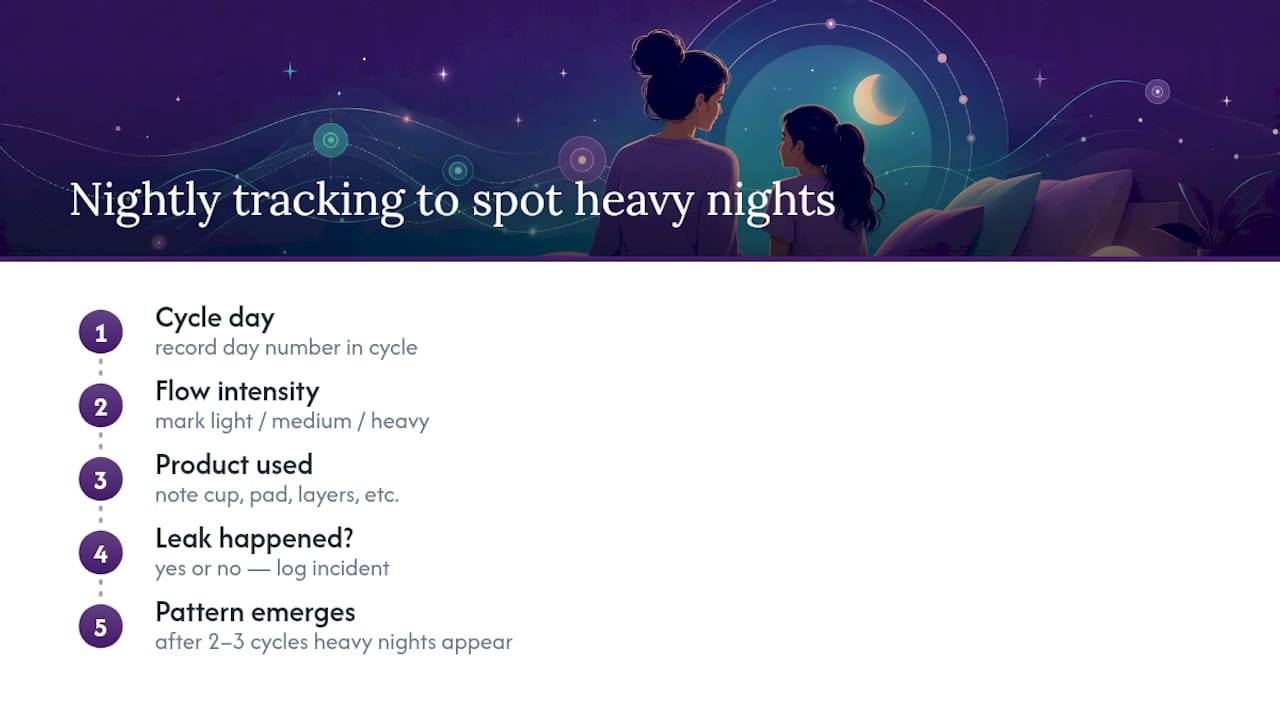
This same tracking habit doubles as useful information if you ever do need to see a clinician about unusually heavy bleeding. Apps built for general health and cycle tracking, like the ones covered by Heala, can help connect flow changes to other cycle symptoms worth watching. The goal isn’t obsessive monitoring. It’s just enough data to stop being surprised.
Matching Overnight Protection to Where You Are in Your Cycle
Flow rarely stays the same for five straight days, so the product that worked perfectly on night one often isn’t the right call by night three. Building flexibility into your overnight routine saves you from both over-protecting on light nights and under-protecting on heavy ones.
Early heavy days call for the highest-capacity combination you’ve got: an overnight pad paired with period underwear, or a cup sized for higher flow. As bleeding tapers around days three or four, many people can drop the backup layer and rely on a single overnight pad or a smaller cup. By the tail end of a period, light spotting often only needs period underwear or a daytime pad worn overnight.
Keeping a small range of products on hand, rather than one single go-to, makes this kind of adjusting realistic instead of a hassle. It’s part of why a stocked supply kit with a few different options tends to serve better than betting everything on one product type.
Choosing Sheets and Sleepwear That Hide and Handle Leaks Better
Fabric choice won’t stop a leak, but it changes how much a leak matters when it happens. Darker sheets and sleepwear, especially in navy, black, or deep maroon, hide staining far better than white or pastel bedding, which takes some of the morning anxiety out of the equation.
Cotton and cotton-blend sheets breathe better than synthetic fabrics like polyester, which matters because trapped heat and moisture around the pelvic area can increase skin irritation during a period. Softer, breathable underwear fabric also reduces chafing from a pad worn all night, particularly for tweens wearing pads for the first time.
For sleepwear, loose cotton shorts or pajama bottoms in a dark color solve two problems at once: comfort and camouflage. A waterproof mattress protector under your regular sheets adds a layer that’s invisible day to day but saves an entire mattress the one night it’s needed.
Managing Leaks on Trips or While Camping
Away from home, the margin for error shrinks. No spare sheets, no washing machine, and sometimes no private bathroom close by. Planning for that in advance beats improvising at 2 a.m. in an unfamiliar place.
Pack more supplies than you think you’ll need, since access to a store isn’t guaranteed. A reusable waterproof pad or a portable liner made for travel and camping protects a sleeping bag the same way a mattress protector protects a bed at home. Choose your highest-capacity combination for any trip during a heavy window, even if you’d normally scale back at home, simply because changing or cleaning up is harder on the road.
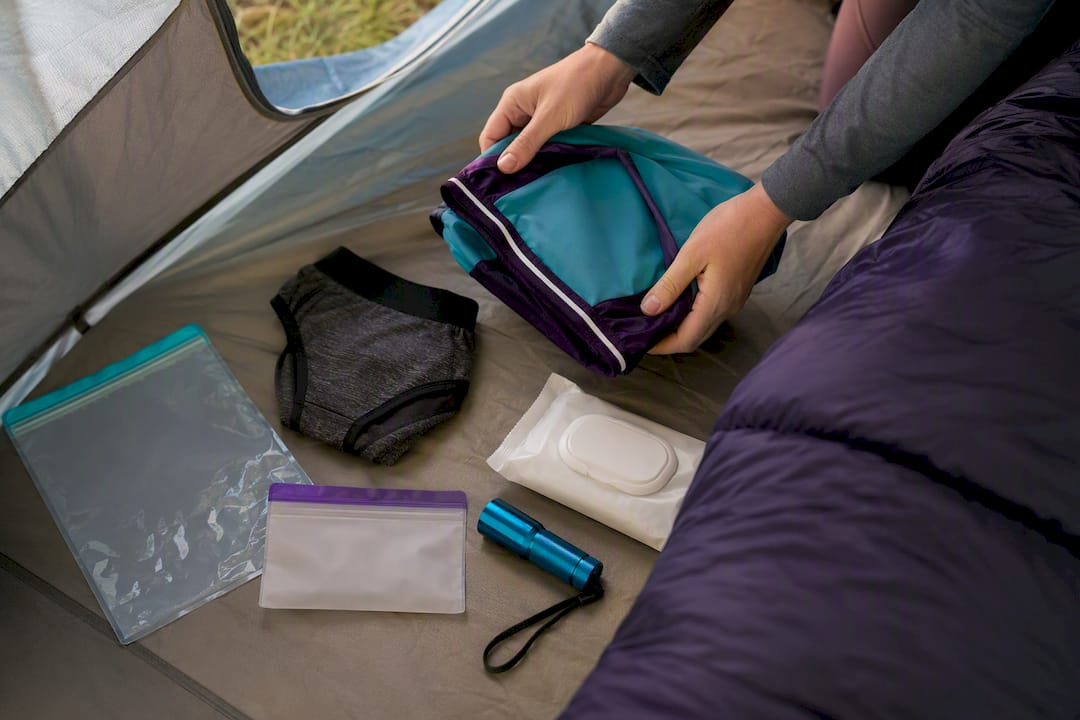
A small travel bag with a spare product, a change of underwear, a couple of sealable plastic bags for soiled items, and unscented wipes covers most situations. For camping specifically, a headlamp or phone flashlight kept within reach makes a middle-of-the-night change far less stressful than fumbling in total darkness.
Why Nighttime Leaks Deserve Less Panic and More Planning
Nighttime leaks aren’t a sign you’re doing something wrong. They’re a predictable mechanical problem, gravity plus sleep position plus product mismatch, and mechanical problems have mechanical solutions. That reframe matters more than any single product recommendation in this article.
What surprises most people is how much a few nights of simple tracking beats guessing. You don’t need a perfect system, just enough notes to spot your own pattern and stop being caught off guard by day two every single cycle.
For a tween experiencing this for the first time, the stakes feel bigger than they are. A calm conversation and one low-pressure trial night at home does more for her confidence than any product ever will on its own.
— The
How Themonthliesbox Helps You Prepare for Leak-Free Nights
Overnight periods hit differently the first time, especially for a tween who’s never had to think about pad placement or backup layers before. The LavenHaven Care Package is built around exactly that moment, pairing discreet period supplies with guidance cards that walk through the same placement and layering steps covered above, so the learning curve happens at home instead of during an actual overnight scare.

For sleepovers, trips, or just keeping a spare set in a backpack, the On-The-Go Kit covers the essentials this article recommends packing: a spare product, backup underwear, and small comfort items sized to actually fit in a bag. Neither kit replaces medical advice or a fitted mattress protector, but both give a girl and her parent a real starting point instead of a guessing game. If tonight’s the night to build that plan together, starting with a care package is one way to begin.
This article is general information, not a substitute for advice from a qualified doctor. Consult a qualified healthcare professional about your own circumstances before acting on anything here.
Sources
- Heavy periods - NHS
- PMS, PMDD, and sleep - Sleep Foundation
- Evaluation of abnormal uterine bleeding - NCBI Bookshelf
- Heavy menstrual bleeding: guidelines and outcomes - PubMed
0 comments