

Feeling sick to your stomach with your period is common, and it’s usually tied to cramps, not something scarier. Most of the time, it comes from prostaglandins, the same chemicals causing your cramps, spilling into your bloodstream and unsettling your stomach. Try these steps in the next hour:
- Sip water or a clear, non-caffeinated drink slowly
- Press a heat pack against your lower belly or lower back
- Take an age-appropriate dose of ibuprofen or naproxen if your parent or doctor has said it’s okay
- Eat something plain, like crackers or toast
- Sit upright, lean back, and give your body a break from moving around
Nausea and vomiting are recognized symptoms of primary dysmenorrhea, and many teens develop painful cramps within the first two years of getting their period. One quick red flag before we go further: if you can’t keep any fluids down, feel faint, or the pain is much worse than usual, that’s your cue to call a doctor right away, not wait it out.
Key Takeaways
Period nausea in teens usually stems from prostaglandins tied to cramps, responds well to early NSAID use and simple comfort measures, and rarely signals a serious problem unless red flags appear.
| Point | Details |
|---|---|
| Nausea is common, not alarming | A large proportion of teens develop cramps linked to nausea within two years of menarche. |
| Start treatment early | Taking NSAIDs at the first sign of cramps works better than waiting for nausea to peak. |
| Watch for red flags | Persistent vomiting, dehydration, or fainting means calling a doctor the same day. |
| Track symptoms each cycle | Recording pain level, nausea, and bleeding helps clinicians spot real patterns. |
| Comfort kits support, not replace, care | Themonthliesbox’s kits ease discomfort but don’t substitute for medical evaluation of red-flag symptoms. |
Table of Contents
- Why Periods Cause Nausea: The Real Physiology Behind It
- How to Manage Period Nausea at Home
- When Period Nausea Needs a Doctor’s Attention
- Supporting a Teen Through Bad Period Days
- What the Research Actually Shows About Period Nausea
- A Note From Themonthliesbox on Period Nausea
- Comfort and Confidence for Symptomatic Days
- Sources
Why Periods Cause Nausea: The Real Physiology Behind It
Your body isn’t overreacting. Nausea during your period comes from a specific chain reaction inside your uterus, and once you understand it, the whole thing feels a lot less mysterious.
Here’s what’s happening: your uterus releases prostaglandins to help shed its lining. Those same chemicals trigger the muscle contractions you feel as cramps. Prostaglandins produced by the uterus can also act on your gut, which is why cramps and stomach upset so often show up together. Some doctors even call the combination “period flu,” because the aches, nausea, and occasional diarrhea can mimic a mild virus.
There’s a second layer to this. Prostaglandins don’t just stay local. They can enter your bloodstream and reach nausea centers in your brainstem, the same regions that respond to motion sickness or food poisoning. That’s the physical explanation for why period nausea can feel disproportionate to how bad your cramps actually are. Primary dysmenorrhea, meaning cramps with no underlying condition, and general PMS hormone swings both feed into this same cycle.
Nausea with a period is a real physical reaction to prostaglandins, not something imagined or exaggerated. Recognizing that fact tends to lower the anxiety teens feel when their symptoms don’t match what friends describe.
Not every case of period sickness is this straightforward, though. A few conditions can look similar and deserve a second thought:
- Pregnancy can cause nausea that overlaps with period timing, especially with irregular cycles
- A stomach virus or food-related illness can hit at the same time as your period by pure coincidence
- Medication side effects, including some acne treatments or antibiotics, can add to stomach upset
- Endometriosis, while less common in teens, can cause more severe or persistent symptoms that don’t fit the usual pattern
Pro Tip: Keep a simple note on your phone of when nausea starts each cycle. If it always lines up with the first day or two of your period, that’s a strong sign it’s ordinary period nausea rather than something else.
How to Manage Period Nausea at Home
Most period nausea responds well to a handful of low-effort, evidence-based steps. You don’t need anything fancy, just consistency and starting early.
Simple comfort measures make a real difference:
- Apply a heating pad to your lower abdomen for 15 to 20 minutes at a time
- Rest in an upright or slightly reclined position rather than lying flat
- Get fresh air or open a window if the room feels stuffy
- Take a short, gentle walk or do light stretching to ease tension
- Distract yourself with a show, music, or a book instead of focusing on the discomfort
For medication, timing matters more than most teens realize:
- Start ibuprofen or naproxen as soon as cramps begin, or even the day before your period is expected if your cycle is predictable
- Follow the dose on the label or one your pediatrician has approved, and take it with food to protect your stomach
- Skip ibuprofen and naproxen if you have a stomach ulcer history, kidney issues, or an allergy, and use acetaminophen instead
- Recheck your symptoms after two hours. If nausea persists, move to non-drug options alongside your medication
On the food and hydration side, small and bland beats big and rich. Sip water, ginger tea, or an electrolyte drink throughout the day rather than gulping a large glass at once. Eat small, frequent meals of things like rice, bananas, or plain crackers, and steer clear of greasy or strong-smelling food, which can make nausea worse fast.
A few non-drug tools are worth trying too. Acupressure on the P6 point, located a few finger-widths below your wrist crease, is a common technique some teens find calming. Ginger and peppermint both have a reasonable track record for settling period-related stomach upset, whether as tea, candy, or aromatherapy. Slow breathing or a short mindfulness app session can also take the edge off, especially if anxiety about the nausea is making it worse.

For teens whose symptoms are severe every single month, a doctor may bring up combined oral contraceptives as a longer-term option. These can reduce prostaglandin production overall, which often eases both cramps and nausea, but that’s a conversation for a clinician, not a decision to make alone.
Pro Tip: If ibuprofen alone isn’t cutting it, pairing it with a heating pad and ginger tea tends to work better than increasing the dose. Combining smaller interventions usually beats maxing out one.
When Period Nausea Needs a Doctor’s Attention
Most period nausea is uncomfortable, not dangerous. But there’s a clear line between “this is a rough day” and “this needs medical attention,” and every teen and parent should know where it sits.
Call a health care provider the same day if you notice any of these:
- Vomiting that won’t stop or happens repeatedly over several hours
- Inability to keep any fluids down for more than a few hours
- Signs of dehydration, like a dry mouth, dizziness when standing, or very little urination
- Fainting or near-fainting
- Pain that’s dramatically worse than previous cycles
- Bleeding heavy enough to soak a pad or tampon every hour
- Nausea or pelvic pain that shows up outside your period entirely
- Missing multiple days of school cycle after cycle
If a teen can’t keep fluids down, is vomiting repeatedly, or symptoms disrupt daily life for more than a couple of days, it’s time to contact a health care provider rather than wait for it to pass on its own.
When you do see a clinician, expect a fairly straightforward visit. They’ll usually ask detailed questions about your cycle, run a pregnancy test if there’s any chance of it, and may do a pelvic exam depending on your age and symptoms. If something points toward endometriosis, such as pain outside your period or pain during bowel movements, they may order imaging or refer you to a specialist. Mild symptoms usually get a trial of a different NSAID or dosing schedule before anything more involved.
As a rough timeline: same-day calls make sense for the red flags above, a routine visit works for cramps and nausea that are simply getting worse cycle to cycle, and urgent care or the emergency room is the right move if you’re fainting, severely dehydrated, or in pain that won’t respond to anything.
Supporting a Teen Through Bad Period Days
Parents often want to help but aren’t sure what actually helps versus what feels dismissive. A few small shifts in language and preparation go a long way.
Start with validation. Saying something like “that sounds really uncomfortable, let’s figure out what helps” lands very differently than “it’s just cramps, you’ll be fine.” Avoid minimizing phrases entirely, even well-meaning ones, since teens tend to remember being brushed off more than they remember the actual pain. Normalizing a trip to the doctor for bad symptoms, rather than treating it as a last resort, also makes teens more likely to speak up early next time.
Tracking symptoms turns a vague “I feel awful every month” into information a doctor can actually use. Note these details each cycle:
- Start and end dates of your period
- Pain level on a simple 1 to 10 scale
- Whether nausea or vomiting occurred, and roughly how long it lasted
- Bleeding amount, including any soaked pads or clots
- Medications tried and whether they helped
- School days missed because of symptoms
For school, a little preparation prevents a lot of stress. Pack a small kit with pads or tampons, a heating patch, ginger candy, and a change of underwear, and keep it in a locker or backpack rather than relying on remembering it each month. If nausea or pain regularly interferes with class, a short note from a parent or doctor to the school nurse can open the door to things like bathroom passes, a place to lie down, or excused absences without penalty. Our guide on handling periods at school walks through how to set that up.
What the Research Actually Shows About Period Nausea
Numbers help put this in perspective, especially for parents wondering if their daughter’s experience is typical or unusual.
Between 50% and 75% of teens develop painful menstrual cramps within a year or two of their first period, and nausea or vomiting is listed among the recognized symptoms of that cramping. That’s a majority, not an outlier group. Nemours KidsHealth confirms this directly, noting that many girls throw up or feel like they might throw up right before or during their period, and that treating the underlying cramps with OTC pain relief typically eases the nausea alongside it.
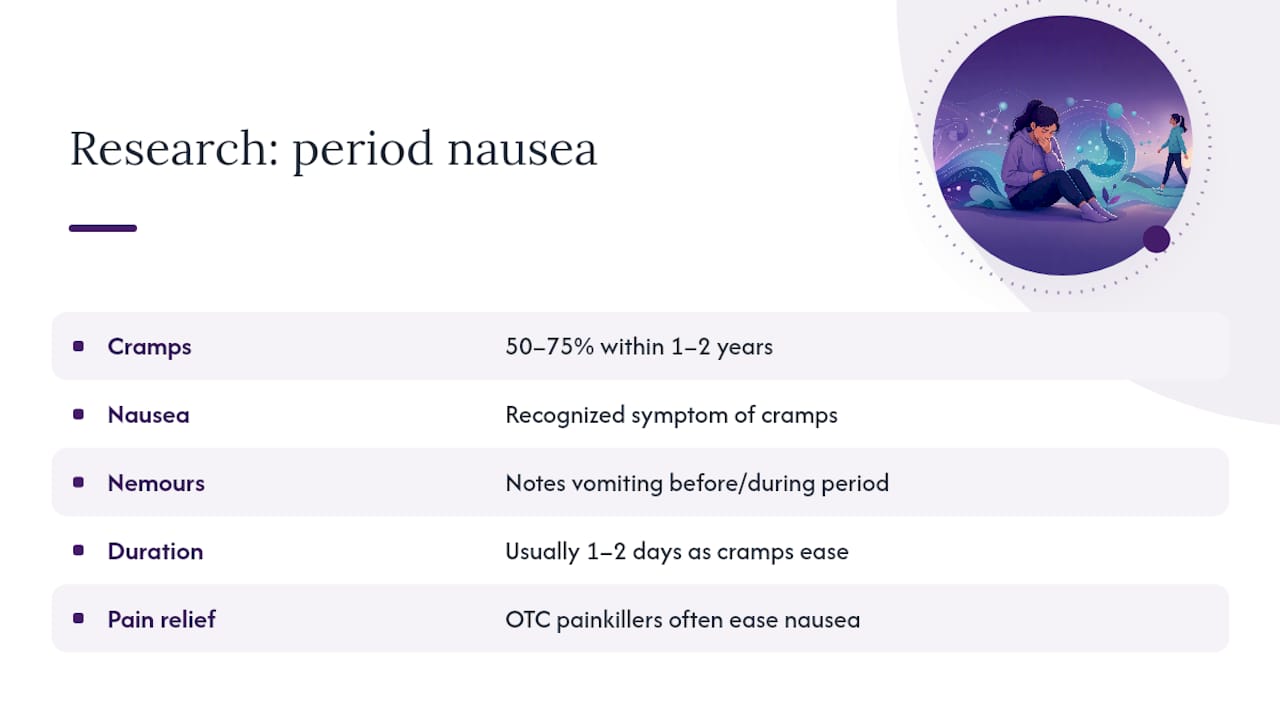
The practical takeaway lines up across every source: mild period nausea tends to resolve within a day or two, generally lining up with when cramps ease off. Symptoms that stretch beyond that, or that come with any of the red flags above, are the point where evaluation makes more sense than waiting.
A Note From Themonthliesbox on Period Nausea
There’s something particularly frustrating about a symptom that’s invisible to everyone but you. Cramps at least get sympathy because people know the word. Nausea during your period gets shrugged off more often, sometimes even by well-meaning adults who assume it’s separate from the “real” period symptoms. It isn’t. It’s the same chemical process, just showing up in a different organ.
What tends to get underestimated is how much timing matters. A lot of teens wait until nausea is already bad before reaching for anything, whether that’s medication, a heating pad, or telling a parent. By then, you’re playing catch-up against prostaglandins that are already circulating. Acting at the very first sign of cramps, even mild ones, usually produces a noticeably better day than waiting to see if it gets worse.
Self-care matters here, but it has a ceiling. Ginger tea and a heating pad can make a rough day more bearable. They cannot replace a doctor’s evaluation if something about your pattern has genuinely changed, or if red flags show up. Treat comfort measures as your first line, not your only line.
Comfort and Confidence for Symptomatic Days
Bad period days call for more than just medication, and that’s where a thoughtfully packed kit earns its place in a nightstand or backpack. Themonthliesbox built the Amethyst Box around exactly that need: practical supplies paired with affirmation cards and educational materials that help a teen feel prepared rather than caught off guard when cramps and nausea show up together.

To be clear, none of these kits treat nausea or vomiting. They’re comfort and preparedness tools, not medical care, and any red flag symptoms covered above still call for a clinician, not a self-care box. What a kit like the Deluxe Box with its 40oz tumbler does well is take the edge off an already hard day: a heat-friendly comfort item within reach, hydration made easier, and small emotional touches that remind a teen this is normal and manageable. For families who want a lighter option to keep in a backpack for school days, the On-The-Go Kit covers the basics without the bulk. Browse the current kits and pick the one that matches how your daughter’s symptoms actually show up, whether that’s heavy cramping days at home or needing something discreet for school.
Sources
- Healthychildren
- I Throw Up During My Period. Is That Normal? (for Teens) | Nemours KidsHealth
- Period flu: What it is and how to feel better | Cleveland Clinic
- Nausea during period: Is it common and remedies | Medical News Today
- Mechanisms linking prostaglandins to systemic symptoms (PMCID article)
Bring any of these to a doctor’s visit if you want backup while discussing management options. Clinicians tend to appreciate a parent or teen who’s already done some homework.
This article is general information, not a substitute for advice from a qualified doctor. Consult a qualified healthcare professional about your own circumstances before acting on anything here.
0 comments