

Most girls experience cramps, bleeding, breast tenderness, bloating, acne, tiredness, and mood changes when their period arrives. These are the period symptoms every girl experiences to some degree, and the good news is that most are completely normal and manageable. Symptoms vary a lot from person to person and even cycle to cycle, so there is no single “right” way to feel. Many are mild and settle within the first few days of bleeding.
Common symptoms at a glance:
- Cramps or lower belly pain
- Bleeding that ranges from light to moderate
- Breast tenderness or soreness
- Bloating and puffiness
- Acne or oily skin
- Tiredness or low energy
- Mood swings, irritability, or tearfulness
When to see a doctor: If pain is so severe it stops your daughter from going to school or sports, or if she soaks through a pad or tampon every hour, call her pediatrician or family doctor. You should not have to wait it out when symptoms are that intense.
Table of Contents
- What do common physical period symptoms feel like?
- How do periods affect mood and emotions?
- What are the early signs a first period is coming?
- How to prepare: supplies, kits, and tracking basics
- How to manage cramps and other symptoms at home and at school
- When do period symptoms need a doctor?
- How parents can support their daughter through her first period
- Key Takeaways
- Why preparation matters more than perfection
- The Amethyst Box: a ready-made first-period kit
- Authoritative sources and further reading
What do common physical period symptoms feel like?
Cramps are usually the first thing girls notice. They show up as a dull ache or tightening in the lower belly or pelvis, caused by prostaglandins, the chemicals that help the uterus shed its lining. They tend to be heaviest on days one and two, then ease off. Lower back pain often tags along.
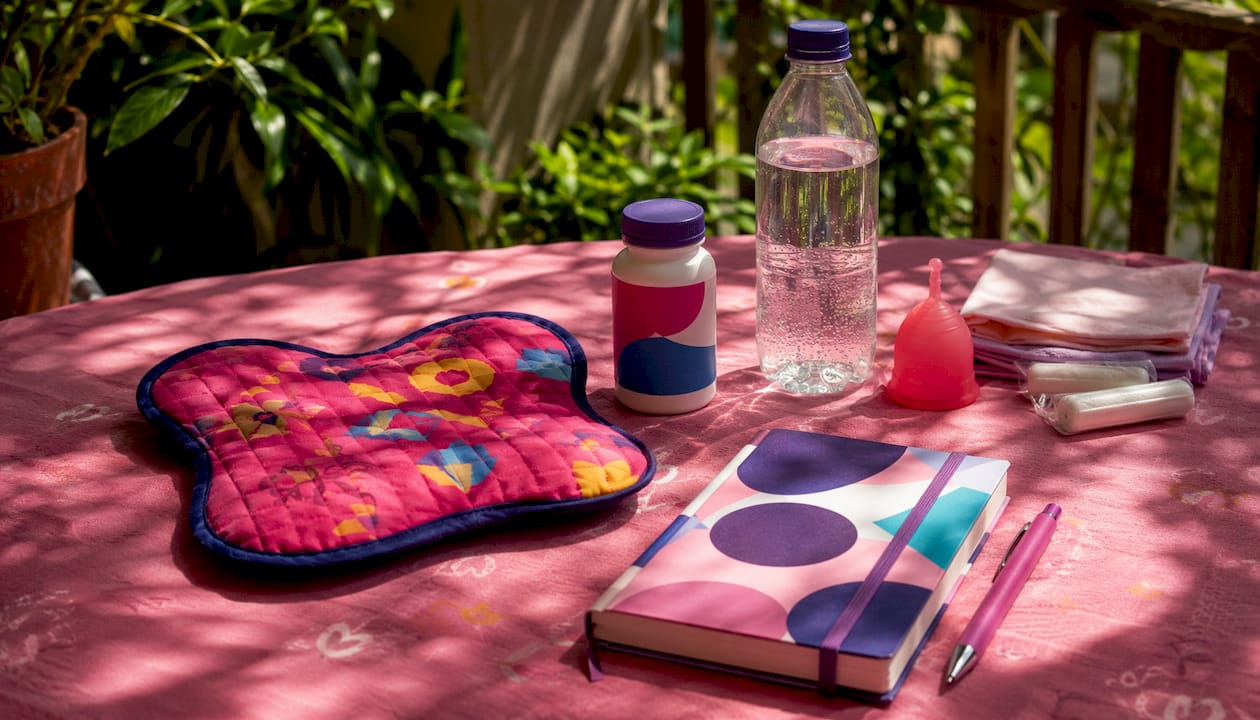
Bleeding itself can look different than most girls expect. The color shifts from bright red to darker red or brown as the days pass, and blood color and texture vary normally. Small clots are common; clots larger than a quarter are worth mentioning to a doctor. Total blood loss per period is usually just 1 to 6 tablespoons (15–90 ml) over the whole period, which is far less than it looks.
| Measurement | Typical range |
|---|---|
| Cycle length | usually 24–38 days, but varies especially in early years |
| Bleeding days | typically 2–7 days, sometimes up to 8 |
| Total blood loss | usually just 1 to 6 tablespoons (15–90 ml) over the whole period |
Other physical symptoms include breast tenderness (breasts may feel fuller or sensitive), bloating in the belly, acne flare-ups, and fatigue. These usually improve once bleeding begins. For more on first-period flow variability, Themonthliesbox has a helpful parent guide.
Pro Tip: A heating pad on the lower belly for 15–20 minutes can ease cramps noticeably. For pain relief, ibuprofen or naproxen are commonly used options. Always follow the dosing label, and check with a clinician for the right dose for your daughter’s age and weight.
How do periods affect mood and emotions?
Emotional shifts are just as real as physical ones, and they can catch girls off guard. Common PMS symptoms include mood swings, irritability, tearfulness, anxiety, appetite changes, and trouble sleeping. These usually appear in the days before bleeding starts and often ease once the period begins.
The intensity varies widely. One cycle might feel emotionally smooth; the next might bring a wave of irritability that feels out of nowhere. There is no single “normal” menstrual experience, and clinical guidance consistently emphasizes supporting girls rather than expecting a rigid pattern.
For parents, the most helpful thing is to validate feelings without minimizing them. Saying “That sounds really frustrating, and it makes sense your body feels that way right now” lands very differently than “It’s just your hormones.” Avoid dismissing what she feels, even when the reaction seems disproportionate. Emotional support during this time builds trust that lasts well beyond puberty.
Pro Tip: Keep a simple mood note alongside period tracking. Even one word per day (“tired,” “fine,” “grumpy”) helps a girl see her own patterns and feel less blindsided each month.
What are the early signs a first period is coming?
The body gives plenty of signals before a first period arrives. The typical sequence runs: breast buds develop first, then pubic and underarm hair, then vaginal discharge, and finally the first period. Most girls get their first period sometime in preadolescence or early adolescence, and timing varies widely and is influenced by many factors.
Puberty timeline, roughly:
- Breast buds: Often the first sign, usually ages 8–13
- Pubic and underarm hair: Follows breast development by several months
- Vaginal discharge: Discharge often begins about 6–12 months before the first period; it is typically clear or white and is a reliable heads-up
- First period: Usually arrives 2–3 years after breast development begins
The role of hormones in driving these changes is worth understanding, especially for parents who want to explain what is happening in plain language.
Pro Tip: Start a simple calendar habit as soon as discharge appears. Mark it with a small dot each day. This builds the tracking reflex before the first period even arrives, so it feels natural rather than new.
How to prepare: supplies, kits, and tracking basics
A little preparation goes a long way. Putting together a home kit and a school kit before the first period arrives means there is no scramble when it happens.
Home kit checklist:
- Pads in a few absorbency levels (light, regular, overnight) and comfortable clothes like girls leggings and basics to help her feel secure during her period
- Period underwear as a backup or standalone option
- Spare bottoms (dark-colored leggings or shorts)
- Unscented wipes
- Small zip bag or pouch
- Pain reliever (ibuprofen or acetaminophen, age-appropriate dose)
- Heating pad or disposable heat patches
School kit (fits in a backpack pouch):
- 2–3 pads or period underwear
- Spare underwear in a small bag
- Wipes
- Pain reliever if school policy allows
For introducing products step by step, Themonthliesbox’s guide on introducing menstrual products walks through pads, tampons, and period underwear in a calm, practical way. Pads are the easiest starting point for most girls. Tampons require more practice and comfort with the body; there is no rush. Period underwear works well as a backup layer or for lighter days.
Simple tracking checklist:
- Mark the first day of bleeding (Day 1)
- Note how many days bleeding lasts
- Rate flow each day: light, medium, or heavy
- Jot down any symptoms (cramps, mood, tiredness)
Tracking over several months builds a personal baseline and makes it much easier to spot changes or explain symptoms to a doctor.
How to manage cramps and other symptoms at home and at school
Most symptoms respond well to simple home care. Heat is one of the most effective tools for cramps. Gentle movement like walking or stretching can also help, as can staying hydrated and eating lighter, more frequent meals rather than heavy ones. Rest matters too, especially on the first two days when symptoms tend to peak.
Practical relief options:
- Heating pad or heat patch on the lower belly or back
- Ibuprofen or naproxen taken at the first sign of cramps (follow label dosing)
- Gentle yoga or a short walk
- Warm bath or shower
- Extra water and less caffeine or salty snacks
At school, it helps to have a plan. Your daughter should know which adult she can go to (a school nurse, a trusted teacher), what she has in her bag, and how to ask to use the restroom or visit the nurse without making it a big deal. A simple script like “I’m not feeling well and need a few minutes” is enough.
Severe cramps that do not respond to ibuprofen or naproxen deserve a doctor’s evaluation. Pain that stops a girl from participating in school or activities is not something to push through. As CHOP guidance makes clear, period symptoms should not be debilitating, and help is available.
When do period symptoms need a doctor?
Most common menstrual symptoms are manageable at home. These signs, though, call for a medical visit:
- Soaking through a pad or tampon every hour for several hours in a row
- Clots larger than a quarter
- Bleeding that lasts more than 7–8 days
- Pain so severe it stops school, sports, or normal activities
- Bleeding between periods
- Fever after using a tampon (seek care promptly)
- Periods that have not started by age 15–16
What to bring to the appointment:
- A record of period start and end dates for the past 2–3 cycles
- Notes on flow level each day (light, medium, heavy)
- Pain severity on a simple 1–10 scale
- Any activities missed because of symptoms
Questions to ask the clinician:
- Is this flow level normal for her age?
- Should we try a different pain relief approach?
- Are there any signs of a condition like endometriosis or PCOS we should watch for?
Mayo Clinic recommends tracking cycles over several months before an appointment so the clinician has real data to work with, not just a memory of one bad cycle.
How parents can support their daughter through her first period
Supportive language builds confidence faster than any supply kit alone. Here are a few scripts parents can use verbatim:
- “Your body is doing exactly what it’s supposed to do. We’re going to figure this out together.”
- “There’s no wrong way to feel right now. Tell me what would help.”
- “Let’s practice so you feel ready. Want to try putting a pad in together?”
- “If it ever happens at school and you need me, just text. No questions asked.”
Practice activity checklist:
- Place a pad in underwear together (no pressure, just practice)
- Role-play telling a teacher: “I’m not feeling well and need to go to the nurse”
- Pack the school kit together and go through each item
- Look at a tracking app or calendar together and mark a practice “Day 1”
Use tracking as a neutral tool, not a judgment. Saying “let’s just see what your body does” keeps it curious rather than anxious.
Themonthliesbox is built around exactly this idea. The Amethyst Method, with its affirm, understand, and equip phases, gives parents a clear framework for these conversations. For a deeper look at supporting your daughter’s first period, the Themonthliesbox blog has practical scripts and step-by-step guidance.
Key Takeaways
Cramps, mood changes, and irregular cycles are all normal parts of menstruation, but symptoms that stop daily life deserve medical attention.
| Point | Details |
|---|---|
| Common symptoms are normal | Cramps, bloating, mood swings, and tiredness affect most girls and usually ease within the first few days. |
| Variability is the rule | Cycle length and flow vary widely; there is no single “right” pattern. |
| Prepare before it happens | A home kit and school pouch with pads, spare clothes, and pain relief remove the panic from a first period. |
| Track from the start | Recording start date, flow, and symptoms over a few months builds a baseline that helps both you and a clinician. |
| Themonthliesbox supports prep | The Amethyst Box pairs practical supplies with education and affirmations, covering the affirm, understand, and equip steps in one kit. |
Why preparation matters more than perfection
No parent gets every conversation right, and no girl feels completely ready the first time. What actually makes a difference is showing up before the moment arrives. A practice run with a pad, a calm conversation about what blood might look like, a small pouch tucked into a backpack: these small acts tell a girl that her body is not a problem to be managed but something to grow through with support. The fear that comes from being unprepared is avoidable. The confidence that comes from being prepared is lasting. You do not need a perfect script. You just need to start.
The Amethyst Box: a ready-made first-period kit
Putting together a first-period kit from scratch takes time, and getting the balance of supplies, education, and emotional support right is harder than it sounds. The Monthlies Amethyst Box does that work for you.
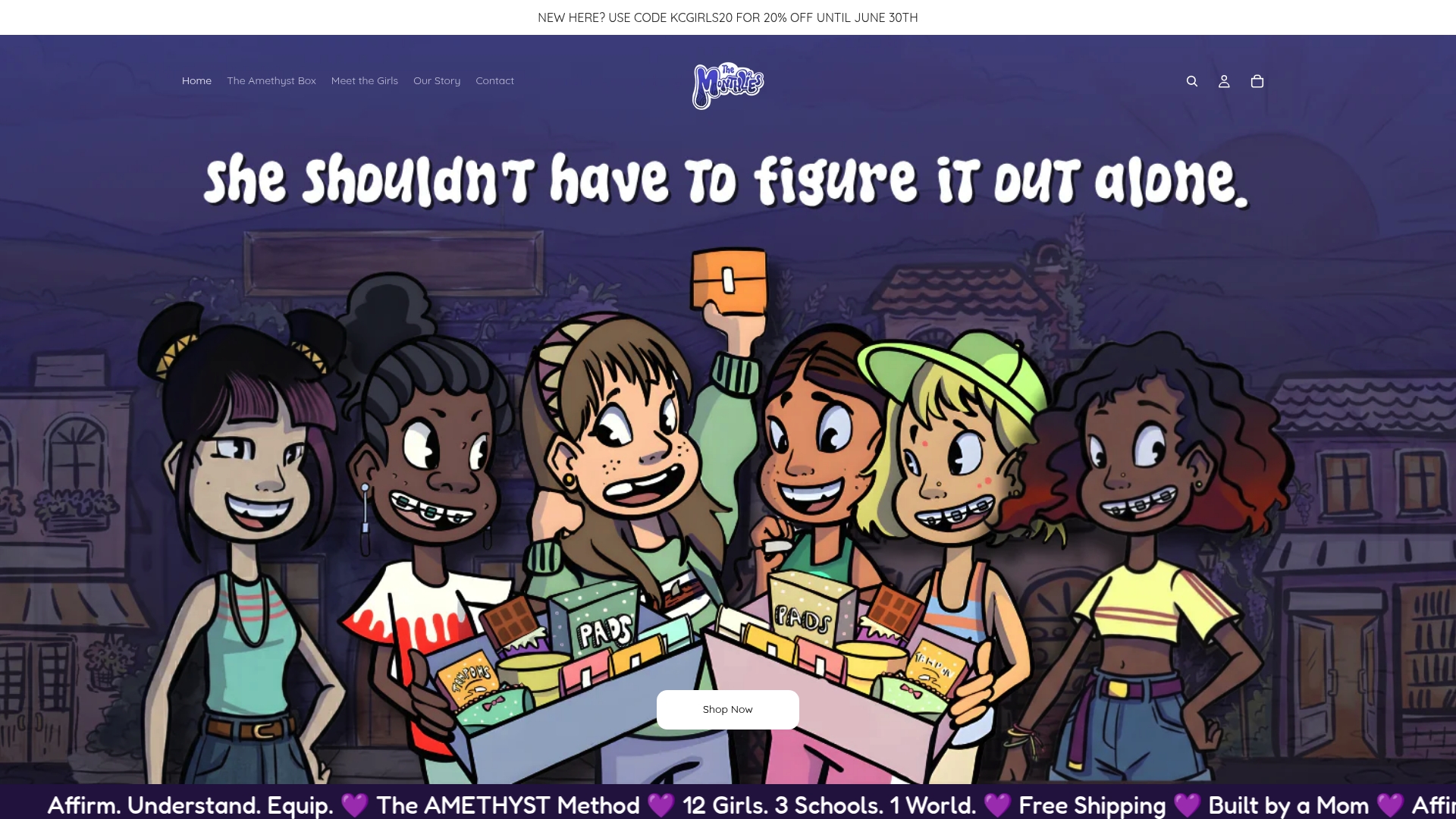
The Amethyst Box is built around the affirm, understand, and equip framework: affirmations and confidence-building materials, clear educational content about what periods are and what to expect, and practical supplies that match the checklist in this article. It is designed specifically for girls approaching their first period, and it works as both a preparation tool and a gift that says “you are ready, and you are supported.” For families who want everything in one place, the On-The-Go Kit is a compact school-ready option. Browse both at Themonthliesbox and find the fit that works for your family.
Authoritative sources and further reading
- Nemours KidsHealth: Teen-friendly clinical guidance on periods, symptoms, and what is normal; written and reviewed by pediatric clinicians.
- Planned Parenthood: Plain-language explanations of what to expect during a first period, including flow, color, and PMS symptoms.
- Mayo Clinic: Evidence-based guidance on cycle variability, tracking, and when to seek care.
- Children’s Hospital of Philadelphia (CHOP): Clinical guidance on menstrual complaints and when symptoms warrant evaluation.
- MedlinePlus: National Library of Medicine overview of menstruation, symptoms, and health basics.
- Themonthliesbox blog: Practical how-to articles for parents, including scripts, product introductions, and emotional support guides.
This article is general health information, not medical advice. For concerns about your daughter’s specific symptoms or cycle, consult her pediatrician or a qualified clinician.
0 comments