

First period experiences, known clinically as menarche, range from barely-there spotting to noticeable bleeding with cramps, and every single variation is normal. Most girls have their first period between ages 10 and 15, though the timing, flow, and emotions surrounding it differ for everyone. Physical changes like breast development and pubic hair often begin one to three years before menarche, giving families a helpful window to prepare. Understanding the full range of what can happen makes the experience far less frightening. The examples and guidance below are here to help both parents and girls feel ready, supported, and confident.
1. Examples of light and spotting first period experiences
Early periods often involve light spotting or a moderate flow lasting around five days, though many girls see far less than that at first. A light first period might look like a few small brownish or pinkish spots in underwear, sometimes mistaken for discharge. This is one of the most common menstruation experience examples, and it catches many girls off guard simply because it looks nothing like what they expected.
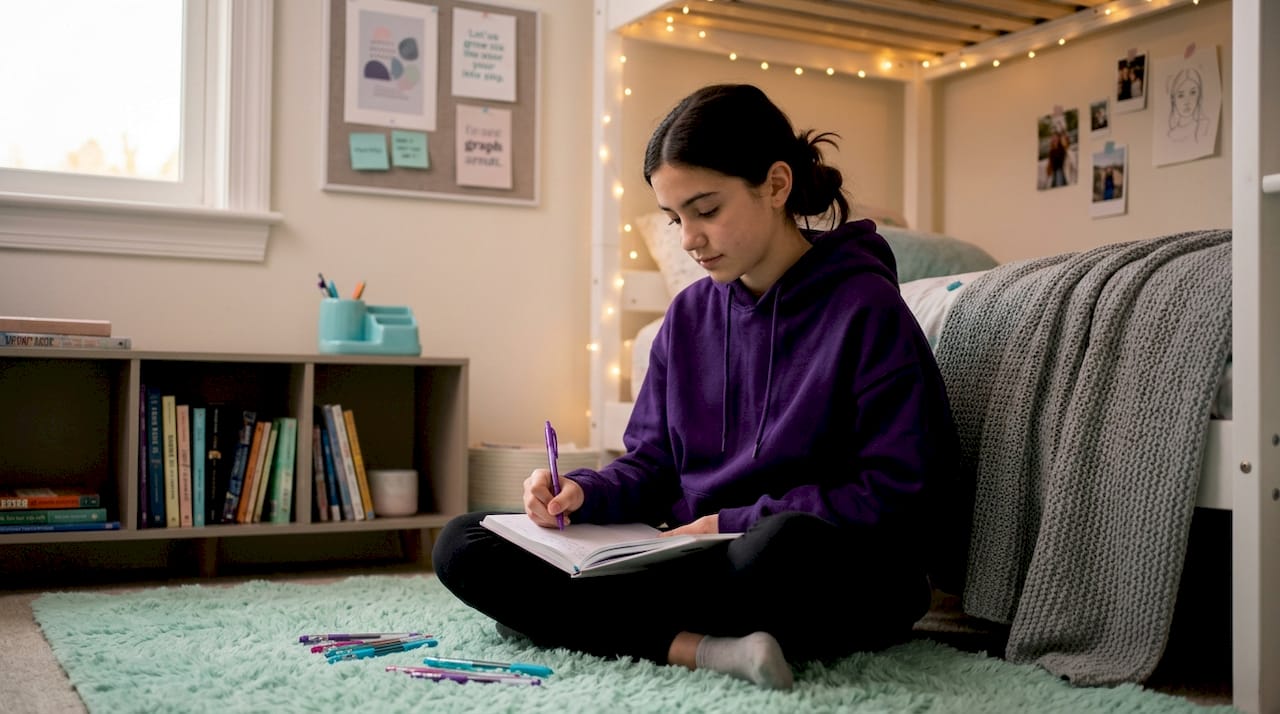
The emotional reaction to a light first period is often a mix of surprise and relief. Some girls feel uncertain because the flow seems “too small” to count as a real period. It absolutely counts. Light flow is a completely valid first period story, and it does not mean anything is wrong.
Here is what managing a light first period typically looks like:
- Use a thin pad or panty liner. These are the most practical choice for spotting or light flow and feel less bulky than full-size pads.
- Check every few hours. Even light flow benefits from regular checks to stay comfortable and avoid staining.
- Keep dark-colored underwear handy. This reduces anxiety about visible staining during the early days.
- Note the color. Brown or dark red spotting at the start is dried blood and is completely normal.
- Track it. Jotting down the start date helps build awareness of cycle patterns over time.
Pro Tip: Pack a small emergency kit in your backpack: one thin pad, one spare pair of underwear, and a small zip pouch. This one habit removes a huge source of anxiety about getting a period at school.
2. Examples of heavier or more noticeable first period flows and cramps
Not every first period is subtle. Some girls experience a noticeably heavier flow right from the start, and that is just as normal as spotting. First periods tend to be light with cramps that often start early and last about two to three days, though flow intensity varies widely. For some girls, the first period arrives with enough blood to soak through a regular pad within a few hours.
Cramps are one of the most common physical experiences during a first period. They are caused by prostaglandin-driven uterine contractions that help the body shed its uterine lining. This means cramps are a sign the body is doing exactly what it is supposed to do, not a sign that something is wrong.
Here is how to manage a heavier first period with more comfort:
- Use a regular or heavy-flow pad. Overnight pads work well for heavier days even during the day.
- Apply a heat pack to the lower abdomen. Heat relaxes the uterine muscles and reduces cramping noticeably.
- Rest when needed. Lying down with a pillow under the knees can ease lower back pressure.
- Stay hydrated. Drinking water helps reduce bloating and supports overall comfort.
- Talk to a trusted adult about pain relief. Over-the-counter options like ibuprofen can help with cramps when taken as directed by a parent or guardian.
Pro Tip: A reusable heat pack or a warm water bottle wrapped in a cloth is one of the most effective and affordable comfort tools for period cramps. Keep one at home and one at school if possible.
3. Emotional and social experiences during first periods
The emotional side of a first period is just as real as the physical side. Girls report feeling everything from pride and excitement to embarrassment and anxiety, sometimes all at once. Open communication with trusted adults helps children adjust to their first period and builds the confidence to ask questions without shame.
Social settings add another layer. Getting a first period at school, during a sleepover, or at a sports practice is common, and those situations can feel overwhelming without preparation. Knowing how to tell a parent or trusted adult about a first period removes a lot of that pressure before it happens.
Here are four emotional and social experiences that come up most often in first period stories:
- Surprise at school. Many girls notice spotting in the bathroom between classes. Having a pad in a backpack and knowing which adult to ask for help makes this manageable rather than scary.
- Embarrassment with friends. Some girls feel reluctant to tell even close friends. Normalizing period talk at home makes it easier for girls to reach out when they need support.
- Pride and a sense of growing up. Many girls feel a quiet sense of accomplishment. Celebrating this milestone, even in a small way, reinforces that it is something to grow through, not dread.
- Anxiety about the unknown. Girls who have not been prepared in advance often feel the most fear. Clear, calm information from a parent or guardian is the single most effective way to reduce that anxiety.
Listening to questions and providing age-appropriate answers builds lasting confidence. Parents do not need to have perfect answers. Showing up, staying calm, and validating feelings is enough.
4. Understanding irregularity and variability in early cycles
Irregular cycles after menarche are the rule, not the exception. Cycles are irregular initially and may take about two years to become regular. This means a girl might have one period and then not see another for six to eight weeks. That is not a problem. It is the body finding its rhythm.
Vaginal discharge often starts six to twelve months before the first period, giving families an early signal that menarche is approaching. Tracking discharge and other body changes helps reduce the element of surprise. The table below outlines what is typically normal versus what warrants a conversation with a healthcare provider.
| Pattern | What it means | When to seek advice |
|---|---|---|
| Cycles 21 to 45 days apart | Normal range in first two years | No action needed |
| No period for 3+ months | Common early on, but worth monitoring | Consult a provider if it continues past year two |
| Light spotting between periods | Often normal in early cycles | Mention at next checkup |
| Soaking through a pad every hour | Heavier than typical flow | Speak with a healthcare provider |
| Severe cramps disrupting daily life | About 1 in 3 women describe heavy periods; pain that stops normal activity is worth addressing | See a doctor |
Irregular periods at the start are normal and typically do not stop main activities like school or sports. The best measure of whether a period is “normal” is not perfect cycle regularity. It is whether daily life stays manageable. A simple period tracking app or a small notebook works well for logging dates and symptoms from the very first cycle.
Pro Tip: Start tracking from day one. Even a basic note with the start date, flow level, and any cramps gives a doctor useful information and gives a girl a sense of control over her own body.
Key takeaways
First period experiences vary widely, and understanding that range of light spotting, heavier flow, cramps, emotional responses, and irregular cycles is the most effective way to prepare girls and their families with confidence.
| Point | Details |
|---|---|
| Flow varies from the start | First periods range from light spotting to moderate flow; both are completely normal. |
| Cramps are common and manageable | Heat packs and over-the-counter pain relief reduce discomfort during the first two to three days. |
| Emotions are part of the experience | Surprise, pride, and anxiety are all normal; open family communication reduces fear significantly. |
| Irregular cycles are expected | Cycles commonly take about two years to regularize; tracking helps build awareness and confidence. |
| Preparation removes the biggest fear | An emergency kit in a backpack and clear information from a trusted adult are the two most practical tools. |
Why no two first period stories are the same, and why that matters
I have spent years working with families navigating puberty preparation, and the pattern I see most often is this: girls who were told one specific story about what a first period “should” look like are the ones who feel most confused when their experience differs. The girl who expected heavy bleeding is thrown off by spotting. The girl who expected spotting is overwhelmed by cramps. The story we tell matters as much as the information itself.
What actually helps is focusing on practical guidance over any single perfect narrative. Every first period is its own event. Some arrive quietly on a Tuesday morning. Others show up during gym class. Some bring cramps that need a heat pack and a quiet hour. Others pass with barely a notice. All of them are valid.
The families I have seen handle this best are the ones who talk about it before it happens, keep supplies on hand, and treat the whole thing as something worth celebrating rather than surviving. That shift in framing, from dread to readiness, is what Themonthliesbox was built around. Preparedness is not just practical. It is emotional. It is the difference between a girl who feels caught off guard and one who feels supported.
— The
Get your girl ready before her first period arrives
The best time to prepare is before the moment happens, not during it. Themonthliesbox created the Amethyst Box specifically for this: a curated first period kit that combines practical period supplies with affirmations and educational materials, built around the Affirm, Understand, and Equip method. It is the kind of gift that says “I see you, I’ve got you, and you are ready.”
For girls who are already on the go, the On-The-Go Kit keeps essentials within reach at school, practice, or anywhere else life takes them. Both options make first period preparedness feel like a celebration rather than a crisis. Welcome to LavenHaven. We have been waiting for you.
FAQ
What does a first period actually look like?
A first period can range from a few spots of brown or pink discharge to a light red flow lasting up to five days. Early periods often involve light spotting or moderate bleeding, and both are completely normal.
How long does a first period usually last?
Most first periods last between two and seven days, though the flow is often lighter and shorter than later cycles. Tracking the start and end date from the beginning helps build a clearer picture of what is normal for each individual.
Is it normal to have cramps during a first period?
Yes. Cramps during a first period are caused by uterine contractions and are one of the most common physical experiences. A heat pack and rest are effective first steps, and a parent or guardian can advise on over-the-counter pain relief if needed.
How long will cycles be irregular after the first period?
Cycles may take about two years to become regular after menarche, with cycle lengths ranging from 21 to 45 days. Irregular timing in the first two years is expected and does not indicate a health problem.
When should a parent or girl see a doctor about periods?
A doctor visit is worth scheduling if periods are soaking through a pad every hour, causing pain that stops normal activities, or if no period has arrived by age 15. Periods should not prevent usual activities like school or sports; if they do, that is a signal to seek professional guidance.
0 comments