

Yes, your tween can swim on her period, and there’s no medical reason to keep her on the sidelines. With a tampon, menstrual cup, or period swimwear, she can jump right in. The exceptions are honestly rare: unusually heavy flow, sharp cramping, or a doctor’s specific advice to rest. Otherwise, this is just a prep-and-practice situation, and we’ll walk you through exactly how.
TL;DR:
- Tweens can safely swim during their period using tampons, cups, or period swimwear, except in cases of heavy bleeding, severe cramps, or medical advice to rest.
- Tampons should be one size larger and changed immediately after swimming to prevent leaks, while cups require practice to insert comfortably.
- Pool water does not carry risk or affect water quality significantly, and changing a tampon every four to eight hours while swimming is recommended to prevent health issues.
- Practicing product insertion at home beforehand and planning for logistics can ease initial discomfort and streamline swim day preparations.
- Wet, damp period swimwear should be changed promptly to avoid irritation, and including a spare product and clothes in the swim bag helps manage accidental leaks.
Table of Contents
- Can a Tween Swim on Her Period Safely?
- Is Swimming During a Period Actually Safe and Hygienic?
- How Can Parents Prepare a Tween for Swimming on Her Period?
- What Should You Pack for Swim Day?
- How Do The Monthlies’ Resources Support Swim-Ready Tweens?
- A Note From The Monthlies
- A Simpler Way to Get Swim-Ready
- Sources
Can a Tween Swim on Her Period Safely?
Short answer: yes, and the science backs it up. U.S. Masters Swimming confirms swimming during a period is safe, and many swimmers do it without a second thought. The real question isn’t “can she?” but “what does she wear?”
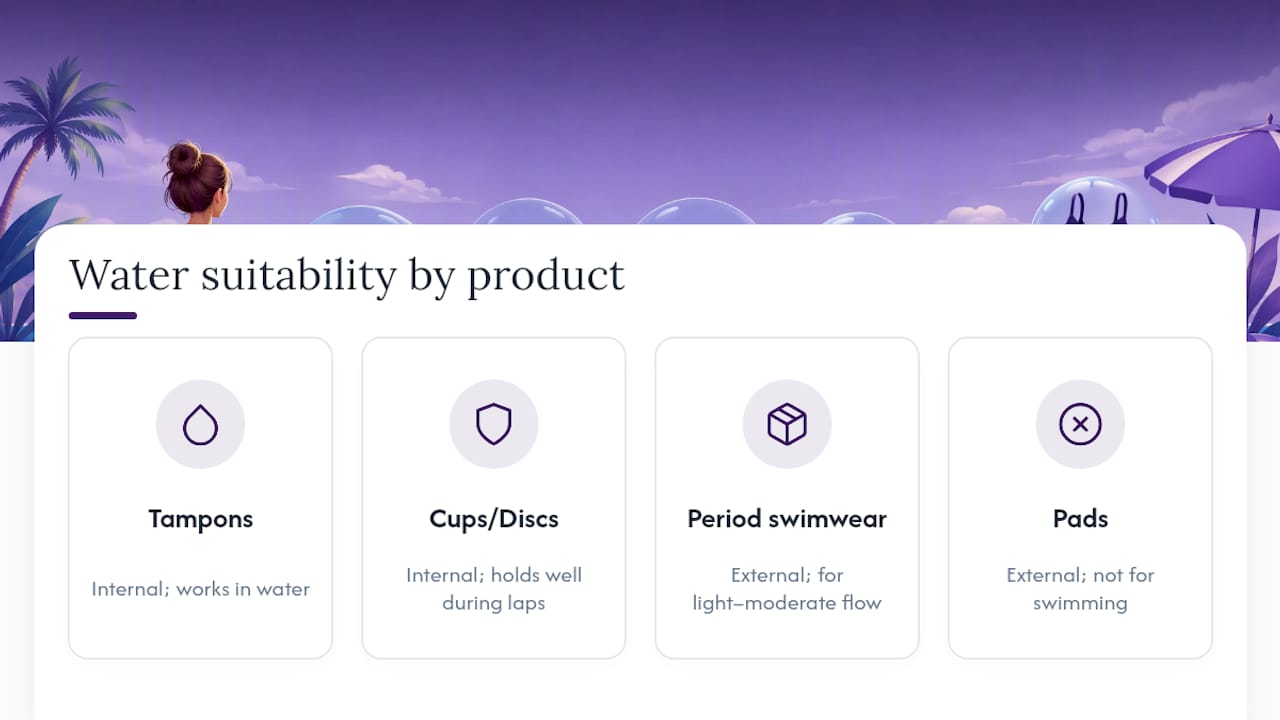
Here’s where tampons, cups, and period swimwear each earn their place, and why one classic product doesn’t belong in the pool at all.
Tampons. In water, a tampon works the same way it does anywhere else, absorbing flow before it exits the body, which is why water pressure doesn’t cause problems the way people assume. For a first swim, going one size up in absorbency gives extra peace of mind. Change it right after swimming, not hours later. KidsHealth notes some tweens find insertion tricky at first, which is exactly why practice at home matters more than the pool itself.
Menstrual cups and discs. These collect blood instead of soaking it up, so they tend to hold up well during laps or a pool party. They do come with a learning curve. A tween trying a cup for the first time the same morning as swim practice is setting herself up for stress.
Period swimwear. Built-in absorbent layers handle light-to-moderate flow, and this is the go-to for kids who aren’t ready for internal products. It’s ideal for swim lessons or shorter pool sessions, and one pair typically holds the equivalent of several tampons depending on the style. Wash and dry it exactly per the product’s instructions to keep the absorbent layer working.
Skip the pad. Pads are designed to sit against dry fabric, and water turns them into a heavy, soaked mess that stops working within minutes. WebMD and KidsHealth both point tweens toward tampons, cups, or period swimwear instead.
The best approach lets your daughter choose. Some tweens take to tampons right away; others want nothing to do with internal products for another year or two. Both are completely normal, and our guide on types of menstrual products can help her weigh the options herself.
Pro Tip: Have her try the product at home first, in the bathtub or shower, so the first time isn’t also the first time in front of friends at the pool.
Is Swimming During a Period Actually Safe and Hygienic?
Pool worries usually come from two directions: is it safe for her, and is it gross for everyone else? Both answers are reassuring. Chlorine and filtration systems are built to handle far more organic material than a small amount of menstrual flow, and Nike’s roundup of period experts confirms pool water quality isn’t meaningfully affected.
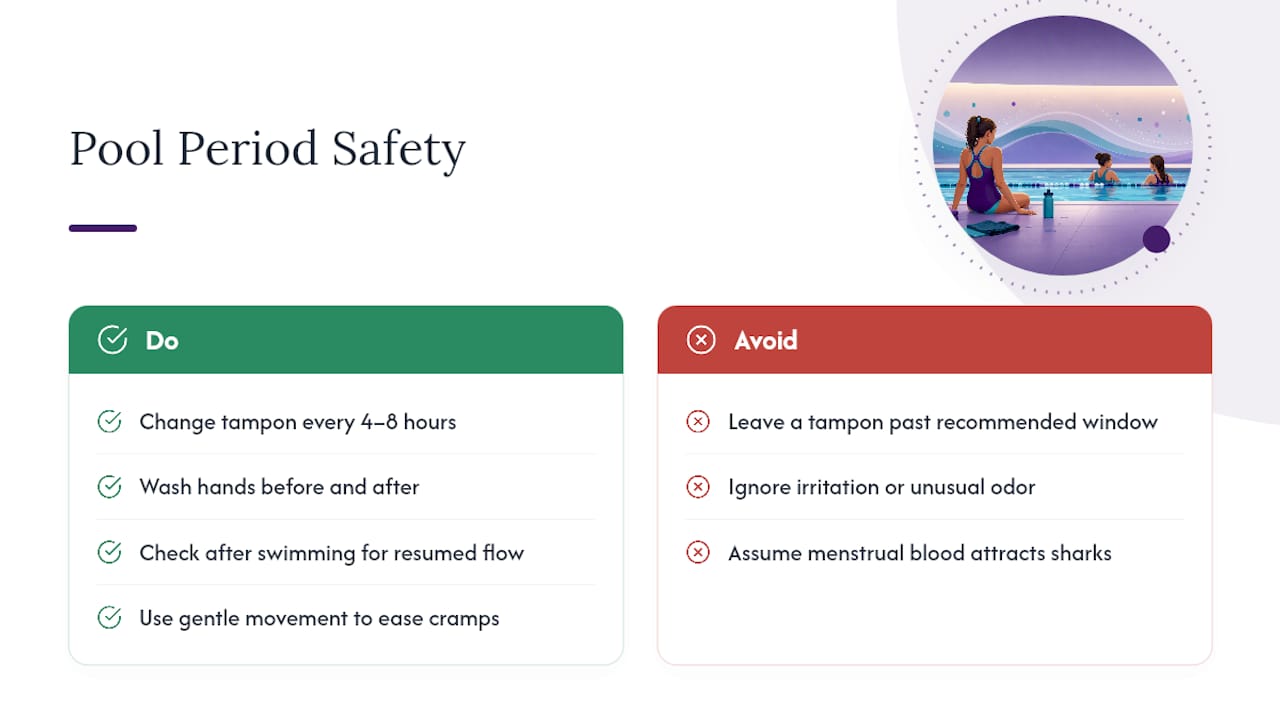
For internal products, the safety rules are simple. Change a tampon every four to eight hours, wash hands before and after, and stop using it if there’s irritation or an unusual odor. Toxic shock syndrome is rare, but leaving a tampon in far past the recommended window raises the risk, so a firm change schedule matters more on pool days than any other day. Our tampon safety plan breaks this down step by step if you want a printable version.
One physics note worth knowing: water pressure can reduce visible flow while she’s submerged, but it doesn’t pause her period. Flow often resumes the moment she stands up, coughs, or gets out of the pool, which is why a quick post-swim check matters.
And no, menstrual blood doesn’t attract sharks. That myth has circulated for decades with zero evidence behind it. Swimming can even ease cramps through gentle movement and the natural endorphin boost, so there’s a real upside to staying in the water rather than sitting out.
How Can Parents Prepare a Tween for Swimming on Her Period?
A little rehearsal at home turns a stressful first swim into a non-event. Try this sequence in the days before her lesson, pool party, or vacation:
- Practice at home first. Let her try inserting a tampon or cup in the bathroom, or simply wear period swimwear around the house to get used to the fit.
- Talk it through casually. Skip the big serious sit-down. A quick “Want to try this before Saturday?” works better than a formal conversation.
- Let her pick the product. She’s the one wearing it, so her comfort level should drive the decision, not yours.
- Plan the logistics. Pack spare clothes, figure out a private changing spot, and decide together whether the swim instructor needs to know anything.
- Know when to sit it out. Heavy flow days, real pain, or simply not feeling up to it are all valid reasons to skip swimming, and that’s fine too.
If period anxiety is the bigger hurdle, not the swimming itself, our guide on helping her manage period anxiety tackles that piece directly.
What Should You Pack for Swim Day?
A five-minute checklist beats a frantic bag search on the way out the door.
- Her chosen product (tampon, cup, or period swimwear), plus a backup
- Dry underwear and a spare swimsuit for after
- A wet bag for anything damp
- A small towel and hand sanitizer
- Wipes for quick cleanup
- Pain relief, only if a doctor has already approved it for her
Change out of a wet tampon or empty a cup as soon as she’s out of the pool, not after the drive home. Damp period swimwear should come off quickly too. Sitting around in wet fabric raises the chance of irritation, so that dry change of clothes is doing real work in the bag. Wash period swimwear according to the label to keep the absorbent layer performing the next time she wears it.
How Do The Monthlies’ Resources Support Swim-Ready Tweens?
Preparation works best when it’s practical, not theoretical, which is the whole idea behind what we build. Some puberty preparation boxes give first-period-age girls supplies sized for their bodies, plus plain-language education that makes a swim day feel more manageable. Some travel-sized kits are designed for vacations or overnight swim meets, addressing the scenarios parents often consider.
A few places to go deeper:
- Practice self-care routines for building comfort with new products before the pressure of a pool deck
- Sports and periods if swim team practice is part of her routine
- Tampon safety for teens for the exact change-schedule rules covered above
A Note From The Monthlies
We hear from a lot of anxious parents right before summer, and almost every one of them is worrying more than the situation calls for. Most tweens can swim on their period without any drama, once they’ve got the right product and a little practice under their belt. If you want the shortcut version, use the checklist above, or lean on our resources to walk through it step by step. You’ve got this, and so does she.
— The
A Simpler Way to Get Swim-Ready
Building a swim-day kit from scratch means guessing at sizes, tracking down period swimwear that actually fits a tween, and hoping you remembered the wet bag. The Amethyst Box skips that entire scramble by pairing tween-sized supplies with practice prompts that walk her through trying a product before she ever needs it at the pool. It’s built for exactly the moment covered in this guide: first-period season, the week before a swim unit starts at school, or a family trip where you’d rather not pack blind.
The On-The-Go Kit is the travel-sized version, made to slide into a swim bag or suitcase for weekend meets and vacations. If a friend or teammate is heading into her first swim season with a period to navigate, the Bestie Bundle covers two girls at once. And if she’s already logging pool hours regularly, an app like Swimbox can help you track her practice schedule so period timing never catches you off guard.
Head to the Amethyst Box product page to see what’s inside and get her set before her next swim day.
This article is general information, not a substitute for advice from a qualified doctor. Consult a qualified healthcare professional about your own circumstances before acting on anything here.
Sources
- Can I swim during my period? | U.S. Masters Swimming
- How to Go Swimming During Your Period | WebMD
- Can you swim on your period? Experts explain. | Nike
- Five things to know about periods | KidsHealth
0 comments