

Very heavy bleeding, clots bigger than a quarter, periods lasting more than seven days, disabling pain, no period by age 15, or a first period before age 8 are the teen period red flags that call for medical attention. If your daughter shows any of these, the next step is simple: call her pediatrician or an adolescent gynecologist this week, and head to urgent care if she’s fainting or bleeding through protection every hour.
TL;DR:
- More than seven days of heavy bleeding, passing large clots, or soaking a pad every hour signals the need for urgent medical care.
- Pain that worsens over cycles, causes vomiting, or disrupts daily activities suggests conditions like endometriosis or ovarian cysts.
- Waiting for multiple cycles to gather data on bleeding, pain, or missed activities improves diagnosis accuracy, with logs crucial for medical evaluation.
- Emergency care is necessary if she faints, bleeds through protection hourly, or passes very large clots with rapid heavy bleeding; routine visits suffice otherwise.
- Testing for anemia, bleeding disorders, and structural issues guides treatment, which can include iron supplements, hormonal therapy, or specialist referrals.
Table of Contents
- What Are the Warning Signs of an Abnormal Period?
- What Might These Symptoms Actually Mean?
- How Should You Track Your Teen’s Cycle Before an Appointment?
- When Should You Call the Doctor, and How Fast?
- What Tests and Treatments Should You Expect?
- How Do You Support Her While Getting Care?
- Supporting girls during this moment involves the belief that girls do better when they’re informed, not just treated. If your daughter is showing red flags, get her to a clinician first. Alongside that, pack a kit, practice how she’ll describe her symptoms, and use tracking so she walks in prepared, not scared.
- A Practical Companion While You Sort Out the Medical Side
- Sources
What Are the Warning Signs of an Abnormal Period?
Most menstrual quirks in the first couple of years are just a young body finding its rhythm. But certain signs cross the line from “normal irregularity” into something worth a phone call. Here’s a checklist to consider keeping on the fridge or in your phone.
Bleeding that’s genuinely heavy:
- Soaking a pad or tampon within an hour, repeatedly, for two hours or longer
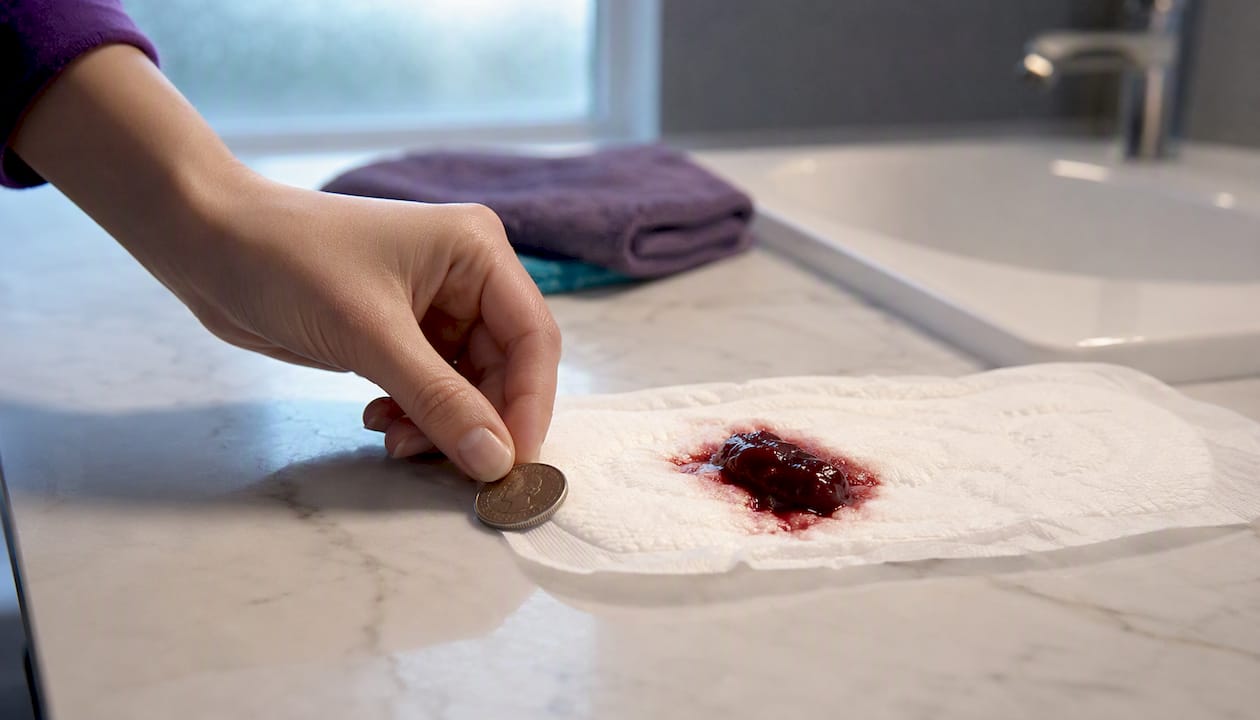
- Passing clots larger than a quarter
- Bleeding that continues past seven days
Pain that disrupts real life:
- Vomiting from cramp intensity
- Missing school, practice, or plans because of pain
- Pain that shows up between periods, not just during them
Timing that’s off the charts:
- A first period before age 8
- No period by age 15, or three years after breast development starts
Other clues pointing to a bleeding disorder:
- Easy bruising or frequent nosebleeds
- A family history of heavy periods or diagnosed bleeding disorders
What Might These Symptoms Actually Mean?
A heavy flow in the first year or two after menarche is often just anovulatory cycles. That’s the medical term for cycles where an egg doesn’t release, so the uterine lining builds up longer than usual and sheds heavier when it finally does. That pattern usually settles on its own. But when heavy bleeding sticks around, doctors start looking at bleeding disorders. Roughly 30 to 40 percent of teens evaluated for genuinely heavy menstrual bleeding turn out to have an underlying bleeding disorder, often von Willebrand disease. That’s not a rare outlier diagnosis. It’s common enough that most adolescent gynecologists screen for it as a matter of course.
Pain tells its own story. Cramps affect 50 to 75 percent of teens, so some discomfort is expected. What isn’t expected is pain that laughs off ibuprofen, shows up outside the period window, or gets progressively worse cycle over cycle. That pattern raises suspicion for endometriosis or an ovarian cyst, conditions that often go undiagnosed for years because “bad cramps” get normalized.
Early or delayed menarche can point to endocrine issues like thyroid dysfunction or, less commonly, a structural difference in the reproductive tract. And sudden bleeding between periods deserves a look at infection, medication side effects, or, rarely, a growth on the uterine lining.
How Should You Track Your Teen’s Cycle Before an Appointment?
Doctors can’t diagnose what they can’t measure, and “her period seems heavy” doesn’t give a clinician much to work with. Two or three cycles of real data changes the whole conversation.
- Log the dates. Start and end day of every period, plus total bleeding days.
- Count product changes. How many pads or tampons per hour during the heaviest days.
- Estimate clot size. Dime, quarter, or larger, noted honestly.
- Rate the pain. A simple 1 to 10 scale works fine.
- Note missed activities. School, sports, sleepovers skipped because of symptoms.
- Flag other bleeding. Nosebleeds, gum bleeding, easy bruising in that same window.
A paper calendar works. So does a phone tracking app, if that fits her better. Either way, consistency beats fancy features.
Pro Tip: Snap a photo of any large clots on a pad before flushing. A clinician reading “it was big” versus seeing an actual size comparison next to a quarter makes a real difference in how quickly they act.
When Should You Call the Doctor, and How Fast?
Not every red flag needs an emergency room visit tonight. Some need a phone call this week. Knowing the difference saves you a frantic drive and saves her an unnecessary ER bill.
Get urgent care or the ER now if she’s:
- Fainting, dizzy, or unusually pale
- Soaking through pads or tampons every hour for several hours straight
- Vomiting from pain that won’t ease with medication
- Passing very large clots alongside rapid, heavy bleeding
Schedule a routine visit for:
- Heavy bleeding that’s persistent but not currently dangerous
- Repeated missed school days tied to her period, which pediatric specialists flag as reason enough to seek evaluation on its own
- No period yet by the age thresholds above
- A new pattern of irregularity that’s lasted several cycles
- Suspected anemia, easy bruising, or a family bleeding history worth investigating
Bring her tracking log, a written symptom timeline, family bleeding history, and her current medication list. That packet turns a rushed fifteen-minute appointment into a productive one.
What Tests and Treatments Should You Expect?
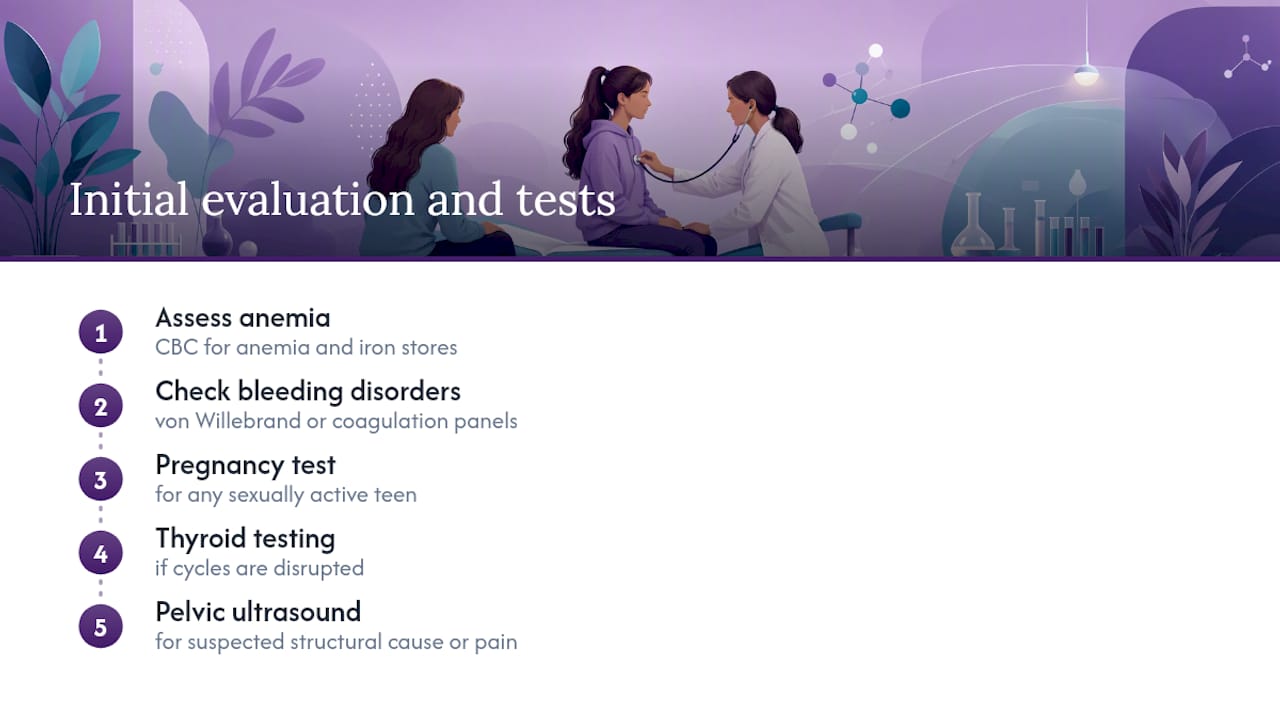
A first workup for heavy or irregular bleeding usually starts with a complete blood count to check for anemia, since chronic heavy flow depletes iron stores over time. If a bleeding disorder is suspected, your doctor may order von Willebrand panels or broader coagulation testing. A pregnancy test is standard for any sexually active teen with unusual bleeding, and thyroid testing often gets added since thyroid imbalance frequently disrupts cycles. Pelvic ultrasound comes into play when there’s suspicion of a structural issue or when pain patterns suggest something beyond typical cramping.
Treatment depends entirely on the cause, and most causes are manageable. Iron supplementation addresses anemia from chronic blood loss. Tranexamic acid can reduce heavy flow during periods without hormones. Hormonal options, whether pills, patches, or other methods, help regulate erratic cycles and dial down pain, and your teen’s doctor can walk through which fits her situation. When bleeding disorders or endometriosis are confirmed, referral to hematology or a pediatric and adolescent gynecology specialist usually follows. None of this is one-size-fits-all, and that’s the point: a diagnosis usually comes with a real plan attached.
How Do You Support Her While Getting Care?
Missing school or sports isn’t a side effect to shrug off. It’s itself a signal worth acting on. Validate what she’s feeling instead of minimizing it. In the short term, talk to her school about accommodations, time NSAIDs before pain peaks rather than after, and pack a discreet kit for school or practice so a surprise doesn’t turn into a crisis. If pain or heavy bleeding has her anxious, withdrawn, or dreading school, loop in a counselor alongside the medical workup. Bodies and minds don’t process this stuff separately.
Supporting girls during this moment involves the belief that girls do better when they’re informed, not just treated. If your daughter is showing red flags, get her to a clinician first. Alongside that, pack a kit, practice how she’ll describe her symptoms, and use tracking so she walks in prepared, not scared.
— The
A Practical Companion While You Sort Out the Medical Side
Getting a diagnosis takes appointments, tests, and patience. What your daughter needs in the meantime is confidence that she’s not navigating this alone. That’s exactly the gap the Amethyst Box was built to fill.
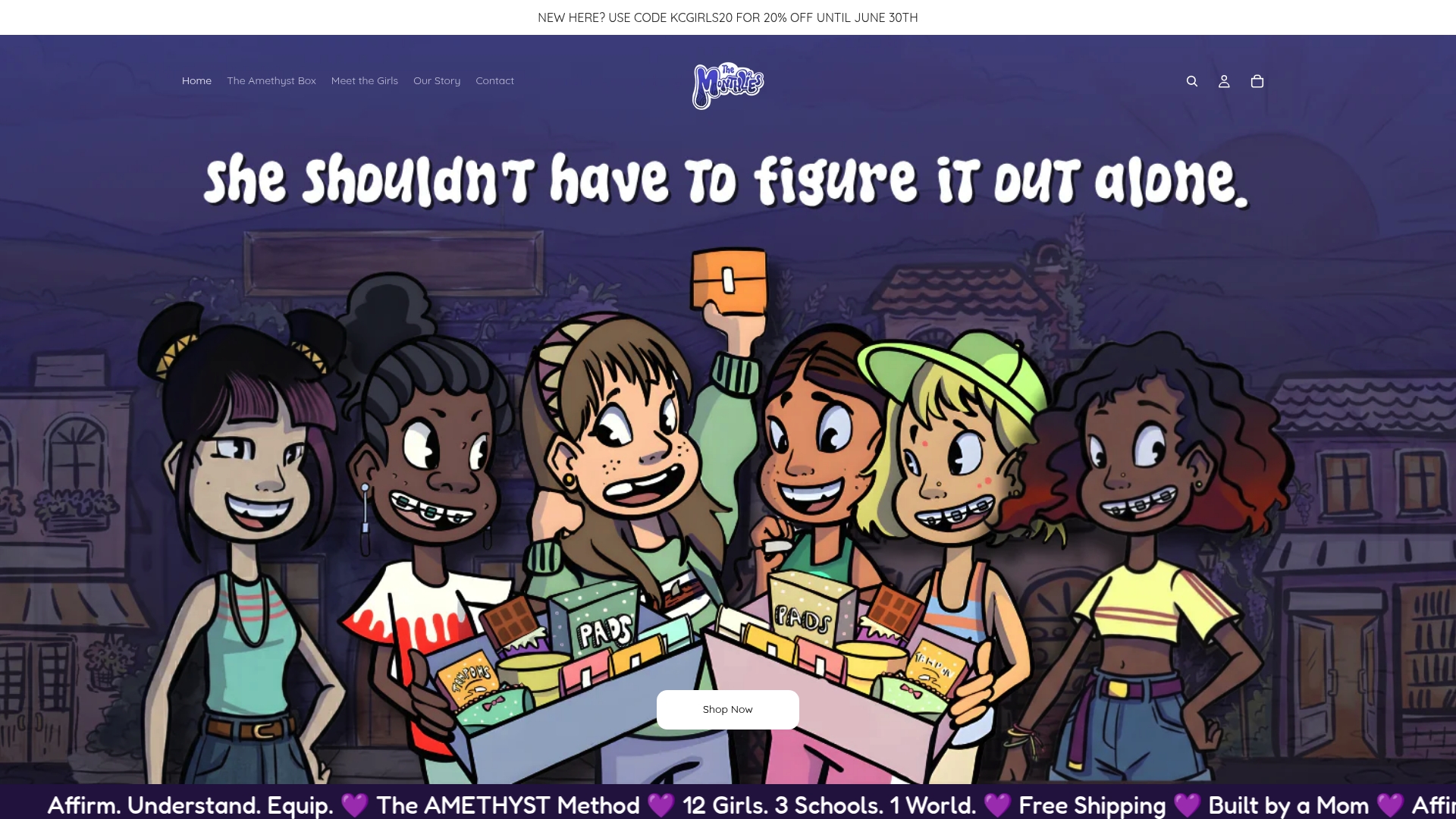
The Amethyst Box pairs affirmation cards and plain-language education about puberty with practical supplies sized for a younger body, so she isn’t fumbling with adult-sized products during an already confusing time. It’s not a substitute for the CBC, the ultrasound, or the hematology referral her doctor might order. Think of it as the emotional and practical scaffolding around the medical care she’s getting, something to make school days and sleepovers feel manageable while you work through the diagnostic process. If she needs something compact for her backpack or gym bag between now and her appointment, the On-The-Go Kit covers the essentials without the bulk. Visit Themonthliesbox to see which box fits where she is right now.
Sources
For deeper reading: NICHD on irregularity definitions, CDC on heavy bleeding, Children’s Hospital Colorado, Vanderbilt Health, and Cleveland Clinic on diagnosis and treatment.
- Heavy menstrual bleeding | CDC
- When to worry about irregular periods in teens | Children’s Hospital Colorado
- Period problems in teens: When to get help | Vanderbilt Health
- Abnormal menstruation (periods) | Cleveland Clinic
0 comments