

Most teens’ periods fall within a broad normal range, and the single most important thing you can do right now is start tracking. According to UChicago Medicine, most adolescents get their first period during early adolescence. Irregular cycles in the first couple of years are completely expected. What matters most is knowing what “normal” looks like for your daughter and recognizing the signs that warrant a call to her pediatrician or adolescent gynecologist.
Here’s what to do right now:
- Carry a pad or period underwear in your backpack every day once puberty begins.
- Keep a basic pain reliever like ibuprofen at home (with caregiver approval).
- Start a simple period log, even just in your phone’s notes app, recording start date, how long it lasts, and how you feel.
And for caregivers: stock a small period kit, open the conversation early, and know the red flags covered below. You don’t have to have all the answers. You just have to show up.
Table of Contents
- What is a period, and why does it happen?
- When do teens usually get their first period?
- How long is a normal cycle, and what counts as heavy flow?
- What are common period symptoms, and how can you manage them?
- Which period products are right for teens?
- How should you track your cycle, and when is it time to see a doctor?
- How can caregivers support teens emotionally and practically?
- What should go in a first-period kit?
- Key Takeaways
- Periods are something to grow through, not just deal with
- A ready-made kit so you’re never caught off guard
- Useful sources and further reading
What is a period, and why does it happen?
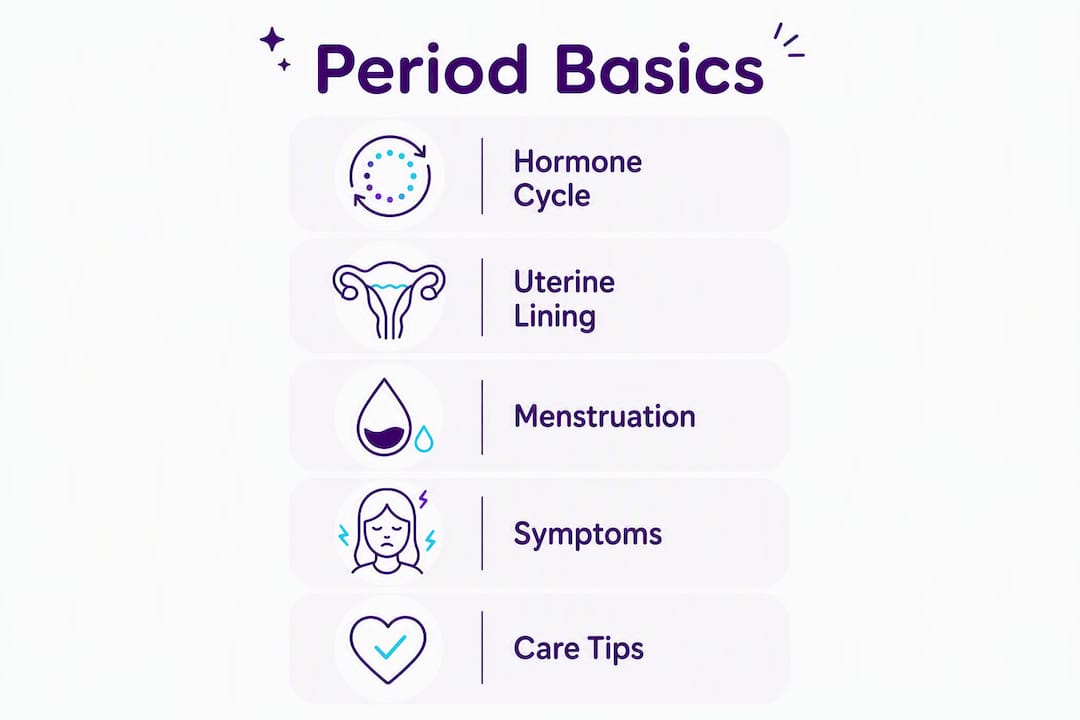
A period, also called menstruation, is the monthly shedding of the uterine lining through the vagina. It is not an injury. It is the body doing exactly what it is designed to do.
Here’s the short version of the biology: each month, hormones signal the uterus to build up a thick, soft lining in case a fertilized egg needs a place to grow. When pregnancy doesn’t happen, those hormone levels drop, and the lining sheds. That shedding is what causes bleeding. The whole process is part of the menstrual cycle, which also includes ovulation, the release of an egg from the ovary.
For a deeper, age-appropriate explanation you can read together, Themonthliesbox has a helpful resource: what a period is and why it happens.
One thing worth saying clearly: the blood looks different from a cut or wound. It can be bright red, dark red, or even brownish, especially at the start or end of a period. That variation is normal. The body is not broken.
When do teens usually get their first period?
Most adolescents get their first period between ages 10 and 15, with 12 being the average. Periods typically follow a predictable sequence of puberty changes, so knowing the signs can help caregivers prepare.
The usual order looks like this:
- Breast development begins first, often between ages 8 and 13.
- Body hair appears under the arms and in the pubic area.
- Vaginal discharge (clear or whitish) usually starts about 6 months to a year before the first period.
- The first period typically arrives 2–2.5 years after breast development begins.
When to check with a clinician:
- Period arrives before age 8 (this may indicate early puberty and warrants evaluation).
- No period by age 15, or no period within 3 years of breast development starting.
- Any signs of puberty before age 7 or 8.
If you’re in either of those situations, the right step is a conversation with a pediatrician or adolescent gynecologist, not a wait-and-see approach. Bring a note of any puberty signs you’ve observed and when they started. That context helps a clinician quickly assess what’s going on.
How long is a normal cycle, and what counts as heavy flow?
A typical menstrual cycle runs anywhere from 21 to 35 days, measured from the first day of one period to the first day of the next. The period itself usually lasts 2–7 days. For teens, especially in the first year or two, cycles are often irregular, and that’s expected.
It can take a few years after the first period for cycles to become regular. A teen who skips a month or has two periods close together in her first year is not necessarily experiencing a problem. Her body is still calibrating.
Understanding flow amount:
| Flow Level | What It Looks Like | Notes |
|---|---|---|
| Light | Spotting or minimal pad use | Common at start or end of period |
| Moderate | Changing a pad every 3–4 hours | Typical for heaviest days |
| Heavy | Changing a pad every 1–2 hours | Worth monitoring |
| Very heavy | Soaking through a pad or tampon in under 1 hour | Seek medical evaluation |
According to Johns Hopkins Medicine, soaking through a pad or tampon in under one hour is a clinical indicator for evaluation and can put a teen at risk for iron-deficiency anemia. That’s the number to remember.
Statistic to know: A significant portion of teens experience painful cramps within a year or two of their first period. Dysmenorrhea, the clinical term for menstrual cramps, is the most common period complaint in adolescents, and it is treatable.
What are common period symptoms, and how can you manage them?
Cramps are the most talked-about period symptom, but they’re far from the only one. Teens often experience a combination of physical and emotional changes in the days before and during their period.
Common symptoms include lower abdominal cramps, bloating, breast tenderness, headaches, fatigue, mood shifts, and digestive changes like nausea or loose stools. These are all part of the hormonal fluctuation that drives the cycle.
Practical relief options that work:
- NSAIDs first. Ibuprofen (Advil, Motrin) or naproxen sodium (Aleve) work best when taken at the first sign of cramps, not after pain peaks. Follow dosage instructions and always take with food.
- Heat. A heating pad or warm water bottle on the lower abdomen relaxes the uterine muscle and genuinely reduces pain.
- Gentle movement. Light walking or stretching can ease cramping better than staying still.
- Sleep and hydration. Both are underrated. Fatigue makes cramps feel worse, and dehydration can increase bloating.
- Iron-rich foods. Foods high in iron, like lean meats, beans, and fortified cereals, help replace what’s lost during heavier periods and reduce anemia risk.
For more caregiver-specific strategies, Themonthliesbox covers first-period pain management tips for parents in detail.
When symptoms cross a line: If cramps are severe enough to keep a teen home from school, limit sports, or don’t respond to OTC medication, that’s a signal to see a clinician. According to HealthyChildren.org, periods lasting more than seven days, severe pain limiting daily life, or heavy bleeding all warrant medical evaluation.
Pro Tip: Have your daughter take ibuprofen the evening before her period is expected to start, based on her tracked cycle. Starting before cramps peak is significantly more effective than waiting until the pain is already intense.
For school days specifically, a small heating patch (like ThermaCare or a similar air-activated patch) fits discreetly under clothing and provides hours of relief without needing a nurse visit.
Which period products are right for teens?
There’s no single right answer here, and that’s actually good news. Teens have more options than ever, and starting simple is always fine.
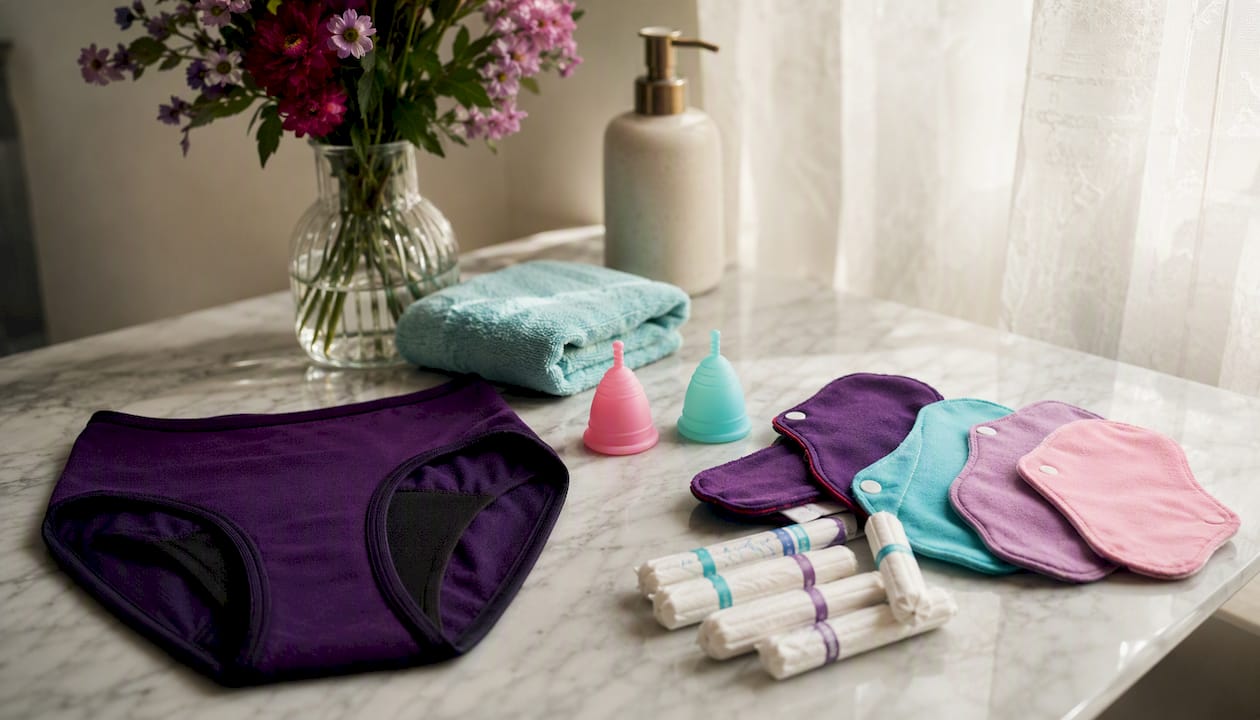
Pads are the easiest starting point. They attach to underwear, require no insertion, and come in a range of sizes for light to heavy flow. Experts recommend starting with pads or period-proof underwear before moving to tampons or cups, especially for first-time users.
Period underwear works like a pad built into the underwear itself. It’s a great backup option or a standalone choice for lighter days. Many teens find it less stressful than managing a pad at school.
Tampons are useful for swimming and sports. They do require insertion, which can feel intimidating at first. The key safety rule: never wear a tampon for more than 8 hours, and change it every 4–6 hours to reduce the risk of toxic shock syndrome (TSS). TSS is rare but serious, so the timing rule matters.
Menstrual cups are reusable silicone cups inserted like a tampon. They hold more than a tampon and can stay in for up to 12 hours. Cleaning requires rinsing with water and a mild soap. They’re a great long-term option but may feel like a lot to manage at first.
Pro Tip: Practicing tampon or cup insertion on a non-period day, using a little water-based lubricant, helps build confidence without the pressure of active bleeding. It’s a low-stakes way to get comfortable with the process.
School logistics: Keep an emergency kit in a locker or backpack with two pads or a spare pair of period underwear, a small zip bag for disposal, and a change of underwear. Planned Parenthood recommends telling the school nurse when needed and knowing you can discreetly ask a teacher to step out. For a full school-day guide, Themonthliesbox has a dedicated resource on handling your period at school.
How should you track your cycle, and when is it time to see a doctor?
Tracking symptoms, not just bleeding dates, is the single most useful tool clinicians use to decide whether a teen needs evaluation. A phone app like Clue or Flo works well, but a simple paper calendar does the job too.
What to track each cycle:
- Date period started and ended
- Flow amount each day (light, moderate, heavy)
- Pain level on a 1–10 scale
- Any activities missed because of symptoms
- Mood changes or emotional shifts
- Any spotting between periods
Red flags that mean: call a clinician now.
- No period by age 15
- Period starts before age 8
- Cycles still irregular after 2 years of menstruating
- Soaking through a pad or tampon in under 1 hour
- Periods consistently lasting more than 7 days
- Pain that prevents normal daily activities or doesn’t respond to OTC medication
Bringing a 2–3 month symptom log to an appointment gives the clinician objective data rather than a general description. That specificity speeds up diagnosis and makes the visit more productive for everyone.
How can caregivers support teens emotionally and practically?
The way a caregiver responds to a teen’s first period shapes how she feels about her body for years. A calm, matter-of-fact response goes further than any product.
Phrases that help open the conversation:
- “This is completely normal, and I’m here for whatever you need.”
- “Do you want to talk about what to expect, or would you rather I just make sure you have what you need?”
- “You can always come to me, even at school or in the middle of the night.”
Practical support matters just as much as words. Stock the bathroom with pads in different sizes before the first period arrives. Keep a small kit in the car. Check in privately, not in front of siblings or friends. If your daughter seems anxious, Themonthliesbox has a parent-focused guide on managing period anxiety that covers specific strategies.
For school, consider emailing the school nurse at the start of the year to let them know your daughter has started her period and may need occasional support. That one email removes a lot of friction.
Pro Tip: Normalize the conversation by talking about periods matter-of-factly before the first one arrives. Girls who hear about menstruation as a normal, expected part of growing up report less anxiety and embarrassment when it actually happens.
Peer teasing is real, and it stings. If your daughter comes home embarrassed about a leak or a comment from a classmate, validate the feeling first before problem-solving. “That sounds really uncomfortable” lands better than “It’s no big deal.” Then move to practical solutions together.
What should go in a first-period kit?
A good first-period kit removes the panic from an unexpected period. Build one together with your daughter so she knows exactly what’s in it and feels ownership over it.
Essentials:
- 2–3 pads in different absorbencies (regular and overnight)
- A pair of period underwear as backup
- Individually wrapped wipes (unscented)
- A spare pair of underwear in a small zip bag
- A second small zip bag for soiled items
- Ibuprofen or naproxen (if caregiver-approved and school policy allows)
Comfort items:
- A disposable heat patch for cramps
- A small snack (a piece of dark chocolate or a granola bar works well)
- A water bottle
- A short, handwritten note from a caregiver, or a plan for a quick phone call if she needs reassurance
For younger teens just starting out, do a practice run at home: open a pad, attach it to underwear, and talk through what to do if it happens at school. For older teens who want to try tampons or a cup, the Themonthliesbox On-The-Go Kit is a compact, school-ready option that covers the essentials without the overwhelm of building one from scratch.
Key Takeaways
Most teen periods are normal, and starting a simple symptom log is the single most useful step a teen or caregiver can take right now.
| Point | Details |
|---|---|
| Normal age range | Most teens get their first period between ages 10 and 15; 12 is the average. |
| Irregular cycles are expected | Cycles may take 2–3 years after the first period to become regular. |
| Heavy bleeding red flag | Soaking through a pad or tampon in under 1 hour warrants medical evaluation due to anemia risk. |
| Track symptoms, not just dates | Logging pain, flow, and missed activities gives clinicians the data they need to help. |
| Themonthliesbox supports preparation | The Amethyst Box and On-The-Go Kit provide period supplies, education, and comfort items in one ready-made kit. |
Periods are something to grow through, not just deal with
Here’s what I think gets missed in most period conversations: we spend so much time on the biology and the products that we skip the part where we tell girls it’s okay to have feelings about all of this. Confusion, embarrassment, frustration, even grief about a changing body — those are real, and they deserve space.
The medical guidance is clear and reassuring: most teen periods are normal, most symptoms are manageable, and the first gynecology visit is usually just a conversation. UChicago Medicine notes that first adolescent gynecology visits are often educational with no pelvic exam required, which removes a lot of the fear around seeking help.
But the emotional piece is equally real. A girl who feels supported, informed, and prepared handles her period differently than one who was handed a pad and told to figure it out. That confidence doesn’t come from a single conversation. It builds over time, through open check-ins, practical preparation, and the message that her body is not a problem to manage but something to understand and care for.
If you’re a caregiver reading this, you’re already doing the right thing by looking for information. That matters more than having perfect answers.
A ready-made kit so you’re never caught off guard
Putting together a first-period kit from scratch takes time, and knowing what to include isn’t always obvious. Themonthliesbox built the Amethyst Box specifically for this moment: it includes period supplies sized for tweens and teens, affirmation cards, educational materials, and comfort items, all guided by the Amethyst Method’s three phases of affirm, understand, and equip.
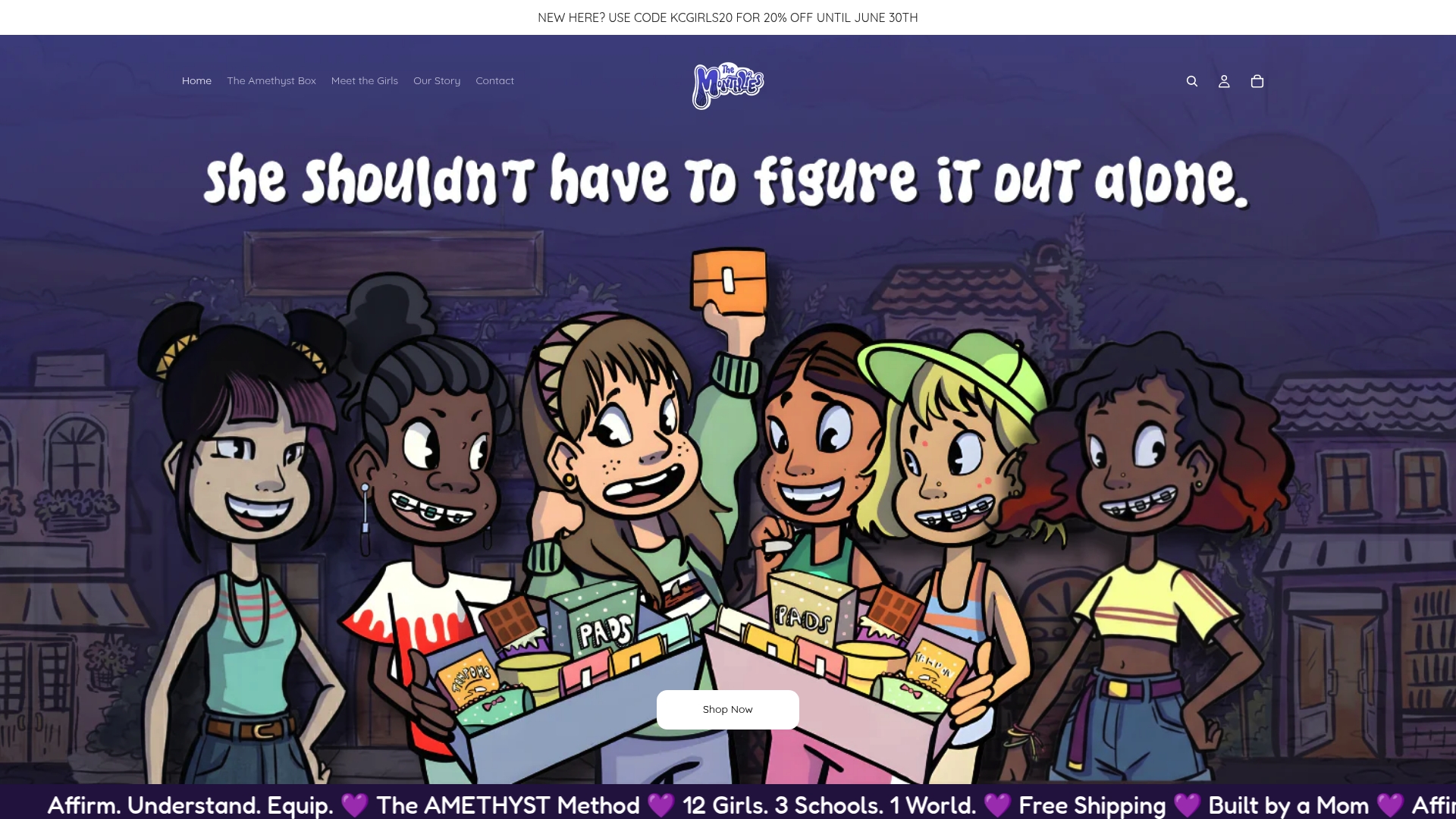
For girls who are already menstruating and need something portable, the On-The-Go Kit fits in a backpack or locker and covers the school-day essentials without the bulk. Both options are available at Themonthliesbox and ship directly to your door.
This article is for general informational purposes only and is not a substitute for professional medical advice. If you have concerns about your daughter’s menstrual health, please consult a pediatrician or adolescent gynecologist.
Useful sources and further reading
The information in this article draws from the following trusted resources. Bring these to appointments or share them with your daughter’s care team.
- UChicago Medicine: Normal teen menstrual cycles and when to see a gynecologist — covers age ranges, cycle norms, and what to expect at a first visit
- Johns Hopkins Medicine: Menstrual cycle management in adolescents — clinical guidance on heavy bleeding and treatment options
- Mayo Clinic: Menstrual cycle tracking — practical symptom-tracking guidance
- HealthyChildren.org: Menstrual disorders in teens — American Academy of Pediatrics guidance on dysmenorrhea and when to seek care
- Planned Parenthood: What to expect when you get your period — teen-friendly overview of products and school logistics
- Nemours KidsHealth: All about periods — accessible teen-facing explainer with nutrition and hygiene tips
For your appointment: Print or screenshot your daughter’s symptom log and bring it. Note the date her first period started, how long cycles have been, and any symptoms that have limited her activities. That information helps a clinician assess her situation quickly and accurately.
0 comments