

First period protection options are defined as the full range of menstrual products a girl can use to manage her period safely and comfortably. Contemporary Pediatrics organizes these into two clear categories: external products (pads, panty liners, period underwear) and internal products (tampons, menstrual cups, menstrual discs). That simple framework reduces confusion and helps parents guide their daughters with confidence. The right choice depends on flow level, activity, and comfort, so starting with external options and building from there is the most practical approach.
1. What are the main types of first period protection options?
The two main categories of menstrual protection are external and internal. External products sit against the body on the outside, while internal products are worn inside the vaginal canal. Framing choices this way reduces anxiety for both parents and girls. Most first periods are best managed with external products first, then internal options introduced as confidence grows.
2. External options: pads, panty liners, and period underwear
Pads and panty liners are the simplest first period supplies available. They attach to the inside of underwear and come in a range of absorbencies, from light liners to overnight pads. Pads and liners are widely recommended for beginners because they require no insertion and are easy to change at school or home.
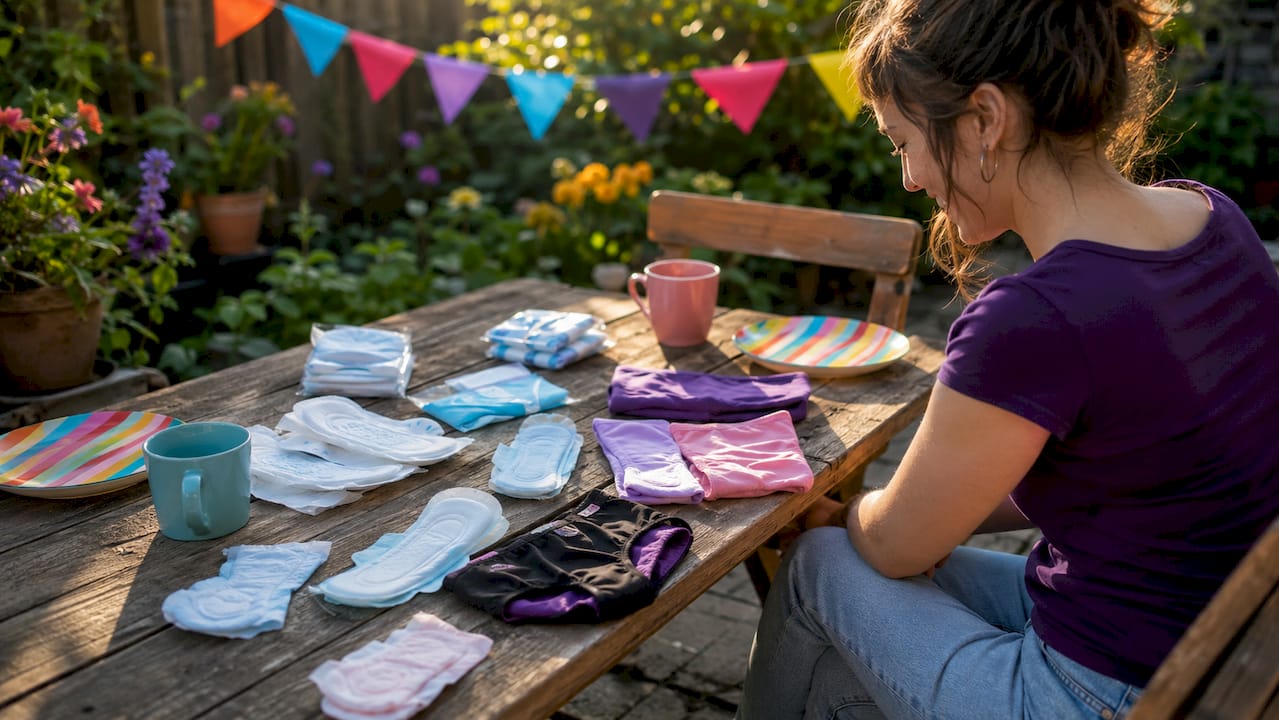
Period underwear works like a built-in pad. It absorbs flow directly into the fabric lining and can be layered over a liner for extra protection on heavier days. Most period underwear is machine washable and reusable, which makes it a cost-effective long-term option.
Pro Tip: Pack a small zip pouch with two pad sizes, a liner, and a spare pair of underwear. That covers light, medium, and unexpected heavy days without taking up much space in a backpack.
Here is a quick comparison of external period protection methods:
| Product | Absorbency | Comfort | Cost | Best for |
|---|---|---|---|---|
| Panty liner | Light | High | Low | Spotting, backup use |
| Regular pad | Medium | High | Low | School days, beginners |
| Overnight pad | Heavy | Medium | Low | Nighttime use |
| Period underwear | Light to medium | High | Medium to high | Layering, reusable option |
UCDavis Student Health Services recommends changing absorbency products at least every 4 hours. That schedule prevents odor and reduces the risk of irritation, so building it into a school-day routine early makes a real difference.
3. How do internal period protection options work?
Internal products are worn inside the body and are better suited for active days, swimming, or girls who prefer a less noticeable option. They require more practice than external products, so most experts suggest waiting until a girl feels comfortable with her cycle before trying them.
Tampons
Tampons are small cylinders of absorbent material inserted into the vaginal canal. They come with or without an applicator. Applicator tampons are generally easier for beginners. Tampons must be changed every 4–8 hours. Leaving one in longer raises the risk of Toxic Shock Syndrome (TSS), a rare but serious bacterial infection.
Menstrual cups
Menstrual cups are small, reusable silicone cups that collect flow rather than absorb it. They can be worn for up to 12 hours, which makes them practical for school days and overnight use. There is a learning curve with insertion and removal, so most girls benefit from practicing at home before relying on a cup at school.
Menstrual discs
Menstrual discs sit at the base of the cervix rather than in the vaginal canal. Like cups, discs can be worn up to 12 hours and hold more volume than a standard tampon. They are a good option for girls who find cups uncomfortable but want longer wear time.
Here is a summary of internal menstrual protection choices:
- Tampons: Easy to find, good for active days, must be changed every 4–8 hours
- Menstrual cups: Reusable, long wear time, requires practice to insert correctly
- Menstrual discs: Longer capacity, sits higher than a cup, less widely available
Sexual Health Victoria recommends using pads overnight instead of tampons to reduce TSS risk. That one swap is one of the most practical safety habits you can teach early.
Pro Tip: Always match absorbency to actual flow. Using a higher-absorbency tampon than needed on a light day increases TSS risk. Start with the lowest absorbency that works.
4. How to build a first period kit for home and school
A well-stocked first period kit removes the panic from unexpected moments. Luna’s parent guide recommends including pads in multiple absorbencies, a panty liner, spare underwear, wipes, and a small pouch. That combination covers most situations without overpacking.
School kits and home kits serve different needs. A school kit should be compact and discreet, focused on quick changes between classes. A home kit can be larger and include comfort items like heat patches or pain relief.
Separate kit routines for school and home help girls build reliable habits early. Knowing exactly what is in each kit reduces stress and builds confidence.
| Item | Function | School kit | Home kit |
|---|---|---|---|
| Regular pad | Main daytime protection | Yes | Yes |
| Overnight pad | Heavy flow and nighttime | No | Yes |
| Panty liner | Light days and backup | Yes | Yes |
| Spare underwear | Emergency change | Yes | Yes |
| Wipes | Quick clean-up | Yes | Yes |
| Heat patch | Cramp relief | Optional | Yes |
| Pain relief | Cramp management | Optional | Yes |
For parents who want to go further, adding a short educational booklet or a period tracking app to the home kit gives girls a tool for understanding their own cycle. The first period at school guide from Themonthliesbox covers what to prepare specifically for the school environment.
5. How to choose the right combination of period products
No single product works for every day of a period. Flow varies from light spotting on day one to heavier flow on days two and three, so mixing product types is the most practical approach. Using pads alongside cups or tampons provides backup confidence, especially on unpredictable days.
Here are the key factors to consider when personalizing menstrual protection choices:
- Light flow days: Panty liners or light pads are enough. Period underwear alone can also work.
- Medium flow days: Regular pads or a tampon with a liner as backup covers most activity levels.
- Heavy flow days: Overnight pads for home, or a tampon plus a pad for school days with longer class periods.
- Sports and swimming: Tampons or menstrual cups are the only options that allow full movement in water.
- Overnight: Overnight pads or period underwear are the safest choices. Avoid tampons overnight.
- Unpredictable days: Layer a liner under a tampon or cup for added security.
Encourage your daughter to track her cycle from the start. Even a simple notes app works. Knowing when her period is due and how her flow changes across days makes product choices much easier over time. The period self-care routine guide from Themonthliesbox offers a practical starting framework for preteens.
Matching absorbency to flow and sticking to regular changing schedules are the two most important safety habits for any product type. Getting those two habits right matters more than which specific product she chooses.
Key takeaways
The most effective approach to first period protection is pairing the right external product for daily use with a clear changing schedule, then introducing internal options gradually as comfort and confidence grow.
| Point | Details |
|---|---|
| Start with external products | Pads and liners are the easiest first period supplies for beginners and school use. |
| Change products every 4 hours | Regular changes prevent odor, irritation, and reduce TSS risk with internal products. |
| Build two separate kits | A compact school kit and a fuller home kit cover different practical needs. |
| Layer for unpredictable days | Using a pad as backup with a tampon or cup builds confidence on heavy or uncertain days. |
| Match absorbency to flow | Using the correct absorbency level is the single most important safety habit for tampon use. |
What I’ve learned about guiding girls through their first period
Most parents focus almost entirely on which product to buy. That is understandable. But the girls who feel most prepared are the ones whose parents talked openly about what to expect before it happened. The product is almost secondary.
What I have seen consistently is that anxiety drops when a girl already has a kit in her bag before her period arrives. She does not need to figure anything out in a stressful moment. The kit does the work. The conversation beforehand does the rest.
The other thing worth saying plainly: no product is perfect on the first try. Some girls will leak. Some will find tampons uncomfortable at first. That is normal, and it is not a failure. Patience and a backup plan matter more than finding the perfect product immediately.
The best period protection for beginners is the one she feels confident using. Start there, and build from it.
— Themonthliesbox
Themonthliesbox has first period kits ready for your daughter
Putting together a first period kit from scratch takes time. Themonthliesbox has already done that work for you.
The Amethyst Box is designed specifically for first periods. It includes practical period supplies, affirmations, and educational materials built around the Amethyst Method: affirm, understand, and equip. For girls who need something portable and ready for school, the On-The-Go Kit packs period and self-care essentials into a compact, discreet format. Both options take the guesswork out of preparation and give your daughter something she can feel good about carrying.
FAQ
What period products are best for a first period?
Pads and panty liners are the best first period supplies for beginners. They are easy to use, require no insertion, and come in absorbencies suited to light and medium flow.
How often should a preteen change her pad or tampon?
UCDavis Student Health Services recommends changing absorbency products at least every 4 hours. That schedule applies to both pads and tampons during school and activity hours.
Is it safe for a teen to use tampons on her first period?
Tampons are safe when used correctly, but most experts recommend starting with pads. If tampons are introduced, use the lowest absorbency needed and always change within 4–8 hours to reduce TSS risk.
What should a first period school kit include?
A school kit should include a regular pad, a panty liner, a spare pair of underwear, and wipes in a small zip pouch. That covers most situations without taking up space in a backpack.
Can period underwear replace pads for a first period?
Period underwear can work as a standalone option on light flow days. On medium or heavy days, layering period underwear with a liner provides more reliable protection for beginners.
0 comments