

A menstrual cup is a small, flexible, bell-shaped device inserted into the vagina to collect menstrual fluid rather than absorb it. Made from medical-grade silicone, rubber, or plastic, most cups are reusable and can last anywhere from 6 months to 10 years depending on the brand and how well you care for them. Think of it like catching raindrops in a bucket instead of soaking them up with a sponge. That one difference changes everything about how you experience your period.
Here is a quick overview of what makes menstrual cups stand out:
- What they are: Flexible, bell-shaped cups worn inside the vagina during menstruation
- How they work: They collect menstrual fluid instead of absorbing it like tampons or pads
- Materials: Medical-grade silicone, natural rubber, latex, or thermoplastic elastomers
- Lifespan: Most cups are reusable and can last several years with proper care
- Cost: Generally cost-effective compared to disposables over time
- Popular options: DivaCup, Cora The Easy-Does-It Cup, MeLuna Classic, MeLuna Shorty, and Voxapod Menstrual Cup
- Key benefits: Reusable, eco-friendly, longer wear time, and less odor
Whether you are exploring period products for the first time or helping a young girl prepare for her first period, this guide covers everything you need to feel confident and informed.
What types of menstrual cups are available?
Not all menstrual cups are built the same, and that variety is actually a good thing. Different bodies need different fits, and the range of materials, sizes, and firmness levels means there is likely a cup that works well for you.
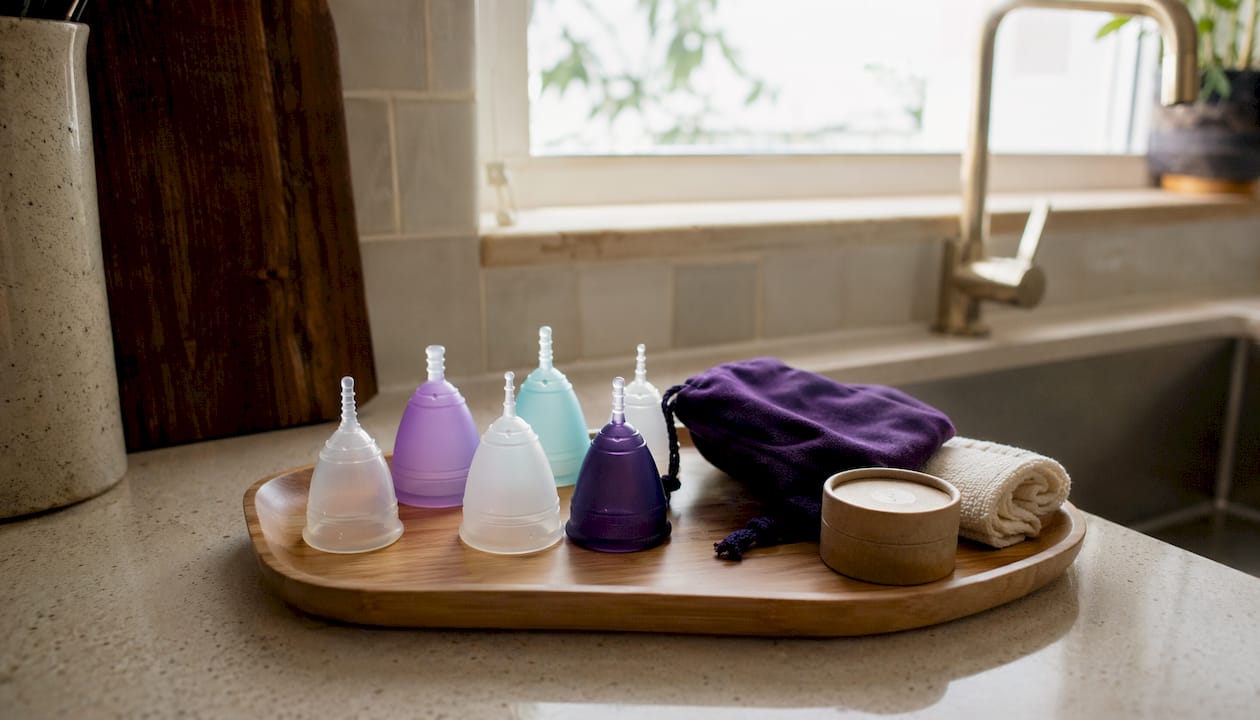
Materials
The material a cup is made from affects both comfort and safety. Medical-grade silicone, latex, and thermoplastic elastomers are all considered safe for body use, hypoallergenic, and non-toxic when cleaned properly. Natural rubber is another option, though people with latex allergies should avoid it. Silicone tends to be the most popular because it is soft, durable, and easy to clean.
Sizes and firmness
Most brands offer at least two sizes, typically labeled small and large, though some go further with options like “shorty” designs for those with a lower cervix. Size choice usually depends on:
- Age and flow: Younger users or those with a lighter flow often start with a smaller size
- Cervix height: A lower cervix calls for a shorter cup like the MeLuna Shorty
- Birth history: Those who have given birth vaginally may find a larger size more comfortable
- Firmness preference: Softer cups feel gentler but can be harder to open; firmer cups pop open more easily but may feel more noticeable
Popular cup options
- DivaCup: One of the most widely recognized cups in the US, available in multiple sizes and made from medical-grade silicone
- Cora The Easy-Does-It Cup: Designed with beginners in mind, featuring a softer feel and easy-grip ridges
- MeLuna Classic: A thermoplastic elastomer cup available in a wide range of sizes and firmness levels, including a shorty version for lower cervixes
- MeLuna Shorty: Specifically designed for people with a low cervix, shorter in length than standard cups
- Voxapod Menstrual Cup: A softer silicone option that emphasizes comfort and a flexible fit
Exploring the full range of menstrual product options can help you or your daughter find the best fit before committing to one style.
How do you use a menstrual cup step by step?
Using a menstrual cup takes a little practice, and that is completely normal. Most people get the hang of it within a few tries. Here is how to do it from start to finish.
Insertion
- Wash your hands thoroughly with soap and water before touching the cup.
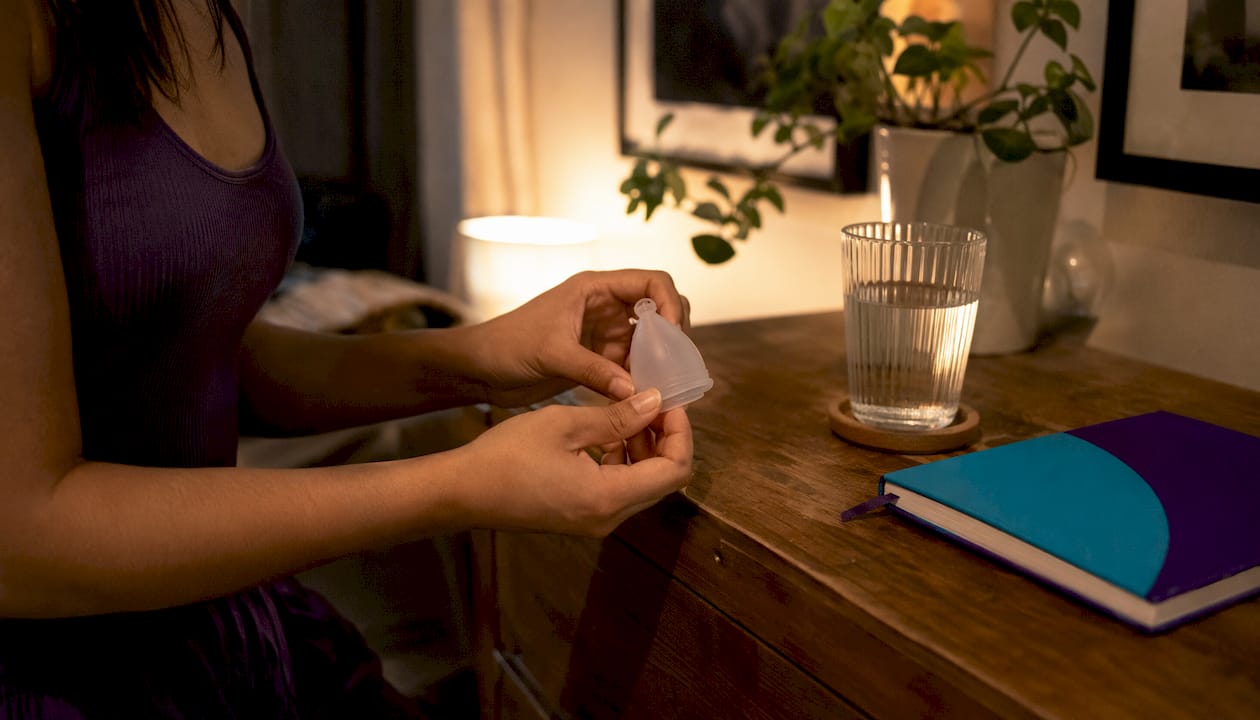
- Fold the cup using one of these common methods: the C-fold (fold it in half to form a C shape), the punch-down fold (push one side of the rim down into the cup), or the 7-fold (fold one side down at an angle). The punch-down fold creates the smallest insertion point and works well for beginners.
- Relax your body. Tension makes insertion harder. Try sitting on the toilet, squatting, or standing with one leg raised.
- Insert the folded cup into the vaginal opening, angling it slightly toward your tailbone rather than straight up.
- Release the fold once the cup is inside, and let it open fully. You should feel or hear a soft pop as it expands.
- Rotate the cup gently by gripping the base and turning it one full rotation to confirm it has opened and formed a seal.
Checking placement
Run a finger around the base of the cup to feel whether it is round and fully open. If it feels dented or collapsed, grip the base and gently squeeze and release to encourage it to pop open. The cup should sit low in the vaginal canal, below the cervix, with the stem just inside or barely outside the vaginal opening.
How long can you wear it?
Menstrual cups can be worn up to 12 hours depending on your flow, holding up to three times more fluid than a regular tampon. On heavier days, you may need to empty it every 4–6 hours. On lighter days, you can go much longer between empties.
Removal
- Wash your hands again before removal.
- Relax and bear down slightly using your pelvic floor muscles, as if you are pushing gently. This brings the cup lower and within easier reach.
- Pinch the base of the cup firmly to break the suction seal before pulling. Never yank on the stem alone.
- Tilt the cup slightly as you pull it out to avoid spilling.
- Empty the contents into the toilet, rinse the cup with water, and reinsert.
Pro Tip: If the cup feels stuck or hard to reach, try bearing down more firmly with your pelvic floor muscles while staying relaxed. Panic tightens muscles and makes removal harder. Take a breath, bear down, and pinch the base.
What are the benefits of using a menstrual cup?
Menstrual cups offer real advantages over disposable products, and those advantages add up quickly over time.
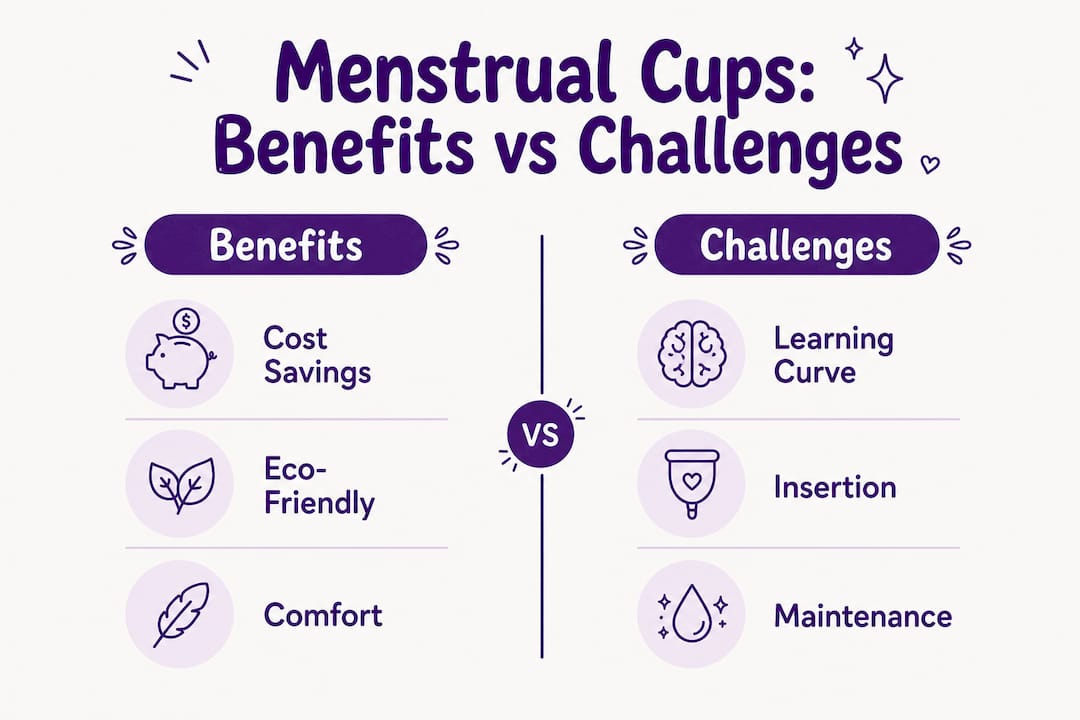
Cost savings are significant. A single cup costs between $20 and $40, while the average person spends $50–$150 on disposable pads and tampons every year. Over a decade, that is a meaningful difference in your wallet.
The environmental impact is just as striking. A lifetime of disposable period products generates thousands of individual pieces of waste. One reusable cup, cared for properly, replaces all of that.
Here are the core benefits at a glance:
- Longer wear time: Up to 12 hours of protection without changing, which is especially helpful overnight or during long days
- Less odor: Because menstrual blood stays inside the cup and is not exposed to air, odor is significantly reduced compared to pads
- Less irritation: Cups do not contain the fibers or chemicals found in many disposable products, which can cause dryness or skin sensitivity
- Higher capacity: Cups hold up to three times more fluid than a standard tampon, making them practical for heavier flows
- Swim and sleep friendly: A properly fitted cup stays in place during physical activity, swimming, and sleep
- No last-minute runs to the store: One cup handles your entire period, every cycle
Understanding your hormonal cycle phases can also help you predict your flow and know when to empty the cup more frequently.
Did you know? Menstrual cups can hold up to three times more fluid than a regular tampon, making them one of the highest-capacity period products available without requiring a change every few hours.
What are the challenges of using a menstrual cup?
Cups are not perfect for everyone, and being honest about the challenges helps you go in with realistic expectations.
- Learning curve: Insertion and removal take practice. Most people need a few tries before it feels natural, and that is okay.
- Wrong size or fit: A cup that is too large, too small, too firm, or too soft for your anatomy will not sit correctly and may cause discomfort or leaking.
- Cleaning requirements: Unlike disposables, cups need to be rinsed during your period and fully sterilized between cycles. If you are in a public restroom without easy access to a sink, this can feel awkward.
- IUD concerns: People with an IUD can generally use a menstrual cup safely, but you should check with your healthcare provider and monitor your IUD strings regularly for any changes in position.
- Discomfort with improper placement: If the cup is not fully open or is sitting too high or too low, it can feel uncomfortable or press on the bladder.
- Myths about virginity: A menstrual cup does not affect virginity status. It is safe and appropriate for people of any age or sexual experience.
The biggest hurdle is simply the unfamiliarity. Once you get past the first couple of cycles, most of these challenges fade. Pairing cup use with a period self-care routine makes the adjustment feel much more manageable.
How do you clean and store a menstrual cup?
Keeping your cup clean is straightforward once you know the steps. Good hygiene protects both the cup and your health.
During your period
- Empty the cup every 4–12 hours depending on your flow.
- Rinse it with cool water first to prevent staining, then wash with warm water.
- Use a mild, unscented soap if needed. Avoid anything with oils, fragrances, or antibacterial agents, as these can degrade the silicone and disrupt vaginal pH.
- Wipe the rim and air holes gently to clear any residue before reinserting.
- In a public restroom, wipe the cup with clean toilet paper or an unscented menstrual cup wipe, then reinsert. Rinse it properly at your next opportunity.
After your period ends
- Boil the cup in a pot of water for 5–10 minutes to fully sterilize it. Most silicone and rubber cups tolerate boiling well. Always check your manufacturer’s instructions first.
- Let it cool completely before handling or storing.
- Inspect the cup for any tears, discoloration, or damage to the rim or air holes. Replace it if you notice anything unusual.
- Store the cup in a breathable cotton bag or pouch. Never seal it in an airtight container or plastic bag, as trapped moisture encourages bacterial growth.
Pro Tip: Keep a small, dedicated pot just for boiling your cup. It makes the process feel less awkward and keeps things organized.
Pairing good cup hygiene with solid period hygiene basics gives you a complete picture of how to care for your body during menstruation.
How much does a menstrual cup cost compared to disposables?
The upfront cost of a menstrual cup is higher than a single box of pads or tampons, but the math shifts quickly when you look at the full picture.
| Product | Upfront Cost | Annual Cost | 10-Year Cost |
|---|---|---|---|
| Menstrual cup | $20–$40 | — | $20–$40 over 10 years |
| Disposable pads/tampons | $3–$10 per box | $50–$150 per year | $500–$1,500 over 10 years |
A single cup, cared for properly, can last up to 10 years. Over that same period, disposable products cost hundreds of dollars more and generate thousands of pieces of waste. The financial case for switching is clear, especially for families managing period costs for growing girls.
Some cups also come with a storage pouch and a carrying case included in the purchase price, which adds practical value without extra spending. If you are just starting out and want to explore period care more broadly, the Amethyst Box from Themonthliesbox includes educational materials and practical supplies to help young girls feel prepared and confident from day one.
Why is your menstrual cup leaking, and how do you fix it?
Leaking is the most common frustration new cup users face, and it almost always has a fixable cause.
- The cup did not fully open: After insertion, the cup may still be folded or partially collapsed. Rotate it and feel around the base to confirm it is round and fully expanded.
- No suction seal formed: If the cup is not creating a seal against the vaginal walls, fluid will bypass it. Try reinserting and rotating more deliberately.
- Wrong size: A cup that is too small for your anatomy or flow will fill up faster and may not seal properly. A cup that is too large may not open fully.
- Incorrect placement: The cup should sit low in the vaginal canal, below the cervix. If it is positioned above the cervix, fluid will flow around it rather than into it.
- Overfilling: On heavy flow days, the cup may fill before the 12-hour mark. Empty it more frequently during those days.
- Worn or damaged cup: Over time, the rim or body of the cup can develop small tears or lose its shape. A damaged cup will not seal correctly and should be replaced.
- Stem irritation causing shifting: If the stem is too long and pressing against the vaginal wall, it can push the cup out of alignment. Trim the stem gradually, a little at a time.
Most leaking issues resolve once you find the right size and get comfortable with insertion. Give yourself at least two to three cycles before drawing conclusions about whether a cup is working for you.
How do menstrual cups compare to menstrual discs?
Menstrual cups and menstrual discs both collect fluid rather than absorb it, but they work quite differently inside the body.
- Shape: Cups are bell-shaped with a stem. Discs are flat and round, resembling a shallow dish with a flexible rim.
- Placement: A cup sits low in the vaginal canal and creates a suction seal. A disc sits higher, tucked behind the pubic bone near the cervix, and relies on the anatomy of the vaginal fornix to stay in place rather than suction.
- Capacity: Both hold more fluid than a standard tampon, but discs tend to have a slightly higher capacity due to their wider, flatter shape.
- Reusability: Most menstrual cups are fully reusable. Discs come in both reusable and single-use versions. Single-use discs are more convenient but generate more waste.
- Mess-free potential: Some reusable discs can be emptied without full removal by pressing the rim down while on the toilet, which some people find more convenient in public restrooms.
- Learning curve: Both require practice, but many people find cups slightly easier to learn because the suction seal gives clear feedback on correct placement.
- Sex during menstruation: Discs sit higher and can allow for mess-free penetrative sex during your period. Cups cannot.
The right choice depends on your anatomy, lifestyle, and comfort level. Neither is objectively better. They simply suit different needs.
Are menstrual cups safe? What experts and users say
The short answer is yes. Menstrual cups are considered safe for people of all ages when used and cleaned correctly.
Medical professionals consistently support their use. The Mayo Clinic Health System notes that cups appear to be a safe option during menstruation with many potential benefits, and that women of any age can use them regardless of whether they have given birth. The material safety is well established: silicone, latex, and thermoplastic elastomers used in reputable cups are non-toxic and hypoallergenic when properly maintained.
One of the most common questions is about the learning curve. According to the Cleveland Clinic, first-time users typically need about three menstrual cycles to feel comfortable with insertion, removal, and overall use. That timeline is worth knowing upfront so you do not give up after one difficult attempt.
“These products are safe for most people. The main challenge is the learning curve. With patience and practice, most users find insertion and removal become second nature within a few cycles.” — Cleveland Clinic
Concerns about IUD compatibility are common but manageable. Cups have not been shown to dislodge IUDs, but anyone with an IUD should monitor their IUD strings and check with their gynecologist before switching to a cup. Menstrual cups also do not affect virginity status, a fact the Cleveland Clinic addresses directly. The hymen is not a barrier to cup use, and inserting a cup does not change a person’s virginity.
For young girls and their parents navigating these questions together, having trusted, clear information makes all the difference. Themonthliesbox is built around exactly that kind of support, combining education, affirmation, and practical tools to help girls feel ready and confident. Learning how to introduce menstrual products to your daughter is a great place to start that conversation.
You can also use a period and cycle tracker to monitor your flow patterns, which helps you figure out how often to empty your cup and when to expect heavier days.
Ready to feel prepared and supported?

Starting your period journey, or helping your daughter start hers, does not have to feel overwhelming. Themonthliesbox was created to make this transition feel warm, supported, and even exciting. The Amethyst Box is a thoughtfully curated first-period experience that includes educational materials, affirmations, and practical supplies designed to build real confidence. Because every girl deserves to feel ready, not caught off guard.
Welcome to LavenHaven. We’ve been waiting for you.
Key Takeaways
Menstrual cups are a safe, reusable, and cost-effective alternative to disposable period products, with most users reaching full comfort within three menstrual cycles.
| Point | Details |
|---|---|
| Collection, not absorption | Cups collect menstrual fluid instead of absorbing it, reducing odor and irritation compared to pads and tampons. |
| Cost savings over time | A cup costs $20–$40 upfront versus $50–$150 per year on disposables, saving $500–$1,500 over a decade. |
| Up to 12 hours of wear | Cups hold up to three times more fluid than a tampon, allowing longer wear without changing. |
| Learning curve is normal | Most first-time users need about three cycles to feel comfortable with insertion and removal. |
| Safe for all ages | Menstrual cups are medically endorsed as safe for people of any age and do not affect virginity status. |
0 comments