

Sustainable period care is the practice of using menstrual products and habits that reduce plastic waste, lower carbon emissions, and support menstrual health. The industry standard term is “sustainable menstrual care,” and it covers everything from reusable cups and period underwear to certified organic disposables. A single person who menstruates can generate thousands of disposable products over a lifetime. Switching to eco-friendly period products is one of the most direct ways to shrink that footprint, and Themonthliesbox believes every girl deserves to understand her options from the very start.
What is sustainable period care, and what products does it include?
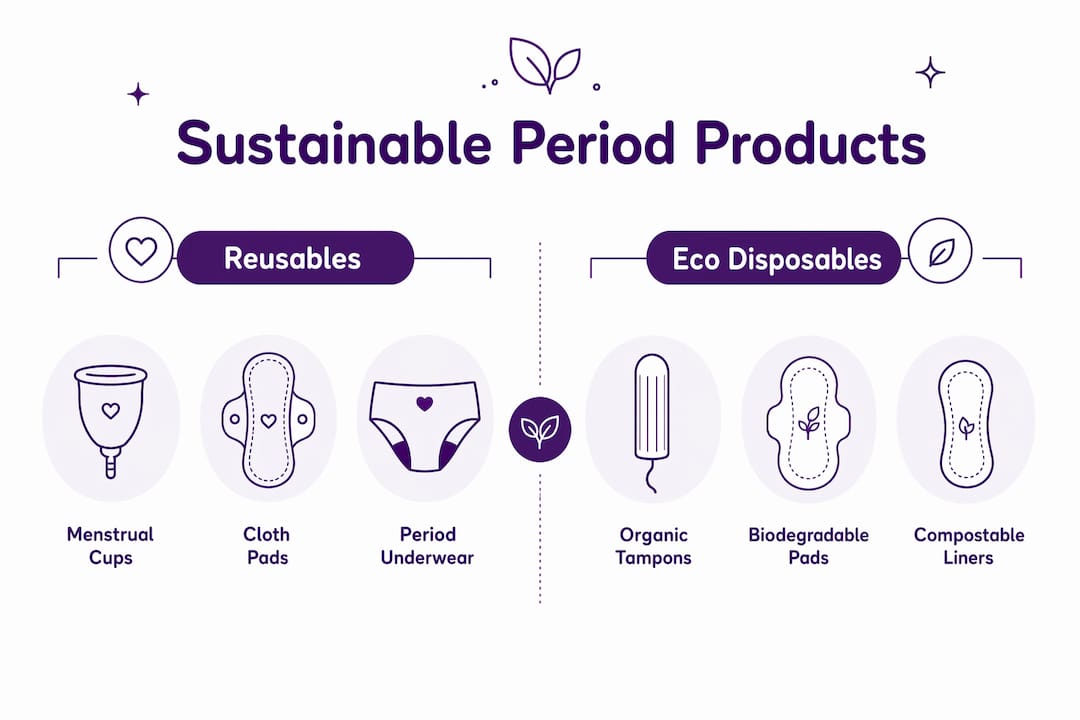
Sustainable period care centers on two product categories: reusables and eco-friendly disposables. Both reduce the environmental impact of menstruation, but they work in different ways and suit different lifestyles.
Reusable products
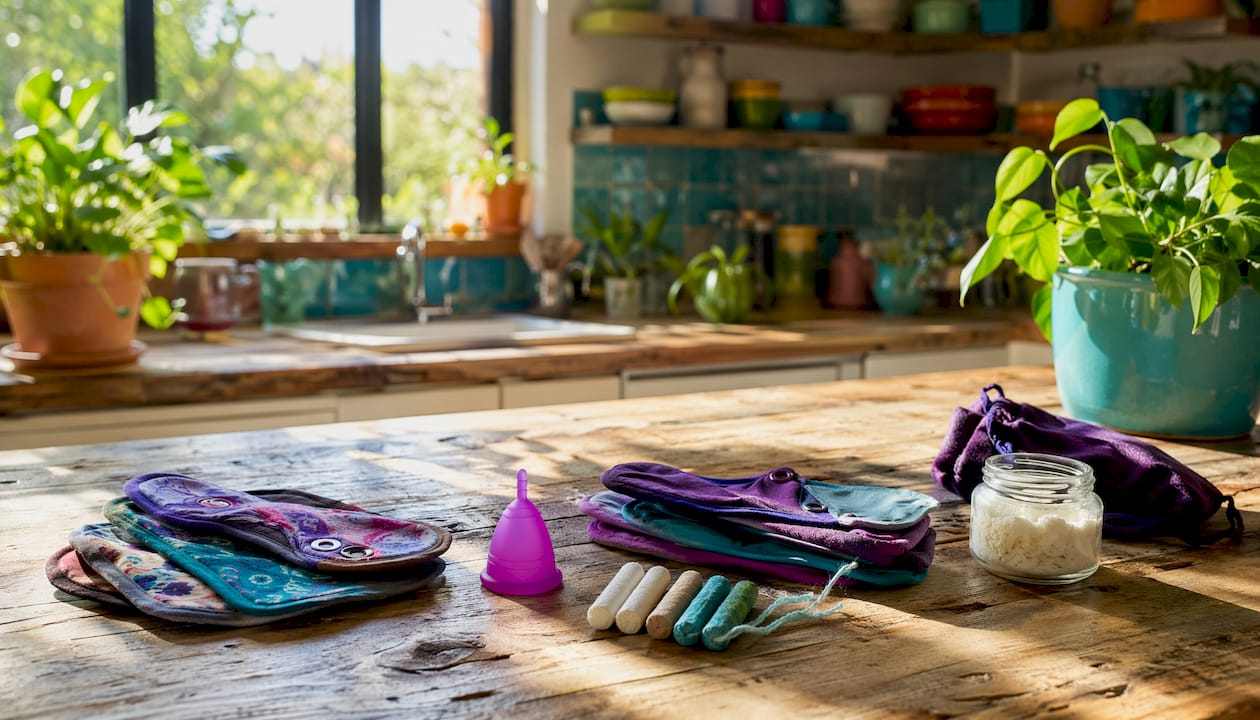
Reusable options replace single-use items cycle after cycle. The most common types are:
- Menstrual cups and discs. Made from medical-grade silicone, they offer up to 12 hours of continuous wear and can last up to 5 years with proper care. That lifespan replaces hundreds of disposable tampons or pads.
- Period underwear. Absorbent underwear can hold 20–40ml of flow, the equivalent of 6–9 super tampons, making it a reliable standalone option for many people.
- Washable cloth pads. Reusable fabric pads wash and dry easily. They suit people who prefer external protection and want a gentle entry point into sustainable options.
Eco-friendly disposables
Not everyone is ready to go fully reusable, and that is completely fine. Certified organic cotton tampons and pads offer a lower-impact alternative to conventional disposables. The key is certification. Products carrying GOTS certification meet stringent environmental and social standards from fiber sourcing through manufacturing. That label tells you the cotton is genuinely organic, not just marketed that way.
The environmental case for switching is clear. Switching to a menstrual cup from conventional tampons reduces carbon impact by 16 times, saving roughly 7 kg of CO2 per person per year. That number adds up fast over a decade of periods.
| Product type | Lifespan | Key benefit |
|---|---|---|
| Menstrual cup or disc | Up to 5 years | Highest CO2 savings, long wear time |
| Period underwear | 2–5 years | No insertion, high absorbency |
| Washable cloth pad | 2–5 years | Gentle entry point, easy care |
| Organic cotton tampon | Single use | Lower impact than conventional |
| Organic cotton pad | Single use | Plastic-free options available |
Pro Tip: Start with one reusable product alongside your usual disposables. You do not have to overhaul everything at once to make a real difference.
How do you identify genuinely sustainable menstrual products?
Market greenwashing makes it hard to trust eco claims at face value. Brands use words like “natural” and “green” without any third-party verification. Here is how to cut through the noise.
Certifications that matter
- GOTS (Global Organic Textile Standard). Covers the full supply chain, from raw cotton to finished product. This is the gold standard for organic fiber products.
- ICEA certification. An Italian standard increasingly recognized in global markets for organic and natural products.
- FDA medical-grade classification. Relevant for cups and discs made from silicone. It confirms the material meets safety standards for internal use.
The biodegradable vs. compostable distinction
This is where most people get misled. “Biodegradable” means a product will eventually break down, but most biodegradable products require industrial composting environments to do so effectively. They will not decompose in a landfill or a backyard compost bin. “Compostable” is a stronger claim, but it still usually requires specific facility conditions. Always check the disposal instructions on the packaging.
What to assess component by component
Conventional pads contain plastic in the top sheet, the absorbent core, and the adhesive backing. A truly eco-friendly pad replaces each of those layers with plant-based or organic alternatives and uses plastic-free packaging. Check that cotton runs through the entire absorbent area, not just the surface layer. A product with an organic cotton top sheet but a synthetic core is not fully sustainable.
Common greenwashing tactics to watch for:
- Vague claims like “made with natural ingredients” without certification
- “Biodegradable” labeling without composting facility instructions
- Partial organic content marketed as fully organic
- Recyclable packaging on a product with a plastic-heavy core
Are reusable period products actually hygienic?
Hygiene concerns are the most common reason people hesitate to switch. The concern is understandable, but the science is reassuring. Medical-grade silicone is non-porous, which means it does not harbor bacteria the way porous materials can. A properly cleaned cup or disc is actually less likely to introduce chemicals or irritants than many conventional disposables.
Proper care is straightforward:
- Rinse between uses. Empty and rinse your cup or disc with clean water during your period.
- Sterilize between cycles. Boil your cup in water for 5–10 minutes at the end of each cycle, or use a dedicated sterilizing solution.
- Store it dry. Keep your cup in a breathable cotton bag, never an airtight container, to prevent moisture buildup.
- Wash period underwear cold. Machine wash on a cold, gentle cycle and air dry. Avoid fabric softeners, which can damage the absorbent layers.
- Check for wear. Inspect cups and underwear regularly. Replace them if you notice discoloration, odor that does not wash out, or structural changes.
Reusable products often carry fewer synthetic chemicals than conventional disposables, which can include fragrances, dioxins from bleaching, and plastic-derived compounds. For parents researching clean period products for their daughters, that chemical reduction is a meaningful health benefit alongside the environmental one.
Pro Tip: If you are nervous about trying a cup, start with period underwear. There is no insertion, no learning curve, and the care routine is as simple as doing laundry.
How do you transition to sustainable period care successfully?
The transition works best when you treat it as a gradual shift, not an overnight overhaul. Incremental choices made consistently over time produce a meaningful lifetime impact. Replacing even one or two disposables with a reusable alternative is a real start.
Choosing the right entry point
Your flow, lifestyle, and comfort level all shape which product fits best. Here is a practical framework:
- Light to medium flow. Period underwear or a small menstrual cup works well. Both handle lighter days with minimal fuss.
- Heavy flow. A larger cup, a disc, or high-absorbency period underwear handles heavier days. Some people use a cup and period underwear together as a backup combination.
- Active lifestyle. Cups and discs are secure during exercise, swimming, and travel. They do not shift or leak the way external products sometimes do.
- Beginners or younger teens. Starting with period underwear or washable pads removes the anatomical learning curve entirely. These are the lowest-barrier entry points.
Managing the learning curve
New users of cups and discs typically need 1–3 cycles to find the right fold, achieve a comfortable seal, and feel confident with removal. That timeline is normal. Patience matters more than perfection in those first few months. Watch instructional videos, try different folding techniques, and give yourself permission to use a backup pad while you learn.
Travel and mixed-use strategies
Sustainable period care does not have to be all-or-nothing when you are away from home. Carry a small bottle of clean water and a cup-cleaning tablet for public restrooms. Pack a wet bag for used period underwear or cloth pads. Keep one or two certified organic disposables as a backup for unexpected situations. The goal is to reduce your overall impact, not to achieve a zero-waste record on every single trip.
For a practical, step-by-step approach to eco-friendly period habits, building a simple routine makes the whole process feel much less daunting.
Key Takeaways
Sustainable period care reduces environmental harm most effectively when reusable products replace disposables consistently over time, supported by certified eco-friendly alternatives for situations where reusables are not practical.
| Point | Details |
|---|---|
| Reusables deliver the biggest impact | Menstrual cups cut carbon impact by 16 times compared to conventional tampons. |
| Certifications cut through greenwashing | Look for GOTS on organic disposables and FDA medical-grade labeling on cups and discs. |
| Biodegradable does not mean landfill-safe | Most biodegradable products require industrial composting to break down effectively. |
| Hygiene concerns are largely unfounded | Medical-grade silicone is non-porous and does not harbor bacteria when cleaned properly. |
| Start small and build | Replacing one or two disposables with reusables is a meaningful and realistic first step. |
Why I think the “all or nothing” approach holds people back
The biggest barrier to sustainable menstrual care is not cost or availability. It is the pressure to do it perfectly. People read about zero-waste periods and feel like anything short of a fully reusable routine does not count. That thinking keeps people stuck with conventional products longer than necessary.
What I have seen work, again and again, is the opposite approach. One reusable product. One certified organic swap. One cycle at a time. The environmental math still works in your favor even when your routine is mixed. A person who uses a menstrual cup for three days and organic tampons for the last two days of their cycle has still dramatically reduced their plastic waste for that month.
The other thing worth saying: sustainable options often feel better. Period underwear is more comfortable than a bulky pad. A well-fitted cup means no more mid-day tampon changes. The benefits are personal, not just planetary. When you find the product that genuinely fits your body and lifestyle, sustainability stops feeling like a sacrifice and starts feeling like a straightforward choice.
— The
Sustainable period care, made simple with Themonthliesbox
Themonthliesbox curates period care experiences designed to make the switch feel supported, not stressful. Whether you are a parent preparing your daughter for her first period or someone ready to explore more conscious menstrual options, there is a box built for that moment.

The Monthlies Deluxe Box combines self-care essentials with practical period supplies, making it a thoughtful starting point for anyone building a more intentional period routine. For younger girls taking their first steps, the Amethyst Box pairs educational materials with affirmations and practical supplies, all built around the Amethyst Method. Every product is chosen with care, confidence, and the belief that every girl deserves to feel supported and prepared.
FAQ
What is sustainable period care in simple terms?
Sustainable period care means using menstrual products that reduce plastic waste and environmental harm, such as reusable cups, period underwear, and certified organic disposables.
How long do reusable menstrual products last?
Menstrual cups and discs last up to 5 years with proper care, and period underwear typically lasts 2–5 years depending on wash frequency and care.
Are biodegradable period products better for the environment?
Biodegradable products are lower impact than conventional ones, but most require industrial composting to break down. They will not decompose effectively in a landfill.
Is it safe to use a menstrual cup as a teenager?
Yes. Menstrual cups made from medical-grade silicone are non-porous, safe for internal use, and FDA-recognized. Beginners may prefer to start with period underwear while they build confidence.
How do I know if a period product is genuinely eco-friendly?
Look for GOTS certification on organic cotton products and check that sustainability claims cover the full product, including the absorbent core and packaging, not just the surface layer.
0 comments