

Menarche, the medical term for a girl’s first menstrual period, commonly begins at night because of how hormones and the body’s internal clock interact during sleep. The question of why first period happens at night has a clear biological answer: progesterone drops, circadian rhythms shift, and the body’s metabolic pace slows, all creating conditions that favor the start of bleeding. The average age for menarche is around 12, with a normal range of 10–15 years. Waking up to find a first period is not a sign that something went wrong. It is one of the most common first period experiences there is.
Why does the first period start at night?
The body does not choose nighttime randomly. Two powerful forces work together to make nighttime the most likely window for menstruation to begin: hormonal changes and the body’s circadian rhythm.
The menstrual cycle is driven by hormones. Progesterone, which keeps the uterine lining stable, drops sharply at the end of a cycle. That drop signals the body to shed the lining, which is what bleeding is. This hormonal shift does not follow a clock on the wall. It follows the body’s internal clock, and that clock is deeply tied to sleep.
Circadian rhythms regulate hormone release throughout the day and night. At night, melatonin rises and cortisol falls. These shifts create a hormonal environment that supports the inflammatory process of endometrial shedding. Research shows that 70.4% of cycles start at night or within the first four hours of the morning. That number reflects a real biological pattern, not coincidence.

During deep sleep, the parasympathetic nervous system takes over. This is the body’s rest-and-digest mode. Parasympathetic dominance during sleep promotes inflammatory processes, including the shedding of the uterine lining, more efficiently than during waking hours. The body is not fighting stress hormones or managing movement. It is free to do the internal work of menstruation.
Here is what is happening in the body during a nighttime first period:
- Progesterone drops: The uterine lining loses its hormonal support and begins to shed.
- Melatonin rises: This sleep hormone interacts with reproductive hormones, nudging the cycle forward.
- Cortisol is low: Without the stress hormone suppressing inflammation, endometrial shedding proceeds more easily.
- Metabolic rate slows: The body redirects energy inward, supporting internal processes like menstruation.
- Parasympathetic activity peaks: Deep sleep creates the ideal physiological state for bleeding to begin.
Pro Tip: If your daughter wakes up with her first period, remind her that her body did exactly what it was supposed to do. The timing is biology, not bad luck.
Higher estrogen levels, genetics, and lifestyle factors like exercise and body weight also influence menarche timing. These factors shape when the first period arrives overall, but the circadian and hormonal forces above explain why night is the most common window for it to begin.
How body position affects when girls notice bleeding
Here is something most parents do not know: the period may not actually start at night. It may start earlier in the day and go completely unnoticed until your daughter lies down.
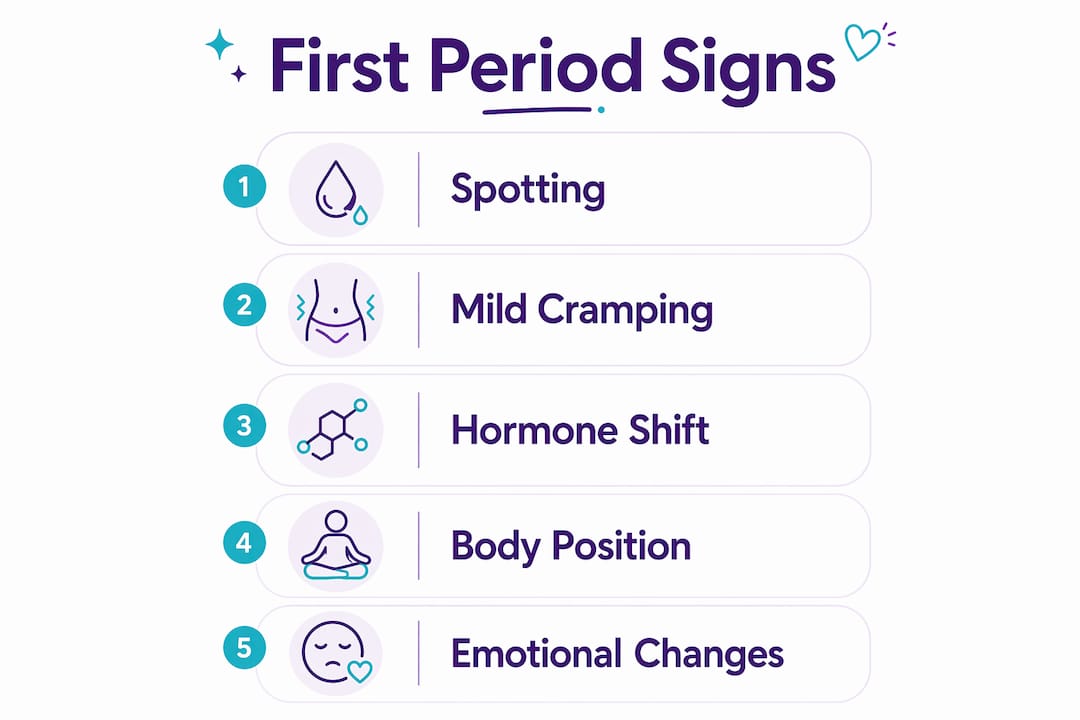
When a girl is upright and moving, gravity pulls menstrual blood downward and out of the body. Flow is more likely to be felt or seen. But when she lies down, blood can pool in the vaginal canal rather than flowing out immediately. Blood pooling while lying down delays both the exit of blood and the awareness that bleeding has started. She may have been lightly spotting for hours before she noticed anything at all.
This physical reality changes how parents should think about nighttime onset. The question is not always “why did the period start at night?” Sometimes the better question is “why did she only notice it at night?”
Consider what a typical day looks like for a preteen:
- Morning and afternoon: Light spotting begins, but she is active, wearing dark clothing, or simply not checking.
- Evening: She changes into pajamas and may notice a small spot, or she may not.
- Night: She lies down, blood pools, and when she wakes or shifts position, the flow becomes obvious.
Pro Tip: Talk to your daughter about what spotting looks like before her first period arrives. A small brownish or pinkish spot in her underwear is often the very first sign, and it can happen hours before she feels anything.
The interaction between body position and hormonal timing means that nighttime detection is more common than actual nighttime onset. Both are normal. Both are worth understanding so your daughter does not feel alarmed when she wakes up to find her period has arrived.
What are the common signs of a first period at night?
Recognizing the signs of first menstruation helps parents prepare their daughters and respond calmly when the moment comes. The first period does not always look like what girls see in movies.
Typical signs include light spotting that is brown, pink, or red. Mild cramping in the lower abdomen is common, though not universal. Some girls feel bloated or notice mood shifts in the days before. The flow during a first period is often very light, sometimes just a few spots over one or two days.
Menstrual irregularities like skipped months or spotting are completely normal for the first 1–5 years after menarche. The hypothalamus-pituitary-ovarian axis, the hormonal system that controls the cycle, takes time to mature. Irregular cycles in the early years are a sign of normal development, not a problem.
| Sign | What it means |
|---|---|
| Brown or pink spotting | Often the very first sign; older blood or light flow |
| Light red flow | Active bleeding has begun; a pad is needed |
| Mild cramps | Uterus contracting to shed its lining; normal and manageable |
| Bloating or mood shifts | Hormonal changes in the days before bleeding starts |
| Irregular timing | Normal for the first 1–5 years as cycles regulate |
Parents should consult a healthcare provider if their daughter has not started her period by age 15, soaks through a pad every 1–2 hours, or experiences pain severe enough to stop daily activity. These are the specific thresholds that signal a need for medical attention. Everything else falls within the wide range of normal first period common experiences.
Emotional validation during the first period is often the most overlooked part of preparation. Beyond supplies and hygiene, normalizing whatever your daughter feels, whether that is relief, embarrassment, fear, or pride, supports her far more than any product alone.
How to prepare for a first period that comes at night
Preparation is the single best thing a parent can do. A girl who wakes up to her first period in a home that is ready for it will have a very different experience than one who wakes up in a home that is not.
-
Build a first period night kit. Place it near her bed or in her bathroom. Include overnight pads, a spare pair of underwear, and a dark-colored towel. Keeping supplies near the bed reduces stress and helps her manage overnight bleeding without needing to search the house at 2 a.m.
-
Talk before it happens. Walk her through what a first period looks like, what to do when she finds it, and who to wake up if she needs help. A calm, matter-of-fact conversation before the event makes the event itself much less frightening.
-
Normalize the nighttime timing. Tell her directly that periods often start at night because of how the body works during sleep. When she knows this in advance, waking up to a period feels expected rather than alarming.
-
Establish a simple hygiene routine. Show her how to apply a pad, how to dispose of it, and how to rinse underwear if needed. Practicing this before her period arrives builds real confidence.
-
Keep communication open. Let her know she can wake you up, text you, or knock on your door at any hour. The middle of the night is not an inconvenient time for this. It is exactly the time she may need you most.
-
Support her emotionally the next day. After the first night, check in. Ask how she is feeling. Offer guidance on supporting her through the days that follow. The first period is a moment she will remember, and your response shapes how she remembers it.
Irregular cycles in the first year or two are expected. Patience matters here. The hypothalamus-pituitary-ovarian axis takes time to settle into a predictable rhythm. Tracking her cycle from the start helps both of you notice patterns and spot anything worth discussing with her doctor.
Key Takeaways
The first period most commonly begins at night because circadian rhythms, progesterone decline, and parasympathetic nervous system activity during sleep create the ideal biological conditions for menstruation to start.
| Point | Details |
|---|---|
| Hormones drive nighttime onset | Progesterone drops and melatonin rises at night, triggering the start of bleeding. |
| Body position affects detection | Blood pools when lying down, so girls often notice bleeding upon waking rather than when it starts. |
| First periods vary widely | Light spotting, mild cramps, and irregular timing are all normal for the first 1–5 years. |
| Preparation reduces anxiety | A bedside kit with pads, spare underwear, and a dark towel helps girls manage nighttime onset calmly. |
| Medical advice has clear thresholds | Consult a doctor if periods have not started by age 15 or if flow soaks a pad every 1–2 hours. |
What I have learned from walking parents through this moment
Working alongside families through puberty preparation, one thing stands out clearly: parents worry most about what they cannot predict. The nighttime first period sits right at the center of that worry. It arrives in the dark, often without warning, and it asks a lot of a girl who may have never handled anything like it before.
What I have found is that the parents who handle this best are not the ones with the most supplies. They are the ones who had the conversation early. A daughter who already knows that periods often start at night, who has seen a pad before, and who knows she can wake her parent without apology, is a daughter who handles her first period with real confidence.
The biology here is actually reassuring once you understand it. The body is not malfunctioning. It is following a deeply programmed internal schedule. Progesterone drops, the parasympathetic system takes over during sleep, and bleeding begins. This is the body working correctly. Framing it that way for your daughter changes everything about how she receives the experience.
One thing I encourage every parent to do: address the emotional fears around the first period before they become the loudest voice in the room. Girls often carry quiet fears about pain, embarrassment, or doing something wrong. Those fears shrink fast when a trusted adult names them out loud and says, “That is normal. You are not alone.”
Irregular cycles in the first year or two are not a red flag. They are a sign that the body is still calibrating. Patience and observation serve girls far better than alarm.
— Themonthliesbox
What Themonthliesbox has ready for her first period night
When the first period arrives at night, having the right supplies already in hand makes all the difference between panic and calm.

The Amethyst Box from Themonthliesbox is designed specifically for this moment. It includes practical period supplies, affirmations, and educational materials built around the Amethyst Method: affirm, understand, and equip. Your daughter gets what she needs physically and emotionally, all in one thoughtfully curated package. For girls who want a portable option, the Monthlies On-The-Go Kit keeps essentials close wherever she is. Themonthliesbox is the friend group every girl deserves when puberty arrives, and it is ready when she is.
FAQ
Why do most periods start at night or early morning?
70.4% of menstrual cycles begin at night or within the first four hours of morning, driven by circadian hormone shifts including progesterone decline and rising melatonin during sleep.
Does lying down cause the period to start?
Lying down does not cause the period to start, but it does cause blood to pool in the vaginal canal. This makes girls more likely to notice bleeding upon waking, even if it began earlier in the day.
What are the first signs of menstruation at night?
The first signs of menstruation are typically light brown or pink spotting in the underwear, sometimes accompanied by mild lower abdominal cramps or a feeling of bloating.
How long does a first period usually last?
A typical menstrual period lasts 2–7 days. The first period is often very light and may last only one or two days, with irregular timing common for the first 1–5 years.
When should a parent call a doctor about a first period?
Parents should contact a healthcare provider if their daughter has not started her period by age 15, bleeds heavily enough to soak a pad every 1–2 hours, or has pain severe enough to prevent normal daily activity.
0 comments