

Menstrual-related absenteeism is defined as the pattern of girls missing school during their periods because of physical pain, social stigma, and inadequate school facilities. This is not a rare problem. Studies show 74% of girls in Odisha miss one to eight school days per cycle, while 59.8% of girls in Kannur report absenteeism linked to pain and tiredness. The causes are layered: cramps, fear of leaking, embarrassment, and bathrooms that offer no real privacy. Understanding why girls miss school during periods is the first step toward changing it.
Why girls miss school during periods: the full picture
Period-related school absence, the formal term is menstrual-related absenteeism, is driven by three overlapping forces: physical symptoms, psychological barriers, and school environment failures. No single cause works alone. A girl dealing with severe cramps in a school with no private bathroom and no supportive teacher faces all three at once.
Research confirms that absenteeism connects directly to poorer exam performance. Missing even one or two days per cycle adds up fast across a school year. That academic gap is real, and it is preventable.
How physical symptoms drive menstrual cycle school absence
Physical pain is the most commonly reported reason girls stay home. Cramps, heavy bleeding, back pain, nausea, and fatigue can make sitting in a classroom feel impossible. These are not exaggerated complaints. They are documented medical symptoms of dysmenorrhea, the clinical term for painful periods.
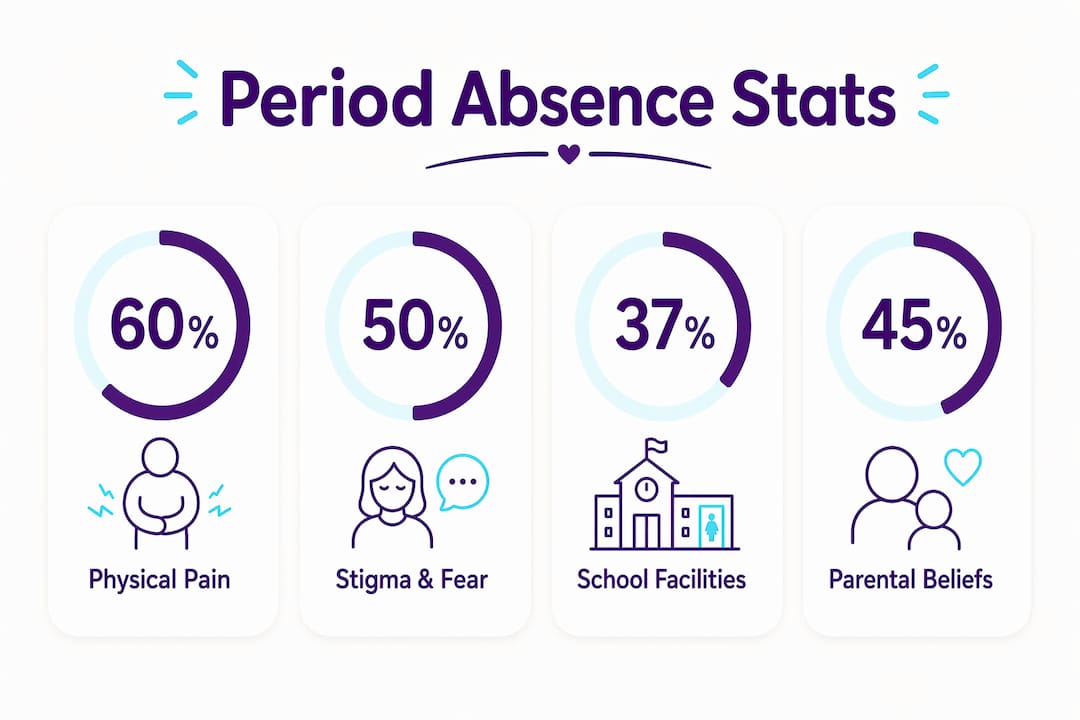
The 59.8% absenteeism rate in Kannur was driven primarily by pain and tiredness. That means more than half of the girls surveyed chose home over school because their bodies hurt. Unmanaged pain also kills concentration. A girl who makes it to school while cramping badly cannot absorb a math lesson or participate in class discussion.
Common physical symptoms that lead to absence include:
- Severe menstrual cramps in the lower abdomen and back
- Heavy or unpredictable bleeding that creates fear of leaking
- Nausea and headaches that make travel or sitting difficult
- Fatigue and low energy that reduce motivation to attend
- Dizziness or fainting in girls with heavy flow
Pro Tip: If your daughter regularly misses school due to cramps, talk to her pediatrician about pain management options. A consistent routine using a heating pad, over-the-counter pain relief, and rest the night before school can reduce the severity of symptoms. You can also find practical first period pain tips to share with her.
How stigma and fear push girls out of school
Stigma is a quieter cause than pain, but it is just as powerful. Girls who fear being teased, spotted with a stain, or seen buying a pad at school often choose absence over humiliation. This emotional withdrawal happens independently of physical symptoms.
Research shows that fear of ridicule from peers is a significant psychological barrier to attendance. A girl who has been teased once about a visible stain may avoid school for every future cycle. That single incident can create a pattern of chronic absence.
The internal experience matters too. Girls internalize shame about menstruation from a young age, often before their first period even arrives. When that shame goes unaddressed, it becomes a private reason to stay home that she may never voice to a parent or teacher. Studies confirm that emotional withdrawal from menstruation causes chronic absenteeism even when physical pain is not the primary issue.
Social and psychological barriers that reduce attendance include:
- Fear of staining clothes or uniforms in front of classmates
- Anxiety about asking a teacher for a bathroom pass or a pad
- Embarrassment in schools where menstruation is never discussed openly
- Internalized shame from cultural messages that periods are dirty or shameful
- Withdrawal from school activities like sports or group work during their cycle
The good news is that supportive school gender climates directly reduce the link between emotional withdrawal and chronic absenteeism. When schools normalize menstruation, girls feel safer staying.
How school facilities shape attendance during menstruation
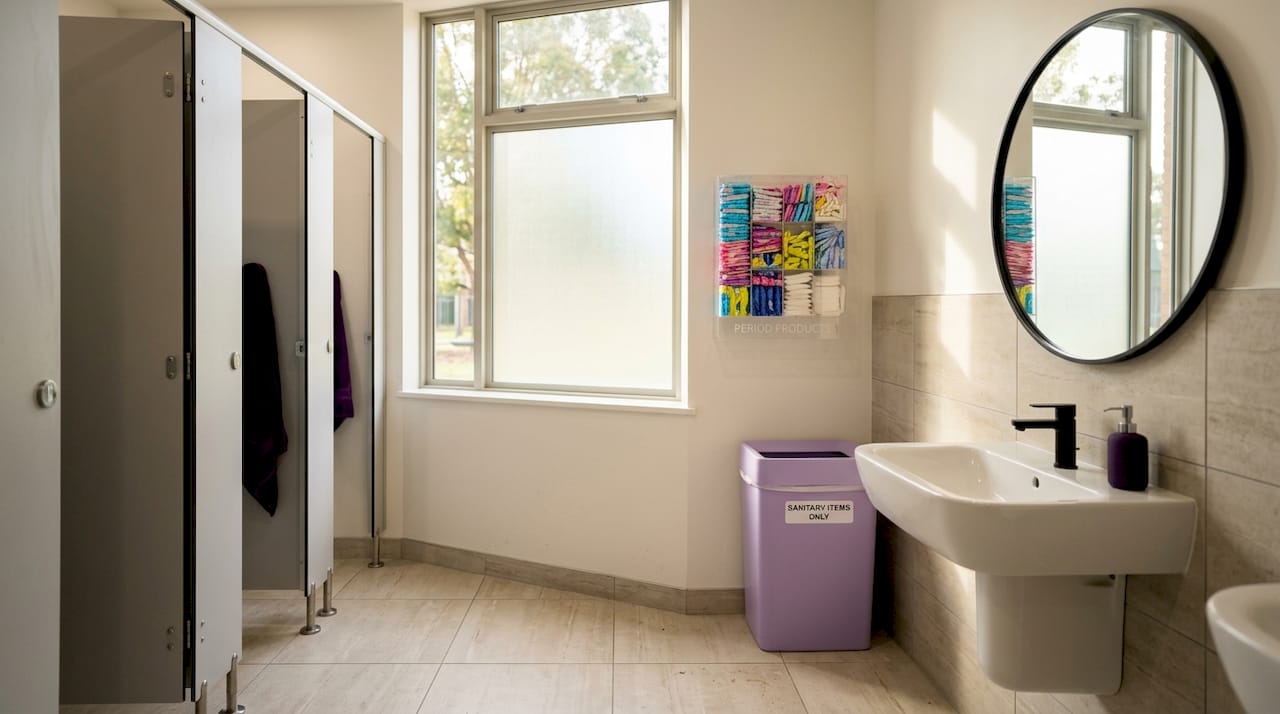
A girl cannot manage her period at school if the school does not give her the tools to do so. This is the core of menstrual hygiene management, known as MHM. MHM refers to the systems, facilities, and education that allow girls to handle their periods safely and privately at school.
The data from Nigeria is striking. Only 36.8% of Nigerian schoolgirls attend school consistently during menstruation. The study found that only 16% of schools had separate toilets for girls, and zero schools had dedicated changing spaces. When a girl has no private place to change a pad, she faces a choice between discomfort and absence. Most choose absence.
| Facility gap | Impact on attendance |
|---|---|
| No separate girl’s toilets | Girls avoid school to prevent embarrassment |
| No private changing area | Girls cannot manage heavy flow discreetly |
| No pad disposal system | Used products pile up or must be carried out visibly |
| No running water | Girls cannot clean up after changing |
| No menstrual products available | Girls are unprepared for unexpected periods at school |
Research also confirms that providing menstrual products alone is not enough. A girl who has a pad but nowhere private to change it is still stuck. Infrastructure and dignity must go together.
Pro Tip: Parents can advocate at school board meetings for WASH upgrades, which stands for Water, Sanitation, and Hygiene. Ask specifically about private stalls, disposal bins in girls’ bathrooms, and whether the school nurse stocks menstrual products. Small asks create real change.
How family attitudes and cultural beliefs affect girls’ school attendance
Parents shape how girls feel about their periods before school ever enters the picture. A mother who treats menstruation as shameful or dangerous passes that belief to her daughter. A father who insists his daughter rest at home “to be safe” during her period may mean well, but the result is missed school days.
Research shows that parental overprotectiveness unintentionally increases absenteeism. When parents pull girls from school during their periods out of concern or cultural habit, they reinforce the idea that periods make girls incapable. That message sticks.
Cultural and religious beliefs in some communities restrict girls’ activities during menstruation. These restrictions vary widely, but their effect on school attendance is consistent. Girls who are told to stay home, avoid certain spaces, or limit movement during their cycle miss school at higher rates.
Families can actively reduce absenteeism by:
- Talking openly about periods before a girl’s first cycle arrives
- Framing menstruation as a normal, manageable part of life
- Sending girls to school unless symptoms are genuinely severe
- Equipping daughters with supplies, pain relief, and a plan for school days
- Connecting with resources that support open conversations about periods
Menstrual education for parents matters as much as education for girls. When parents understand what is normal and what is manageable, they make better decisions about when to keep a daughter home.
What schools and parents can do to reduce period-related absenteeism
Reducing menstrual cycle school absence requires action on multiple fronts. No single fix works alone. The most effective approaches combine education, infrastructure, and emotional support.
-
Start menstrual health education early. Schools that include period education before girls reach puberty see lower rates of shame and fear. Open classroom discussion about menstruation has been shown to reduce stigma and improve attendance. Normalize the topic before it becomes a crisis.
-
Upgrade school WASH facilities. Private stalls, disposal bins, running water, and access to menstrual products are the baseline. Schools that meet this standard give girls a real reason to show up.
-
Train teachers and school staff. A girl who feels she can approach a trusted adult at school is far less likely to stay home. Staff training on menstrual health creates that safety net.
-
Equip girls with supplies and a plan. Parents can prepare a small period kit for their daughter’s backpack. Include pads or tampons, pain relief, a spare pair of underwear, and a small bag for disposal. Knowing she is prepared reduces anxiety about unexpected periods.
-
Build a gender-supportive school climate. Schools where menstruation is treated as normal and where girls are not teased report lower absenteeism. This is a culture shift, and it starts with leadership.
| Intervention | Effect on attendance |
|---|---|
| Menstrual health education | Reduces shame, increases willingness to attend |
| WASH facility upgrades | Removes practical barriers to managing periods at school |
| Menstrual product access | Reduces fear of being unprepared |
| Supportive school climate | Weakens the link between emotional withdrawal and absence |
| Parent education | Reduces overprotective decisions that cause unnecessary absence |
Key Takeaways
Girls miss school during their periods because of physical pain, social stigma, and school environments that fail to support menstrual hygiene management. Addressing all three causes together is the only approach that works.
| Point | Details |
|---|---|
| Physical pain is the top cause | Cramps, fatigue, and heavy bleeding drive the majority of period-related absences. |
| Stigma causes absence independently | Fear of teasing and embarrassment keeps girls home even when pain is manageable. |
| School facilities matter enormously | Schools without private toilets or disposal systems make attendance feel impossible. |
| Family attitudes shape behavior | Parental overprotectiveness and cultural taboos increase absenteeism unintentionally. |
| Combined solutions work best | Education, infrastructure, and emotional support together reduce menstrual absenteeism. |
What I’ve learned from watching this problem up close
The research is clear, but the real story lives in the details. A girl who has never heard an adult talk calmly about periods will not feel safe raising her hand to ask for a bathroom pass. A parent who was taught that periods are private and shameful will pass that silence to their daughter without realizing it.
What strikes me most is how solvable this is. The barriers are real, but none of them are permanent. A single honest conversation between a parent and daughter before the first period arrives can change everything. A school nurse who stocks pads and says “this is normal” can keep a girl in class for years. These are not expensive interventions. They are human ones.
The girls who stay in school during their periods are not tougher or luckier. They are better prepared and better supported. That preparation starts at home, and it starts before the first period ever shows up. Parents who support students through their first period give their daughters a foundation that lasts through every cycle that follows.
The goal is not to make periods disappear. The goal is to make them manageable enough that school stays possible. That is a goal every parent, teacher, and school can work toward right now.
— The
How Themonthliesbox helps girls stay confident and prepared
Girls who feel prepared for their periods are far more likely to stay in school. Themonthliesbox was built around exactly that idea.

The Amethyst Box is designed specifically for girls approaching their first period. It includes practical supplies, educational materials, and affirmations that build confidence before the first cycle arrives. For ongoing support, the Monthlies Deluxe Box gives girls the self-care essentials they need to manage their periods with dignity every month. When girls have the right tools and feel genuinely supported, showing up to school during their period stops feeling like a risk and starts feeling like something they can handle.
FAQ
Why do girls miss school during their periods?
Girls miss school during their periods primarily because of menstrual pain, fear of leaking or staining, and lack of private bathroom facilities at school. Social stigma and embarrassment also play a significant role, even when physical symptoms are mild.
How common is period-related school absenteeism?
Studies report absenteeism rates ranging from 59.8% in Kannur, India, to 74% in Odisha, India, per menstrual cycle. This makes menstrual-related absenteeism one of the most consistent drivers of girls’ school absence globally.
Does missing school during periods affect grades?
Yes. Menstrual absenteeism correlates with lower exam performance. Each missed day creates a gap in learning that compounds over a full school year.
Can better school facilities reduce period-related absences?
Yes. Schools with private toilets, disposal systems, and access to menstrual products see higher attendance rates among girls during their periods. Infrastructure improvements are one of the most direct ways to reduce menstrual cycle school absence.
What can parents do to help their daughter attend school during her period?
Parents can talk openly about periods before they start, send their daughter to school with a prepared period kit, and avoid keeping her home unless symptoms are genuinely severe. Learning how to talk to your daughter about menstruation early reduces fear and builds the confidence she needs to manage her period at school.
0 comments