

Period education is the foundation that helps girls understand menstruation as a normal, healthy part of life rather than something to fear or hide. Without it, girls face their first period unprepared, anxious, and often misinformed. Research confirms that only 39% of schools worldwide provide comprehensive menstrual health education. That gap falls squarely on parents to fill. This guide explains why girls need period education, when to start, and exactly how to make those conversations count.
Why girls need period education before their first period
Menstrual health education is the formal term for teaching girls the physical, emotional, and practical aspects of menstruation. The informal phrase “period education” covers the same ground but signals that this knowledge belongs at home, not just in a classroom. Both matter, and both start with you.
Girls who receive education before menarche (the medical term for a first period) enter that experience with confidence instead of confusion. A structured 30-minute program alone increased menstrual knowledge by 57.4% among adolescent girls. That is a significant gain from a single session. Imagine what consistent, ongoing conversations at home can do.
The benefits of period awareness go beyond knowing what a pad is. Girls who understand their bodies are better equipped to recognize what is normal and what needs a doctor’s attention. Early education helps girls distinguish typical cycles from symptoms that warrant medical care. That skill protects their health for life.
How period education improves menstrual health and hygiene
Good menstrual hygiene is not instinctive. It is learned. Girls who receive clear instruction are far less likely to develop infections or experience unnecessary discomfort during their periods.
The basics every girl needs to know include:
- Changing pads every 4–6 hours to prevent bacterial growth and odor
- Washing hands before and after handling period products
- Disposing of products properly by wrapping them before placing them in a bin
- Recognizing signs of infection, such as unusual odor or persistent irritation
These hygiene fundamentals sound simple, but girls who have never been taught them often make avoidable mistakes. Shame and silence are the main reasons those mistakes happen. Education removes both.
Understanding the menstrual cycle also helps girls manage symptoms. More than two-thirds of girls experience menstrual symptoms that need active management, including cramps, bloating, and mood changes. Knowing these symptoms are normal reduces panic and helps girls respond calmly.
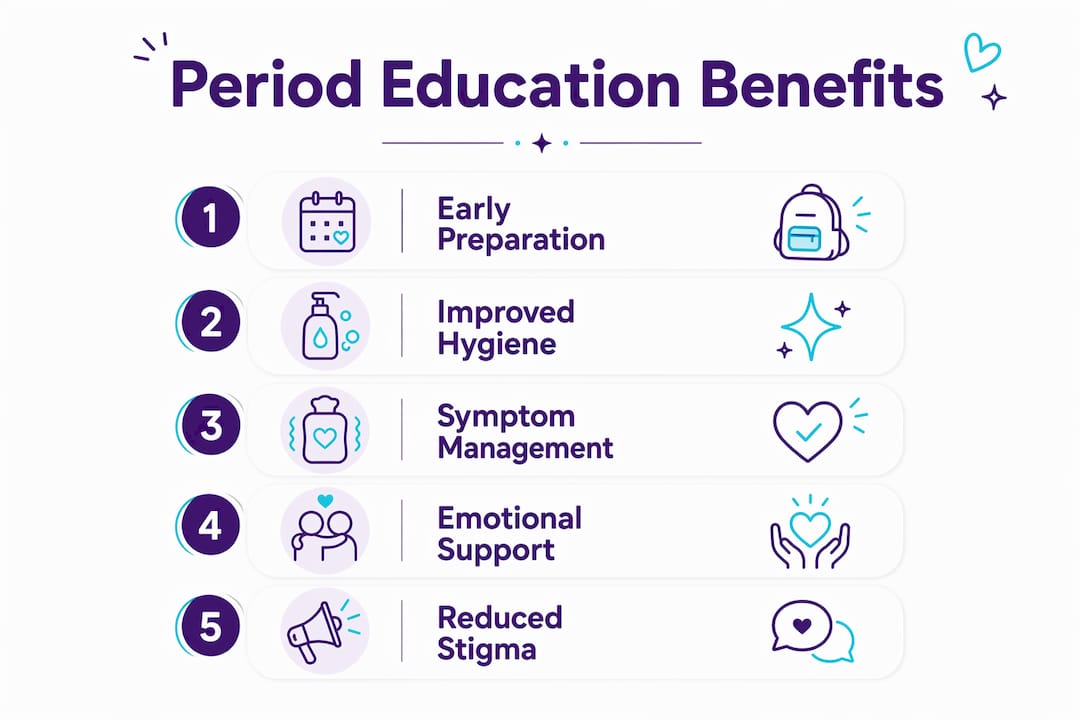
Pro Tip: Pack a discreet emergency kit for your daughter’s school bag. Include two pads, a spare pair of underwear, and a small pack of wipes. A well-stocked period bag reduces anxiety about being caught off guard.
When is the right time to start period education?
The right time to start is earlier than most parents expect. Menarche can begin as early as age 8, yet many school curricula do not introduce menstrual topics until ages 9–11. That gap leaves some girls completely unprepared.
A phased approach works best for most families:
- Ages 6–8: Body awareness. Introduce the names of body parts and explain that bodies change as kids grow. Keep it simple and positive.
- Ages 8–10: Puberty basics. Talk about what puberty means, including breast development, body hair, and the fact that periods will eventually start.
- Ages 10–12: Period specifics. Explain what a period is, how long it lasts, what products exist, and what to do if it starts at school.
- Ongoing: Open dialogue. Keep the conversation going. Answer questions without embarrassment. Normalize the topic at home.
Starting body awareness talks between ages 8 and 10 creates a natural pathway toward deeper menstruation conversations. Girls absorb information more comfortably when it arrives in stages rather than all at once.
Timing matters because girls who start their periods without preparation experience significantly more distress. They often lack knowledge of basic tasks like using pads or disposing of them correctly. That distress is preventable.
How period education reduces stigma and supports emotional well-being
Stigma around menstruation is real, and it causes measurable harm. Girls who feel ashamed of their periods are more likely to miss school, avoid physical activity, and suffer in silence when they need help.
Period education’s primary goal is to normalize menstruation as a natural process. When girls understand that every woman experiences this, the shame loses its grip. School-based education creates trusted spaces that reduce stigma and improve attendance among menstruating students.
The emotional benefits of menstrual knowledge are just as significant as the physical ones. Girls who can talk openly about their periods are more likely to seek help when something feels wrong. They are also more likely to support their peers, which builds a culture of openness rather than embarrassment.
Parents play a central role in this. The way you respond to your daughter’s first questions sets the tone for every conversation that follows. Calm, matter-of-fact answers signal that periods are nothing to be ashamed of. Discomfort or avoidance sends the opposite message.
Effective parent-child communication strategies include:
- Using correct anatomical language from an early age to normalize the vocabulary
- Sharing your own experience (if comfortable) to show that periods are universal
- Responding to questions immediately rather than saying “we’ll talk about it later”
- Checking in regularly rather than having one big talk and considering the topic closed
Practical ways parents can prepare daughters for their first period
Preparation is the most powerful gift you can give your daughter before her first period. It replaces fear with confidence and confusion with a clear plan.
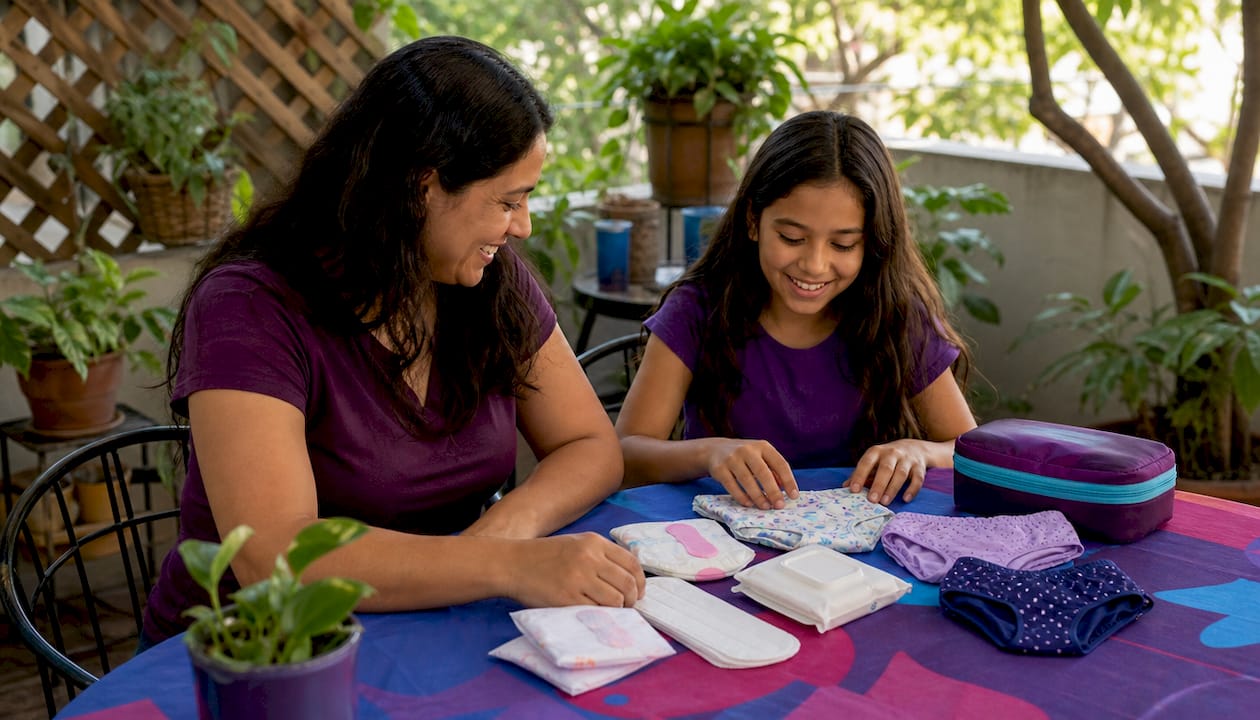
What to include in a first period kit
A well-prepared kit gives girls a sense of control. Pack it together so she knows exactly what is inside and how to use each item.
| Item | Why it matters |
|---|---|
| Pads (light and regular) | Covers different flow levels on different days |
| Spare underwear | Reduces anxiety about leaks at school |
| Unscented wipes | Supports hygiene when a shower is not available |
| Small zip pouch | Keeps everything discreet and easy to carry |
| Pain reliever (age-appropriate) | Manages cramps without a trip to the nurse |
Role-playing “what if” scenarios
Period education must move beyond product use and address real-life situations. Role-playing builds the muscle memory girls need when anxiety is high.
Practice these conversations with your daughter:
- “What if my period starts at school?” Walk her through going to the bathroom, checking her kit, and asking a trusted adult if she needs help.
- “What if I leak?” Reassure her that leaks happen to everyone. Teach her to tie a jacket around her waist and head to the bathroom calmly.
- “What if it hurts a lot?” Explain that mild cramps are normal. Teach her to use a heating pad, rest, or take a pain reliever if needed. Review first period pain management options together.
Involving girls in their own game plan gives them agency and reduces fear, especially when periods start away from home. Girls who have rehearsed these scenarios feel capable rather than panicked.
Pro Tip: Let your daughter choose her own period products at the store. Giving her that small decision builds ownership and confidence around her body.
Maintaining an ongoing dialogue is just as important as the initial conversation. Check in after her first period. Ask how she felt, what surprised her, and what she wishes she had known. That follow-up conversation often matters more than the first one.
Key Takeaways
Girls who receive menstrual health education before menarche manage their periods with greater confidence, better hygiene, and less emotional distress than those who do not.
| Point | Details |
|---|---|
| Start education early | Begin body awareness talks between ages 8 and 10, before menarche arrives. |
| Hygiene is a learned skill | Teach pad-changing intervals, hand-washing, and proper disposal from the start. |
| Stigma causes real harm | Open, calm conversations at home reduce shame and support school attendance. |
| Role-play real scenarios | Practicing “what if” situations builds confidence for unexpected moments. |
| Ongoing dialogue matters | One conversation is not enough. Regular check-ins keep communication open. |
What I’ve learned from watching girls grow through this
The parents who do this best are not the ones with the perfect script. They are the ones who stay calm, stay curious, and stay available. I have seen girls walk into their first period completely terrified because no one told them what to expect. I have also seen girls handle it with quiet confidence because someone they trusted sat down with them and said, “Here is what is coming, and here is what to do.”
The research backs this up. Proactive, calm preparation boosts confidence before the first period arrives. But the deeper truth is simpler. When you normalize menstruation at home, your daughter learns that her body is not a source of shame. She learns that she can ask for help. She learns that she is supported.
That lesson carries far beyond puberty. Girls who grow up with open conversations about their bodies become young women who advocate for their own health. They ask doctors better questions. They recognize when something is wrong. They do not suffer in silence. Period education is not just about periods. It is about teaching girls that their bodies deserve care, attention, and respect.
Do not wait for the “right moment.” The right moment is any ordinary Tuesday when your daughter asks a question and you answer it honestly.
— The
Themonthliesbox is here to help you prepare with confidence
Knowing where to start can feel like the hardest part. Themonthliesbox was created specifically for this moment, giving parents and daughters a warm, practical way to prepare together.
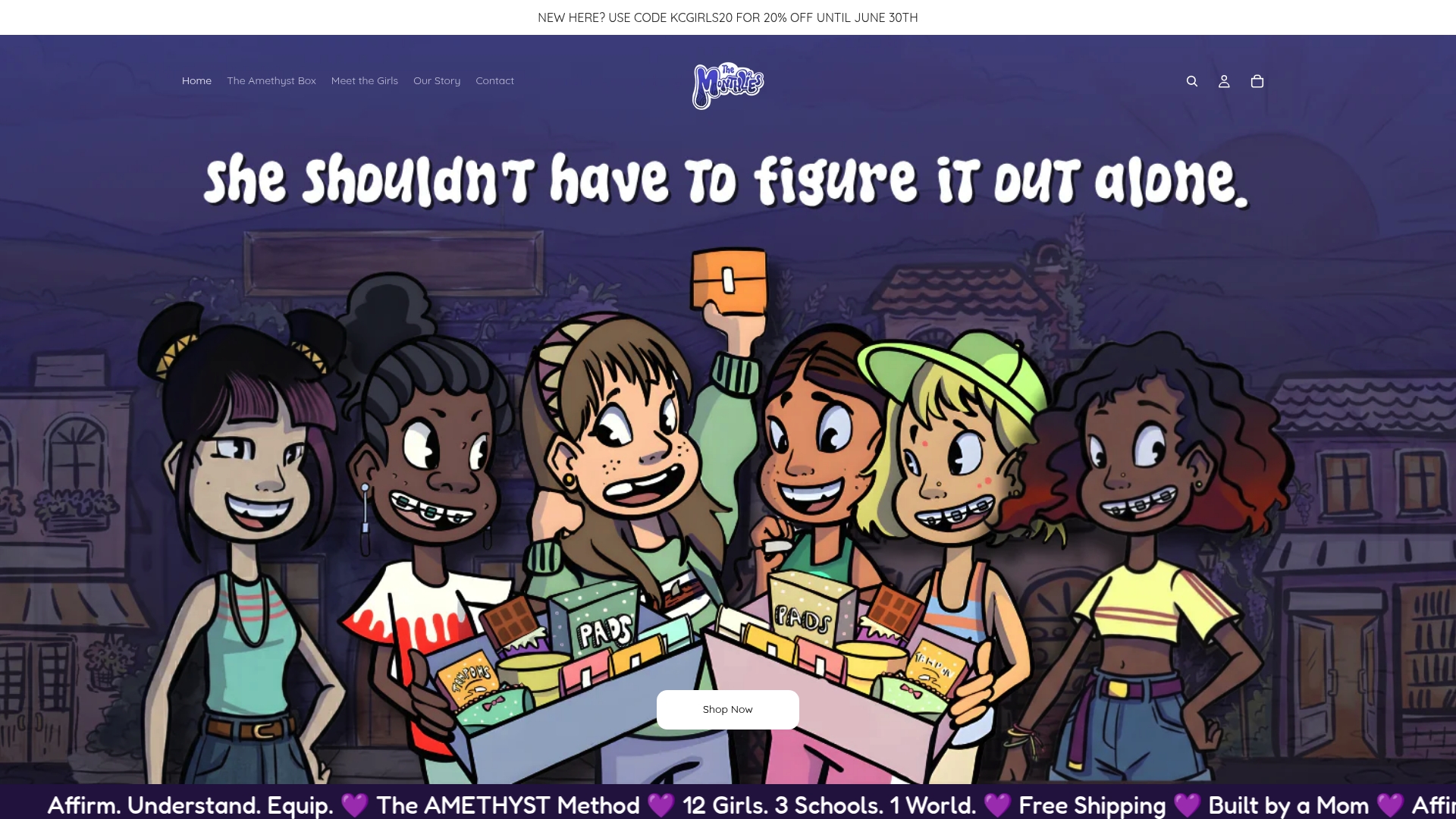
The Amethyst Box is Themonthliesbox’s signature first-period experience. It combines affirmations, educational materials, and trusted period supplies into one thoughtfully curated package. The Amethyst Method inside guides girls through three phases: affirm, understand, and equip. Every item is chosen to build confidence, not just stock a bathroom cabinet. Visit Themonthliesbox to find the right box for your daughter and take the first step toward a prepared, supported first period.
FAQ
Why is period education important for young girls?
Period education prepares girls for menarche with accurate knowledge, reducing anxiety and improving hygiene. Girls who are educated before their first period manage menstruation with significantly more confidence and less distress.
At what age should parents start talking about periods?
Parents should begin body awareness conversations between ages 8 and 10, since menarche can start as early as age 8. A phased approach that builds gradually is more effective than a single conversation.
How does period education reduce stigma?
Education normalizes menstruation by framing it as a universal, healthy process. Open conversations at home and school reduce shame, improve attendance, and encourage girls to seek help when needed.
What should a first period kit include?
A first period kit should include light and regular pads, spare underwear, unscented wipes, a discreet zip pouch, and an age-appropriate pain reliever. Packing it together with your daughter helps her feel prepared and in control.
How can parents keep the conversation going after the first period?
Check in after your daughter’s first period by asking how she felt and what surprised her. Regular, low-pressure conversations are more effective than one big talk, and they signal that her questions are always welcome.
0 comments