

Period poverty reduces students’ attendance, concentration, and wellbeing by removing access to safe menstrual products, eroding confidence, and forcing unsafe coping strategies. A PLOS One peer-reviewed study links inadequate menstrual materials, pain, and negative attitudes directly to absenteeism and lower exam performance. At the college level, a University of Illinois Chicago survey found that 17.1% of students had experienced period poverty, and 55.8% reported class disruption for period-related reasons. The harm runs through three clear channels:
- Missed class: Pain, leakage fear, and no products cause students to skip school entirely or leave early.
- Reduced concentration: Anxiety about leakage and shame pull focus away from learning even when students stay in their seats.
- Unsafe coping: Using toilet paper, rags, or wearing a product far too long raises infection risk and physical discomfort, compounding the problem.
Understanding why menstruation matters in schools is the first step toward fixing it. The sections below map each pathway, name the evidence, and give you concrete steps to act on this term.
Table of Contents
- What is period poverty, and who does it affect in U.S. schools?
- How period poverty hinders learning: the evidence
- Why are schools uniquely positioned to reduce this harm?
- What barriers keep students from managing their periods at school?
- What interventions actually work in schools and on campuses?
- Step-by-step actions educators, advocates, and students can take now
- How puberty education and curated kits reduce stigma and improve preparedness
- Where did period poverty come from? The historical and socioeconomic roots
- How race, income, and geography intensify period poverty among students
- What happens when period poverty goes unaddressed over time?
- What does U.S. policy look like on period poverty in schools?
- How community organizations and public-private partnerships fill the gaps
- Key Takeaways
- The evidence is clear, but the urgency still gets underestimated
- Themonthliesbox supports schools and families with puberty preparedness kits
- Further reading and authoritative sources
What is period poverty, and who does it affect in U.S. schools?
Period poverty is the inability to access safe, adequate menstrual products, clean facilities, accurate education, and the privacy needed to manage a period with dignity. It is sometimes called menstrual hygiene management (MHM) inequity, the broader term used in public health research. The two phrases describe the same problem.
NBC News coverage of a 2024 study surveying 1,816 young people ages 13–21 found that roughly one in three U.S. teens and young adults lack reliable access to tampons or pads. That scale shows up in school data too. A St. Louis charter school study found that 51% of students had been unable to access products at least once, and 46% reported missing school due to their period in the prior year.
The students most affected share overlapping vulnerabilities:
- Students from low-income households who cannot afford products consistently
- Housing-insecure students with no stable place to store supplies
- Students in under-resourced districts where school bathrooms lack dispensers or disposal bins
- Younger students experiencing menarche (first period) without preparation or support
Geography matters too. Rural districts and high-poverty urban schools face the sharpest gaps because they have fewer resources and less consistent policy coverage.
How period poverty hinders learning: the evidence
The pathways from product scarcity to academic harm are specific and measurable.
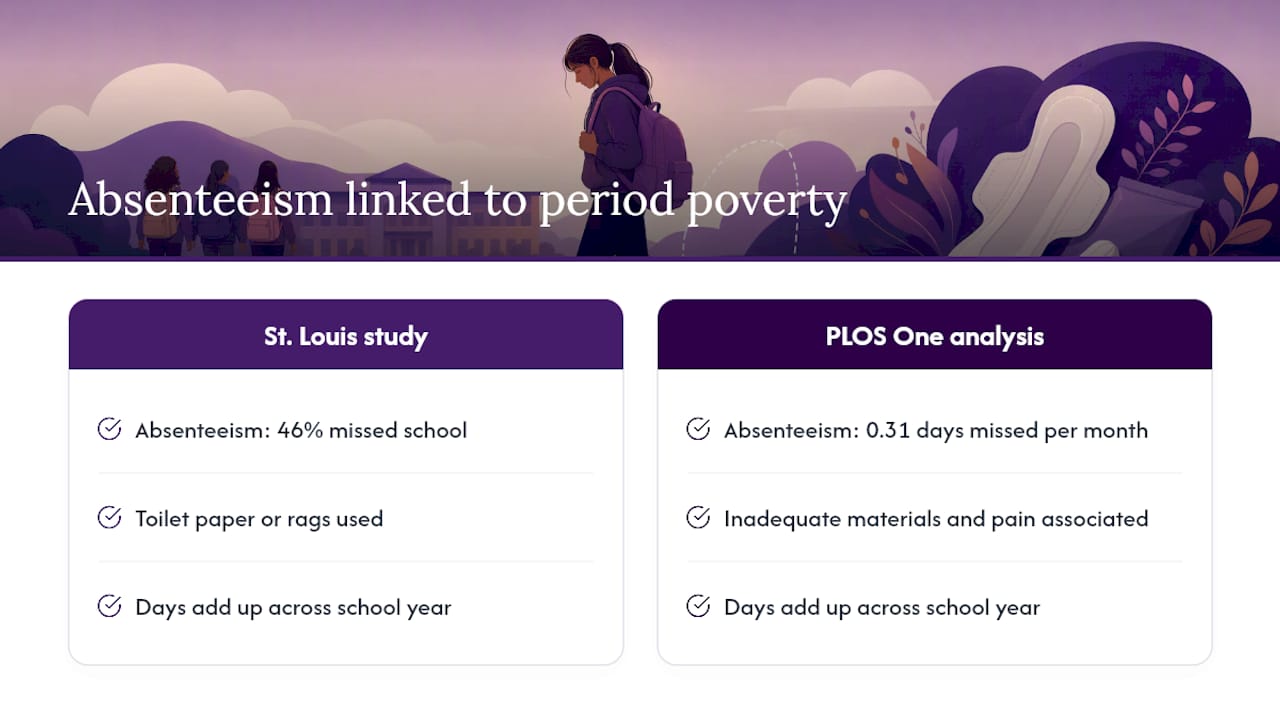
Attendance. The St. Louis charter school study found 46% of students missed school due to their period. The PLOS One analysis reported a mean of 0.31 days missed per month in some samples, with inadequate materials and pain both independently associated with higher absenteeism. Those days add up across a school year.
Concentration and participation. At the college level, 47.5% of students in the UIC survey avoided changing products on campus entirely. Sitting through class in an overused product, or worrying about leakage, pulls attention away from instruction in ways a teacher cannot easily see.
Physical health. Extended product use and improvised materials increase the risk of bacterial infection and discomfort. Students who use toilet paper or rags, as many in the St. Louis sample did, face ongoing physical distraction even when they stay in school.
Mental health. The NBC News-covered study linked period poverty to depression and elevated stress among teens and young adults. The Springer systematic review confirms that negative menstrual attitudes and unmet practice needs associate with poorer classroom engagement across multiple settings.
Period poverty is often invisible. Students using improvised materials stay in their seats, so teachers assume everything is fine. The harm happens quietly, inside a student’s focus and confidence.
Why are schools uniquely positioned to reduce this harm?
Schools reach students at predictable times, five days a week. That regularity makes them the most practical distribution point for menstrual products in the country.
Dr. Bhuchitra Singh of Johns Hopkins has emphasized that school-based product access paired with menstrual education can destigmatize menstruation and improve both educational and economic outcomes. The dual strategy matters: products without education leave stigma intact, and education without products leaves students without practical help.
“Access to menstrual products in schools, combined with education, can reduce stigma and improve outcomes for students.” — Dr. Bhuchitra Singh, Johns Hopkins
EdWeek’s 2024 reporting documents that schools placing products directly in bathrooms, rather than requiring a trip to the nurse, reduce class disruption significantly. The spillover benefits extend beyond the product itself: a school that treats period supplies like soap signals to every student that menstruation is normal and manageable.
Practical school-level steps with broad impact include:
- Stocking products in bathroom dispensers, not only in the nurse’s office
- Training teachers to respond to period requests without judgment
- Integrating shame-free menstrual health content into existing health curricula
- Establishing a discreet signal system so students can leave class without public explanation
What barriers keep students from managing their periods at school?
Even schools with good intentions run into real obstacles. Knowing them helps you audit your own environment.
Logistical barriers:
- Products locked in the nurse’s office or front desk, requiring students to ask an adult and miss class time
- Dispensers that are empty, broken, or stocked with the wrong products
- No disposal bins in stalls, forcing students to carry used products through the bathroom
Infrastructure problems:
- Bathrooms without running water, soap, or working locks
- No private changing space for students with heavier flow or cramps
- Inadequate ventilation or cleanliness that discourages bathroom use altogether
Cultural barriers:
- Teacher discomfort with the topic, which students notice and internalize
- No standardized curriculum on menstruation in many states
- Stigma that makes students feel embarrassed to ask for help
Pro Tip: Run an anonymous student survey asking two questions: “Have you ever stayed in class because you were afraid to ask for a product?” and “Have you ever avoided the school bathroom during your period?” The answers will reveal hidden gaps no supply audit can catch.
What interventions actually work in schools and on campuses?
The evidence points to a multi-pronged approach. No single fix is enough.
- Place products in bathrooms — EdWeek’s reporting confirms that bathroom-based access reduces class disruption more than nurse-only distribution. Treat products like toilet paper: always available, no ask required.
A pilot program can launch in one term. Stock one set of bathrooms, survey students before and after, and use the data to make the case for expansion.
Step-by-step actions educators, advocates, and students can take now
For educators and school staff:
- Audit one bathroom this week: check for products, disposal bins, working locks, and soap.
- Ask your school nurse about the current request process and how many students come in per week.
- Propose a one-semester pilot: stock two bathrooms and track disruptions.
- Use this sample script with your principal: “Research shows that placing period products in bathrooms reduces class disruption and absenteeism. I’d like to pilot this in two restrooms this semester using a small supply budget. Can we discuss funding options?”
For advocates:
- Identify funding sources: Title I funds, PTA budgets, local nonprofit grants, and state-level period equity legislation (roughly 11 states have relevant laws, though many lack dedicated funding per EdWeek).
- Recruit allies: the school nurse, a sympathetic counselor, and one or two PTA members are enough to start.
- Frame the ask around attendance data, not just equity, when speaking to budget-focused administrators.
For students:
- Set up an anonymous need-request box near the school bathroom or counselor’s office.
- Organize a peer education session during a health class or advisory period.
- Document gaps with photos or a short written report and share it with a trusted teacher or counselor.
How puberty education and curated kits reduce stigma and improve preparedness
Preparation before menarche changes the experience entirely. Students who arrive at their first period with knowledge, supplies, and confidence are far less likely to miss class or feel ashamed. Research from the St. Louis charter school study supports this: many students learned about menstruation from family or peers with no structured support, and those gaps showed up as anxiety and improvised coping.
Curated puberty kits, which pair educational materials with practical supplies, can be integrated into school health programs in several ways:
- Distributed by school counselors or nurses at the start of middle school
- Included in new-student orientation packets at the beginning of the year
- Offered as a take-home resource after a puberty education lesson
Privacy-forward distribution matters. Handing a kit to every student in a grade, rather than singling out individuals, removes the stigma of being identified as someone who “needs” help. Including curriculum conversations that address all students, regardless of gender identity, builds a more supportive school culture overall. You can find practical guidance on supporting students’ first period at school and on introducing menstrual products thoughtfully through Themonthliesbox’s resource library.
Where did period poverty come from? The historical and socioeconomic roots
Period poverty is not new. For most of recorded history, menstrual products were either homemade or unaffordable for low-income families. Disposable pads became widely available in the U.S. only in the 20th century, and tampons followed. Even then, cost remained a barrier. Menstrual products are still taxed as non-essential goods in many U.S. states, a policy sometimes called the “tampon tax,” which raises the price for families with the least flexibility in their budgets.
The socioeconomic roots run deeper than product cost. Menstruation has historically been treated as a private, even shameful, matter, which kept it out of public health policy for decades. Schools were not expected to provide products any more than they were expected to provide clothing. That cultural framing persists in funding decisions today: period products are often treated as personal items rather than health necessities, leaving the burden on individual students and families.
How race, income, and geography intensify period poverty among students
Period poverty does not fall evenly. Students of color, particularly Black and Latina students, face higher rates of period poverty because they are disproportionately represented in low-income households and under-resourced school districts. Housing insecurity, which also correlates with race and income, compounds the problem: a student without a stable home has nowhere reliable to store supplies.
Geography adds another layer. Rural students may live far from stores that stock affordable products. Students in high-poverty urban districts attend schools where bathroom infrastructure is often older and less maintained. The NBC News-covered study’s sample of emergency-room patients ages 13–21 captured students already facing significant health and economic stress, and one in three still lacked reliable product access.
These overlapping disadvantages mean that a school policy addressing only product cost will not reach every student who needs help. Facilities, education, and stigma reduction all need to be part of the response.
What happens when period poverty goes unaddressed over time?
The long-term consequences extend well beyond a few missed school days. Students who repeatedly miss class fall behind in ways that compound: missed instruction leads to lower grades, lower grades reduce confidence, and reduced confidence can push students toward disengagement from school entirely.
The mental health link is particularly concerning. The NBC News-covered research tied period poverty to depression among teens and young adults. A student managing chronic anxiety about leakage or shame about asking for help is carrying a cognitive load that competes directly with learning. Over years, that load shapes how a student sees herself in academic settings.
There is also a social dimension. Students who feel different or embarrassed about their periods are less likely to participate in extracurricular activities, sports, or school events that require being away from home. Those activities are where students build the social skills and networks that support long-term success.
What does U.S. policy look like on period poverty in schools?
Progress is real but uneven. Roughly 11 states have passed laws requiring menstrual products in schools, according to EdWeek’s reporting. Several major cities, including New York City, have implemented free product programs in public school bathrooms. At the federal level, advocates have pushed for period products to be covered under programs like SNAP and WIC, with partial success.
The gap between policy and practice is the main problem. States that mandate products without allocating funding leave the cost to districts, and poorer districts are least able to absorb it. The result is that students in the highest-need schools are the least likely to benefit from the laws designed to help them.
Federal legislation like the Menstrual Equity for All Act has been introduced in Congress, though it has not yet passed as of 2026. Advocates at the local and state level have had more consistent success, particularly when they frame period poverty as an attendance and academic performance issue rather than a social justice issue alone.
How community organizations and public-private partnerships fill the gaps
Schools cannot do this alone, and many are not trying to. Community organizations, nonprofits, and private companies have stepped in to supplement school efforts in meaningful ways.
Organizations like PERIOD (a national nonprofit) run product drives and campus chapters that supply schools and colleges with donated products. Local food banks and community health centers increasingly stock menstrual supplies alongside food and hygiene items. Some hospitals and pediatric health systems have partnered with school districts to provide products and education as part of broader adolescent health initiatives.
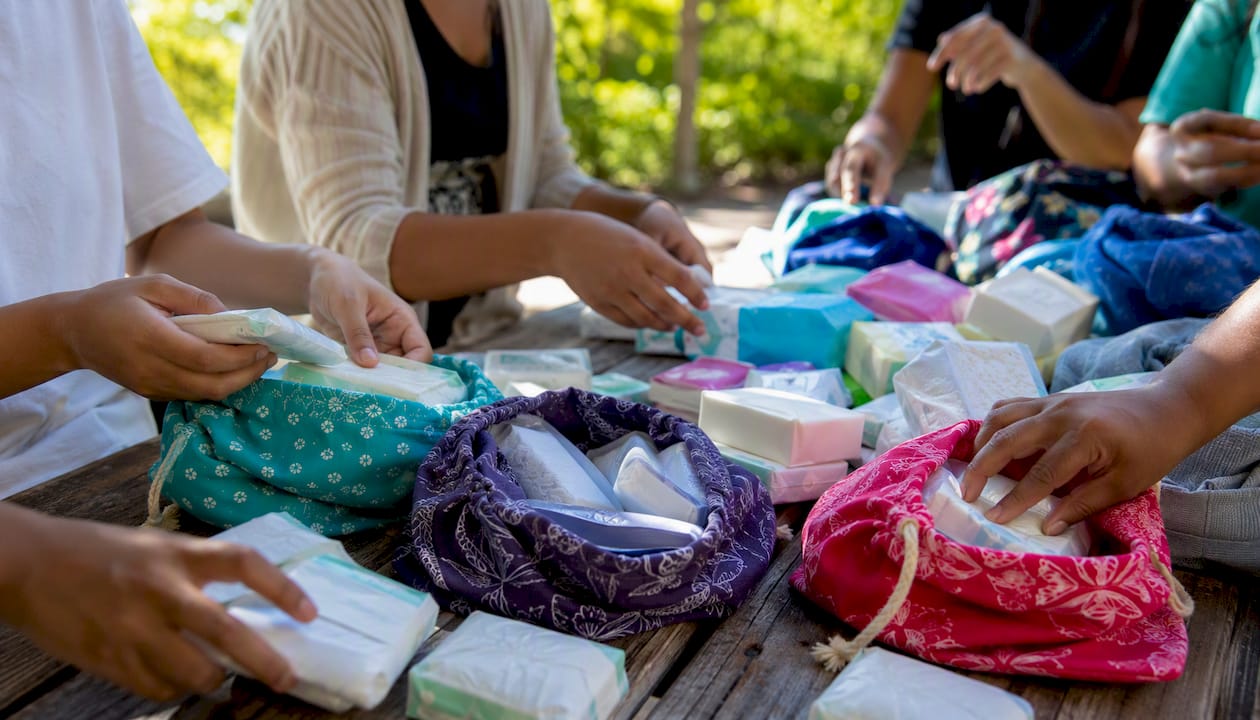
Public-private partnerships have funded bathroom dispensers, trained school staff, and developed curriculum materials in districts that lack the budget to do it independently. When a business sponsors a school’s product program, it also signals to students that the community takes their health seriously. That signal matters.
Parents and families are partners too. Organizations like Themonthliesbox work directly with parents to build preparedness at home, which reduces the pressure on schools to be the only safety net.
Key Takeaways
Period poverty reduces attendance, concentration, and long-term academic outcomes for U.S. students, and schools that combine bathroom-based product access with shame-free education see the clearest results.
| Point | Details |
|---|---|
| Scale of the problem | Roughly 1 in 3 U.S. teens lacks reliable product access; according to the St. Louis study, 46% of students missed school due to their period in the prior year. |
| Core harm pathways | Missed class, reduced concentration, unsafe coping, and mental health strain all connect directly to product scarcity. |
| Most effective school fix | Bathroom-based product access paired with menstrual education reduces class disruption more than nurse-only distribution. |
| Policy gap to know | About 11 states require school products, but many do not fund them, leaving the highest-need districts underserved. |
| Themonthliesbox resource | Curated puberty kits from Themonthliesbox pair education with practical supplies, supporting both home and school preparedness. |
The evidence is clear, but the urgency still gets underestimated
The research on why period poverty affects students is not ambiguous. Attendance drops. Grades suffer. Mental health takes a hit. And yet, in most U.S. schools, period products are still treated as a personal responsibility rather than a basic health supply.
What strikes me most about the evidence is how much harm happens quietly. A student sitting in class with improvised materials, too embarrassed to ask for help, does not show up in attendance data. She shows up in a gradual withdrawal from participation, a drop in confidence, a growing sense that school is not a place built for her.
The fix is not complicated. Products in bathrooms. Shame-free education. Facilities that work. Those three things, done consistently, change the experience for every student who menstruates. The schools and advocates who treat this as a health and attendance issue, not a niche equity concern, are the ones making real progress.
If you are an educator reading this, you likely already know a student this has affected. The period education resources at Themonthliesbox are a good place to start building the case for your school this term.
Themonthliesbox supports schools and families with puberty preparedness kits
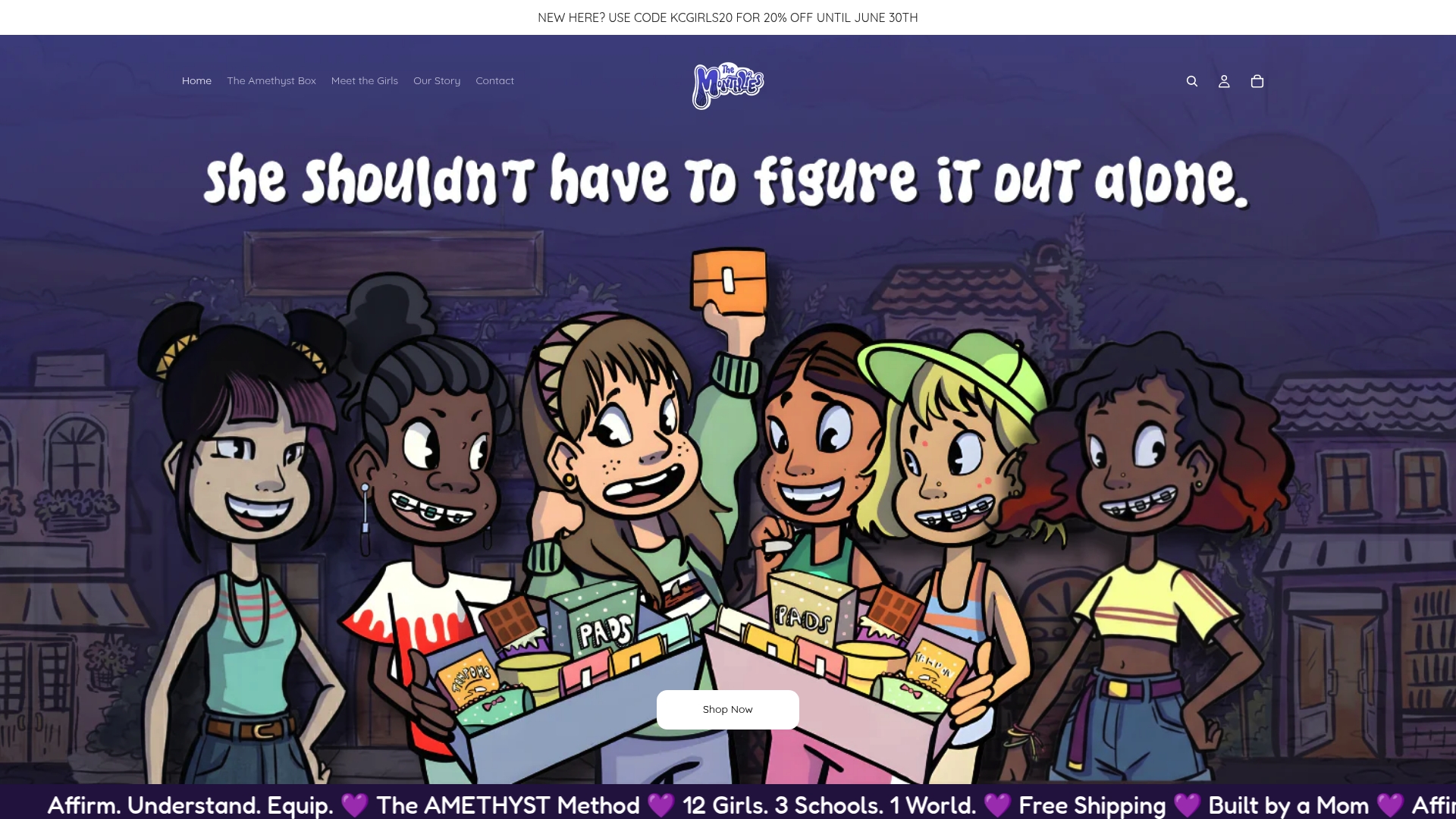
Preparing a student before her first period changes everything. Themonthliesbox offers curated puberty kits that pair practical period supplies with educational materials, affirmation cards, and confidence-building resources, all sized and designed for tweens and teens. The Amethyst Box is built specifically for first-period preparedness, combining the Affirm, Understand, and Equip phases of the Amethyst Method into one thoughtful package. For schools or counselors looking for a compact option, the On-The-Go Kit fits easily in a backpack or nurse’s supply drawer. Both can be evaluated as part of a school pilot program or offered as a take-home resource after a puberty education session. Visit Themonthliesbox to review the full kit options and find the right fit for your program or family.
Further reading and authoritative sources
Use these sources when writing school policy proposals, grant applications, or curriculum materials:
- Exploring Adolescents’ Menstrual Hygiene Management Needs: Findings From Students in St. Louis, Missouri Charter Schools
- A pilot survey of students’ menstrual attitudes, experiences, and needs on an urban university campus
- More Schools Stock Tampons and Pads, But Access Is Still a Problem
- 1 in 3 teens can’t get tampons or pads during their periods, study finds
- The Monthlies — puberty-prep and educational resources
This article provides general educational information. For school policy decisions, consult your district’s health coordinator, legal counsel, and current state legislation.
0 comments