

Your skin breaks out during your period because of a predictable hormonal shift that happens every single cycle. In the week before menstruation, progesterone rises, estrogen drops, and testosterone becomes more active. Together, these changes tell your sebaceous glands to produce more oil, weaken your skin barrier, and create the perfect environment for clogged pores and acne-causing bacteria to thrive. You are not imagining it, and you are definitely not alone. About 65% of people experience worsening breakouts around their period.
Why does skin break out during your period?
The short answer: hormones. The longer answer involves three key players working against your skin at the same time.
During the luteal phase, progesterone rises and stimulates your sebaceous glands to produce excess sebum. At the same time, estrogen declines, which weakens your skin’s natural barrier. Testosterone, though present in smaller amounts, becomes relatively more active when estrogen falls. Androgens like testosterone bind to receptors in your sebaceous glands and hair follicles, triggering even more oil production and promoting the buildup of keratin that blocks pores. That combination of excess oil, a compromised barrier, and clogged follicles creates the ideal environment for Propionibacterium acnes bacteria to multiply and cause inflammation.
Here is what is happening under the surface:
- Progesterone rises in the second half of your cycle, stimulating oil glands directly
- Estrogen falls before your period, reducing the skin’s ability to retain moisture and defend itself
- Free testosterone increases relative to estrogen, driving more sebum and follicle blockage
- Pores clog as oil and keratin accumulate, trapping bacteria inside
- Inflammation follows, producing the red, tender bumps you see on your chin and jawline
Pro Tip: Start using a gentle, non-comedogenic moisturizer in the week before your period. Keeping your skin barrier supported actually reduces the severity of breakouts, because a compromised barrier makes inflammation worse.
What do period breakouts actually look like?
Period acne has a distinct look and feel that sets it apart from the occasional random pimple. Knowing what you are dealing with helps you treat it correctly.
The most common type is a deep, tender cyst. These sit below the skin’s surface, feel sore to the touch, and do not come to a head the way a surface pimple does. You may also notice inflammatory papules, which are raised red bumps without a visible whitehead. Occasional comedones, both open (blackheads) and closed (whiteheads), can appear too, though they are less typical of purely hormonal breakouts.
Where they show up matters as much as how they look:
- Chin and jawline: the most common area for hormonal acne, linked directly to androgen activity
- Lower cheeks and neck: often affected in adult and teen hormonal breakouts
- Upper lip area: less common but possible during high-androgen phases
Period acne tends to feel more painful than other types and sits deeper in the skin. Surface spot treatments often do little for these cysts because the inflammation starts well below the top layer.
When do breakouts start and how long do they last?
Timing your breakouts to your cycle is one of the most useful things you can do. Once you recognize the pattern, you can prepare instead of react.
| Cycle Phase | Approximate Days | Hormonal Activity | Skin Impact |
|---|---|---|---|
| Follicular | — | Estrogen rising | Skin often clearer, more resilient |
| Ovulation | Around day 14 | Estrogen peaks briefly | Skin may look its best |
| Luteal | Days 15–20 | Progesterone rises, estrogen falls | Oil production increases, breakouts begin |
| Menstruation | Days 1–4 | All hormones drop | Breakouts peak, then begin to resolve |
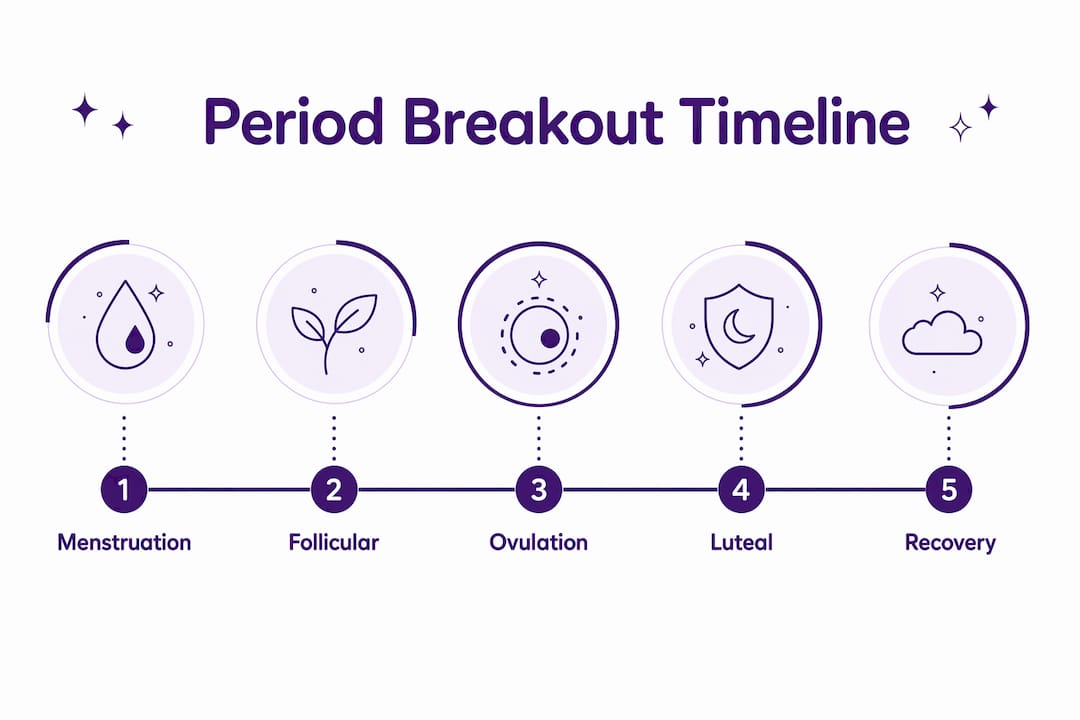
Breakouts typically start forming in the luteal phase, around 7–10 days before your period begins. They peak just before or during the first few days of menstruation, then gradually clear as hormone levels stabilize. Most period-related breakouts resolve within a few days of menstruation starting, though deep cysts can linger longer because of the inflammation involved.
How to prevent breakouts before and during your period
Prevention works best when you treat it as a cycle-aware practice rather than a last-minute fix. Your skin’s needs genuinely change across the month.
In the week before your period, your skin becomes oilier and more reactive. This is the time to lean into gentle chemical exfoliation. Skincare synchronized to your cycle using AHAs like glycolic acid or BHAs like salicylic acid during the luteal phase helps clear pores without the irritation that physical scrubs cause. Hydration stays important even when your skin feels oily, because stripping moisture makes oil production worse.
Practical prevention steps:
- Use a salicylic acid cleanser or toner starting around day 15 of your cycle
- Avoid switching to new products during the luteal phase, when skin is most reactive
- Change your pillowcase at least twice a week and clean makeup brushes regularly
- Keep hands away from your face, especially around your chin and jawline
- Reduce alcohol-based toners and harsh scrubs during this phase
Lifestyle choices carry real weight here too. Stress and poor sleep disrupt hormonal balance and immune function, making pre-period breakouts noticeably worse. Even a consistent 7–8 hours of sleep in the week before your period can make a visible difference.
Pro Tip: Think of your skincare routine as having two modes: a maintenance mode for the first half of your cycle and a protective mode for the second half. Switching to gentler, pore-clearing products around day 14 gives your skin a head start before the hormonal shift hits.
What treatments actually work for period acne?
Over-the-counter options handle most period breakouts well when used consistently. The key is matching the treatment to the type of breakout you have.
- Benzoyl peroxide: kills acne-causing bacteria and reduces inflammation; works well on papules and pustules
- Salicylic acid: a BHA that penetrates pores and dissolves the buildup causing blockages
- Glycolic acid: an AHA that speeds cell turnover and prevents dead skin from clogging follicles
- Hydrocolloid patches: protect cystic spots from bacteria and picking while absorbing fluid overnight
For persistent or severe period acne, a dermatologist can offer more targeted options. Prescription treatments include topical retinoids, which regulate cell turnover and reduce follicle blockage, and oral contraceptives, which stabilize the hormonal fluctuations driving breakouts. Spironolactone, an anti-androgen medication, works by blocking testosterone’s effect on sebaceous glands and is particularly effective for people whose breakouts are driven by higher free androgen levels.
Dermatologist insight: “Do not pop cystic acne. These deep lesions are surrounded by inflammation, and squeezing them spreads bacteria deeper into the skin, increases scarring risk, and prolongs healing. Use a hydrocolloid patch instead to protect the area and let it resolve on its own.”
One important note on oral contraceptives: they can cause a temporary spike in breakouts during the first 3–4 months before hormone levels stabilize and acne improves long-term. Knowing this in advance prevents unnecessary frustration.
If your breakouts are severe, cyclical, and resistant to OTC treatments, please talk to a dermatologist or your healthcare provider. Persistent hormonal acne responds well to medical management, and you deserve clear guidance.
How lifestyle choices affect period acne
What you eat, how you sleep, and how you manage stress all feed directly into how severe your period breakouts become. These are not minor factors.
High glycemic foods, like white bread, sugary drinks, and processed snacks, spike insulin levels, which in turn raises androgen activity and worsens oil production. Dairy has also been linked to hormonal acne in some people, likely because of the hormones naturally present in milk. Staying well hydrated supports your skin’s ability to flush waste and maintain its barrier function throughout your cycle.
Lifestyle adjustments that genuinely help:
- Prioritize 7–8 hours of sleep, especially in the week before your period
- Practice stress reduction through movement, breathing exercises, or whatever works for you
- Reduce high glycemic foods and excess dairy in the luteal phase
- Drink enough water daily to support skin hydration from the inside
- Keep your environment clean: fresh pillowcases, clean phone screens, and washed makeup tools all reduce bacterial exposure
- Consider herbal teas for cycle support as a calming addition to your wind-down routine
Weight management also plays a role. Excess body fat can lower sex hormone-binding globulin (SHBG), which increases free testosterone and worsens hormonal acne. This is not about appearance. It is about how body composition affects the hormonal balance that directly influences your skin.
Supporting young girls through puberty-related skin changes
For girls experiencing their first period, breakouts can feel confusing and upsetting. Understanding that skin changes are a normal part of puberty makes a real difference. The hormonal shifts that cause period acne in adults begin during puberty, when rising androgens first activate sebaceous glands. That is why many girls notice their skin changing even before their first period arrives.
Parents can help by framing skin changes as a normal, manageable part of growing up, not something to be ashamed of. Learning about hormonal changes during puberty together builds understanding and reduces anxiety.
For young skin, a simple routine works best:
- A gentle, fragrance-free cleanser morning and night
- A light, non-comedogenic moisturizer to protect the skin barrier
- Sunscreen daily, even on breakout-prone skin
- Hands off the face, especially around the chin and jawline
Emotional support matters just as much as skincare. Confidence takes a hit when skin acts up, and girls need to hear that breakouts do not define them. Building a self-care routine around their cycle, including rest, hydration, and gentle skin care, gives them a sense of control during a time that can feel unpredictable.
Pro Tip: Help your daughter track her cycle from the start. When she can see the pattern between her cycle and her skin, breakouts feel less random and more manageable. That knowledge is genuinely confidence-building.
Themonthliesbox is built around exactly this kind of support. The Amethyst Box combines practical period supplies with educational materials and affirmations designed to help young girls feel prepared, supported, and confident through every phase of their cycle.

Ready to give the young girl in your life the tools and confidence she deserves? Explore the first period self-care experience at Themonthliesbox and find the right box for where she is in her journey.
Key Takeaways
Skin breaks out during your period because rising progesterone, falling estrogen, and increased free testosterone combine to overstimulate oil production, clog pores, and trigger inflammation in a predictable, cycle-driven pattern.
| Point | Details |
|---|---|
| Hormones drive breakouts | Progesterone, estrogen decline, and free testosterone together cause excess sebum and clogged pores. |
| 65% of people are affected | Perimenstrual acne flares are common, typically peaking in the week before or during menstruation. |
| Timing follows the luteal phase | Breakouts usually start around day 15 and peak just before or during the first days of your period. |
| Cycle-aware skincare prevents flares | Gentle exfoliation with AHAs or BHAs during the luteal phase clears pores without irritation. |
| Persistent acne needs professional care | Dermatologists can prescribe retinoids, oral contraceptives, or spironolactone for hormonal acne that OTC products cannot manage. |
0 comments