

The first period is irregular because the hormonal system controlling the menstrual cycle is still maturing, and the brain-ovary communication pathway has not yet established a reliable rhythm. This condition, clinically referred to as anovulatory cycling, is the norm rather than the exception in the first two years after menarche. Cycles are commonly irregular for 2 to 3 years after a girl’s first period, and understanding why takes the fear out of what can feel like a confusing and unpredictable time. You are not watching something go wrong. You are watching a system come online.
Why first period is irregular: the hormone system explanation
The menstrual cycle is regulated by a three-part communication system called the hypothalamic-pituitary-ovarian (HPO) axis. The hypothalamus sends signals to the pituitary gland, which then signals the ovaries to release hormones and, eventually, an egg. In young girls, this HPO axis is still maturing after menarche, which means the signals are inconsistent and ovulation often does not happen at all.
When ovulation is skipped, the cycle is called anovulatory. Without ovulation, the body does not produce the progesterone that normally stabilizes the uterine lining and triggers a predictable bleed. Instead, estrogen rises and falls on its own schedule, causing the lining to build up and shed at unpredictable times. This is why one cycle might last three weeks and the next might stretch to two months.
Up to 85% of cycles can be anovulatory in the first two years after menarche. That number is striking, and it means the vast majority of irregular periods in early teens are not a sign of illness. They are a sign of a system still finding its footing.
Here is what is happening hormonally during this window:
- Estrogen fluctuations cause the uterine lining to build unevenly, leading to heavier or lighter bleeding than expected
- Absent or irregular ovulation means no progesterone surge, so the cycle has no clear endpoint
- Immature feedback loops between the brain and ovaries mean the body cannot yet self-correct when timing goes off
- Gradual maturation of the HPO axis typically brings more predictable cycles within two years, though some girls take up to three
Pro Tip: If your daughter is asking why her period is so unpredictable, you can explain it simply: her body is still learning the pattern. That framing is accurate and reassuring at the same time.
To understand more about the biological processes behind what causes the first period, the Themonthliesbox blog offers a parent-friendly breakdown that pairs well with this explanation.
What irregular periods actually look like after menarche
Knowing that irregularity is normal is one thing. Knowing what it looks like in practice helps you tell the difference between typical variation and something worth discussing with a doctor.
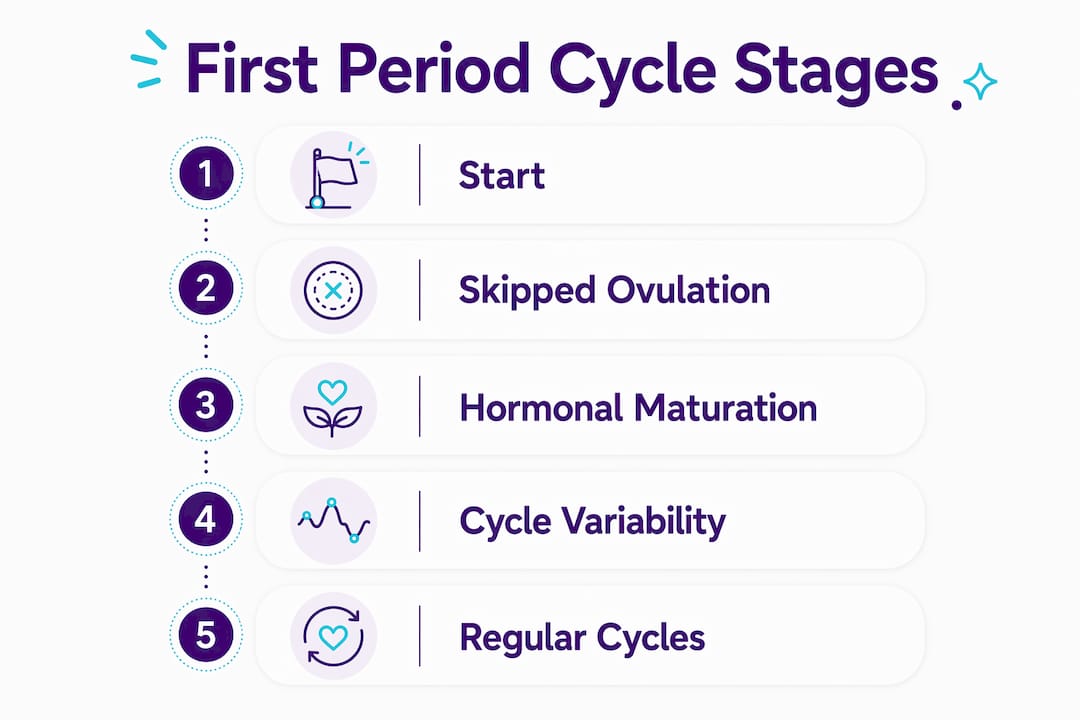
Irregular periods are clinically defined as cycles shorter than 21 days, longer than 35 days, or fewer than 8 cycles per year. In teens, this range is wider than in adults, and variation within the first two years is expected. A girl might have her first period in September and not see another one until December. That is not unusual.
Here is a practical breakdown of what falls within normal range versus what warrants a conversation with a healthcare provider:
- Cycle length of 21 to 45 days in the first year is considered normal for teens, even though adult cycles typically fall between 21 and 35 days
- Gaps of up to 3 months between periods in the first two years are common and do not automatically signal a problem
- Variable flow from cycle to cycle, including one heavy period followed by a very light one, is typical during hormonal maturation
- Skipping periods entirely for a month or two in the first year is expected, not alarming
| Pattern | What it likely means |
|---|---|
| Cycles 21 to 45 days apart | Normal variation during HPO axis maturation |
| Gap of 2 to 3 months | Anovulatory cycle, common in first 2 years |
| Gap longer than 3 months after year 2 | Warrants medical evaluation |
| Fewer than 8 periods per year after age 15 | Outside normal range, discuss with a provider |
| Persistent irregularity beyond 3 years | Possible underlying cause to investigate |
Pro Tip: Start a simple period log from the very first cycle. A notebook or a free app like Clue works well. Recording just the start date and approximate flow level gives a doctor meaningful data if you ever need to seek advice.
Improving menstrual health literacy among caregivers is directly linked to earlier healthcare access and better outcomes for young girls. Tracking is not just practical. It is a form of advocacy.
Other factors affecting first period regularity
Hormonal immaturity is the primary driver of irregular periods in early teens, but it is not the only one. Several lifestyle and health factors can make irregularity more pronounced or last longer than expected.
Physical and emotional stress, sudden weight changes, and excessive exercise are among the most common contributors to cycle disruption in young girls. A girl going through a difficult school year, a family transition, or an intense athletic training schedule may find her cycles become even less predictable. The body treats significant stress as a signal to delay or suppress reproduction, which directly affects the hormonal signals that drive the cycle.

Nutrition also plays a meaningful role. Early-life undernutrition is linked to later menarche, more irregular cycles, and more severe menstrual pain. Girls who had nutritional gaps in childhood may experience a longer adjustment period after their first period. Diet and lifestyle factors continue to influence cycle regularity throughout adolescence, with research pointing to patterns like low protein intake as a contributing variable.
Beyond lifestyle, certain medical conditions can also cause or worsen irregularity:
- Polycystic ovary syndrome (PCOS) is one of the most common hormonal disorders in teen girls and causes irregular or absent periods due to elevated androgen levels
- Thyroid disorders, both hypothyroidism and hyperthyroidism, disrupt the hormonal signals that regulate the cycle and are often missed because symptoms overlap with normal puberty
- Anemia from heavy anovulatory bleeding can compound fatigue and make cycles feel more disruptive
- Significant weight loss or gain in a short period can suppress or alter ovulation, extending the window of irregularity
The key distinction for caregivers is this: normal irregularity improves over time. If your daughter’s cycles are becoming more predictable year over year, that is maturation at work. If they are staying chaotic or worsening after the two-year mark, that is worth investigating with a pediatrician or gynecologist.
How to support your daughter through irregular first periods
Your role as a caregiver during this time is part practical and part emotional. Both matter equally.
Systematic cycle tracking is the single most useful thing you can do. A good record includes the start date of each period, how many days it lasts, the approximate flow level (light, moderate, or heavy), and any notable symptoms like cramps, headaches, or mood changes. This information helps a healthcare provider assess whether what your daughter is experiencing falls within normal maturation or needs further evaluation.
Here is what to watch for as you track:
- Soaking through a pad or tampon every hour for several hours is considered heavy bleeding and should be evaluated
- Periods lasting longer than 7 days consistently may indicate anovulatory bleeding and deserve medical attention
- No period for more than 3 months after the first two years of menarche is a threshold for medical consultation
- Severe pain that prevents your daughter from attending school or normal activities is not something to push through. It is a symptom worth discussing with a doctor.
Open conversations matter just as much as the data. Many girls feel embarrassed or confused about what is happening to their bodies, especially when their experience does not match what their friends describe. Normalizing the conversation at home, without making it a big event, builds the kind of trust that means she will come to you when something feels off.
Pro Tip: Frame period tracking as something powerful, not clinical. Tell her that understanding her own cycle is a form of knowing herself. That reframe shifts it from a chore to something she actually owns.
For more on building that foundation, the Themonthliesbox guide on first period self-care offers practical routines that make the experience feel supported rather than stressful.
Key takeaways
Irregular first periods are a normal result of the body’s hormone system maturing, and most girls see more predictable cycles within two to three years of menarche.
| Point | Details |
|---|---|
| Hormonal immaturity is the root cause | The HPO axis is still developing, leading to anovulatory cycles and unpredictable timing. |
| Up to 85% of early cycles lack ovulation | Anovulation is the norm in the first two years, not a sign of illness. |
| Red flags have clear thresholds | Gaps longer than 3 months after year 2 or persistent irregularity beyond 3 years warrant medical review. |
| Lifestyle factors compound irregularity | Stress, poor nutrition, and excessive exercise can extend the window of unpredictability. |
| Tracking is the most practical tool | Recording start dates, flow, and symptoms gives caregivers and doctors the data needed to assess development. |
What I’ve learned from talking to families about first periods
Here is something I hear from caregivers all the time: “I thought something was wrong because her period just disappeared for two months.” That fear is completely understandable. But the data tells a different story.
The most common mistake I see is focusing on flow volume rather than timing patterns. Caregivers often worry because one period was heavy and the next was barely there. That variation is normal. What actually matters is the gap between cycles and whether irregularity is improving over time, not whether each period looks the same as the last.
The second thing I have noticed is that caregivers who track cycles from the start feel far less anxious. Not because tracking fixes anything, but because it replaces uncertainty with information. When you can look at a log and say “her cycles are getting closer together over the past year,” that is reassurance grounded in reality.
My honest advice: give the body two years before you worry. Keep a record. Stay curious rather than anxious. And if something crosses one of the clear thresholds, a single conversation with a pediatrician is all it takes to get clarity. You do not need to wait until something feels urgent to ask a question.
— Themonthliesbox
How Themonthliesbox supports girls and caregivers through this time
Knowing why periods are irregular at first is the first step. Feeling prepared for what comes next is the second.

Themonthliesbox created the Amethyst Box specifically for this moment. It is a first period care package built around the Amethyst Method: affirm, understand, and equip. Inside, your daughter will find practical period supplies, educational materials that explain what her body is doing, and affirmations designed to build confidence during a time that can feel uncertain. For girls who want something they can carry with them, the On-The-Go Kit keeps essentials close no matter where the day takes them. Because being prepared is not just practical. It is empowering.
FAQ
Why are periods irregular at first?
Periods are irregular at first because the hypothalamic-pituitary-ovarian axis is still maturing, causing cycles that frequently lack ovulation. Up to 85% of cycles in the first two years after menarche are anovulatory, which makes timing unpredictable.
How long does it take for periods to become regular?
Most girls see more predictable cycles within two to three years of their first period. Persistent irregularity beyond two years, or gaps longer than three months, are considered thresholds for medical evaluation.
What cycle length is normal for a teen?
A cycle length of 21 to 45 days is considered within normal range for teens in the first year or two after menarche. Adult norms of 21 to 35 days apply more reliably once the HPO axis has matured.
Can stress cause irregular periods in young girls?
Yes. Stress, sudden weight changes, and excessive exercise are all recognized contributors to cycle irregularity in adolescents. These factors disrupt the hormonal signals that trigger ovulation and regulate cycle timing.
When should I take my daughter to a doctor about irregular periods?
See a doctor if your daughter goes more than three months without a period after the first two years of menarche, if she soaks through a pad every hour for several hours, or if her irregularity shows no sign of improving over time.
0 comments