

A thoughtfully wrapped puberty kit is both a practical emergency kit and a low-pressure invitation to ongoing conversations about menstruation. The goal is simple: give your daughter something she can actually use, paired with a note that says, “You’re supported, and I’m here.” Planned Parenthood recommends balancing practical supplies like pads and a discreet pouch with emotional supports like an age-appropriate book and an encouraging note. Nationwide Children’s advises introducing the kit before the first physical signs of puberty appear, so it functions as a conversation starter rather than a reaction to a surprise. Themonthliesbox’s Amethyst Box and On-The-Go Kit are ready-made options built exactly around this approach.
- Give the kit before puberty begins, ideally during the typical age range when early signs of puberty often appear
- Include practical supplies AND emotional support items
- Use unscented, gentle products only
- Present it as a normal, helpful tool, not a ceremony
- Follow up with short, casual check-ins over time
Key Takeaways
A thoughtfully wrapped puberty kit pairs practical supplies with emotional support and an open conversation, giving your daughter both the tools and the confidence to handle her first period.
| Point | Details |
|---|---|
| Start between ages 8–12 | Introduce the kit before the first period so it functions as a calm conversation starter. |
| Pack two kits | Build a larger home kit with varied absorbencies and a minimal school pouch with 1–2 pads and spare underwear. |
| Unscented products only | Scented pads, wipes, and sprays can irritate sensitive skin and disrupt vaginal pH. |
| Present it casually | Use one of the three age-graded scripts and follow up with short check-ins, not a single big talk. |
| Themonthliesbox Amethyst Box | A ready-made option that maps directly to this checklist, with affirmation cards, educational materials, and tween-sized supplies included. |
This article is general information, not a substitute for advice from a qualified doctor. Consult a qualified healthcare professional about your own circumstances before acting on anything here.
Table of Contents
- How to wrap a puberty kit thoughtfully: what to pack first
- How to present the kit so it feels supportive, not scary
- What to pack in her school pouch and what to tell her teachers
- Product safety and health cautions every parent should know
- When to give the kit and how to follow up after
- Why the Amethyst Box and On-The-Go Kit match this checklist
- Why presentation matters more than the products inside
- The Amethyst Box is ready when you are
- Sources
How to wrap a puberty kit thoughtfully: what to pack first
Before you wrap anything, you need to know what goes inside. WikiHow’s step-by-step guide recommends building two layers: a larger home kit and a compact travel pouch. Here is what each one needs.
Home kit essentials
- Period pads: a variety of absorbencies (light, regular, overnight) so she can match the product to her flow
- Panty liners: useful for spotting and lighter days
- Period underwear: one or two pairs as a backup option
- Resealable bag: for discreet disposal of soiled items
- Gentle, unscented wipes or tissues: for freshening up at school or away from home
- Unscented deodorant: puberty brings new sweat patterns, and this is a practical, confidence-building add
- Gentle facial cleanser and acne spot treatment: hormonal breakouts are common and worth addressing early
- Pain reliever: ibuprofen or acetaminophen, stored safely and labeled with your child’s approved dose
- Hand sanitizer: small bottle for the travel pouch
- Age-appropriate book about puberty: a calm, factual read she can return to on her own
- Affirmation note from you: handwritten, warm, and short
- Small comfort item: lip balm, a favorite snack, or a mini journal
- Simple paper cycle tracker: a low-tech way to start noticing patterns
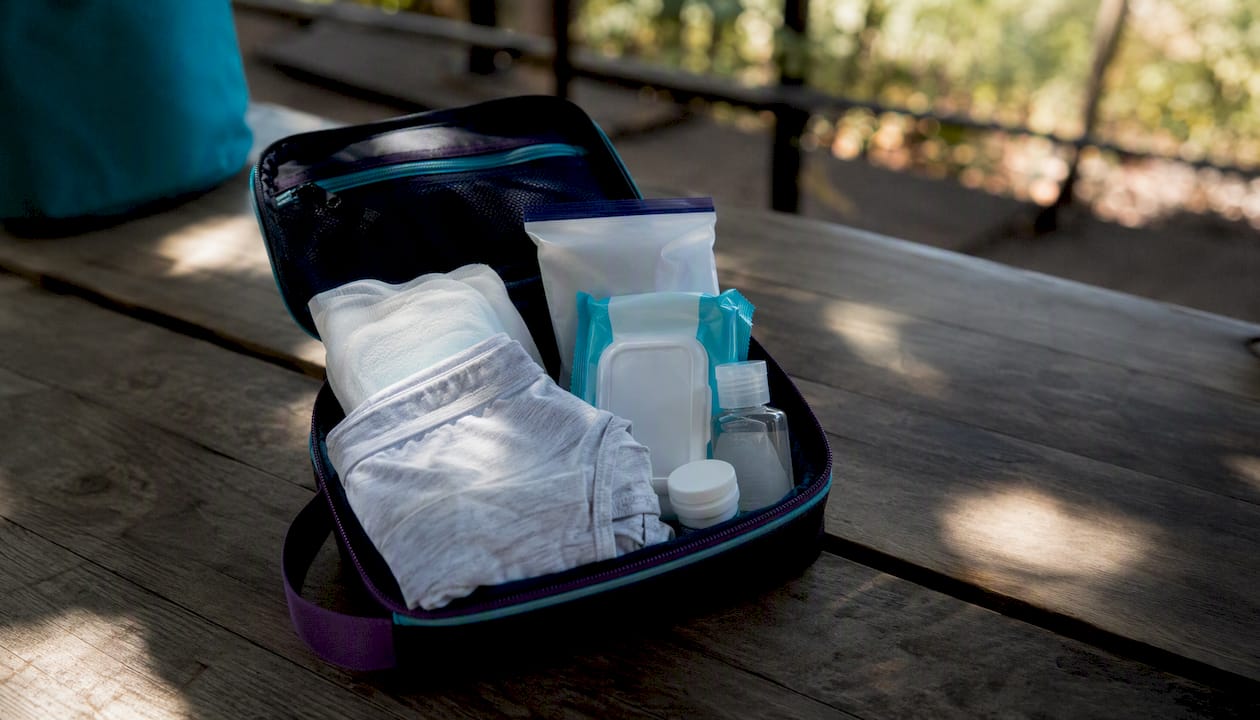
On-the-go pouch: keep it minimal
| Item | Why it’s included |
|---|---|
| a small number of pads (regular absorbency) | Covers most first-period scenarios without bulk |
| 1 spare pair of underwear | Practical backup if there is leakage |
| Small resealable bag | Discreet, hygienic disposal option |
| Unscented wipes or tissues | Freshening up without irritating sensitive skin |
| Hand sanitizer | Hygiene after changing |
| Mini pain reliever (parent-approved) | Cramp relief when a parent isn’t nearby |
Health note: Planned Parenthood is clear that scented products used near the vulva can irritate sensitive skin and disrupt vaginal pH. Stick to unscented pads, wipes, and cleansers throughout both kits.
How to present the kit so it feels supportive, not scary
Present the kit as a practical, no-big-deal support item. The goal is not a ceremony. It is a calm, normal handoff that says: “Here’s what you need, and I’m always here to talk.”
Timing and packaging
Introduce the kit at the first signs of puberty, or simply around ages 8–12, whichever comes first. A decorated shoe box, a fabric drawstring pouch, or a keepsake tin all work well. Avoid labeling the outside with anything that would embarrass her if a friend saw it. A simple ribbon or her name on the lid is enough.
Building the kit together is one of the most effective ways to normalize the topic. Shopping for supplies side by side turns a potentially awkward conversation into a shared, practical activity.
Three short scripts you can adapt
Younger tween (ages 8–10): “I put together a little kit for you. It has some things you might need when your body starts changing. We can look through it together whenever you want.”
Older tween (ages 10–12): “You might get your period soon, and I want you to feel ready. This kit has everything you’d need. Let’s go through it so you know exactly how to use each thing.”
Joint shopping session: “Want to help me pick out what goes in your kit? You get to choose the colors and what feels right for you.”
Practice activities that build real confidence
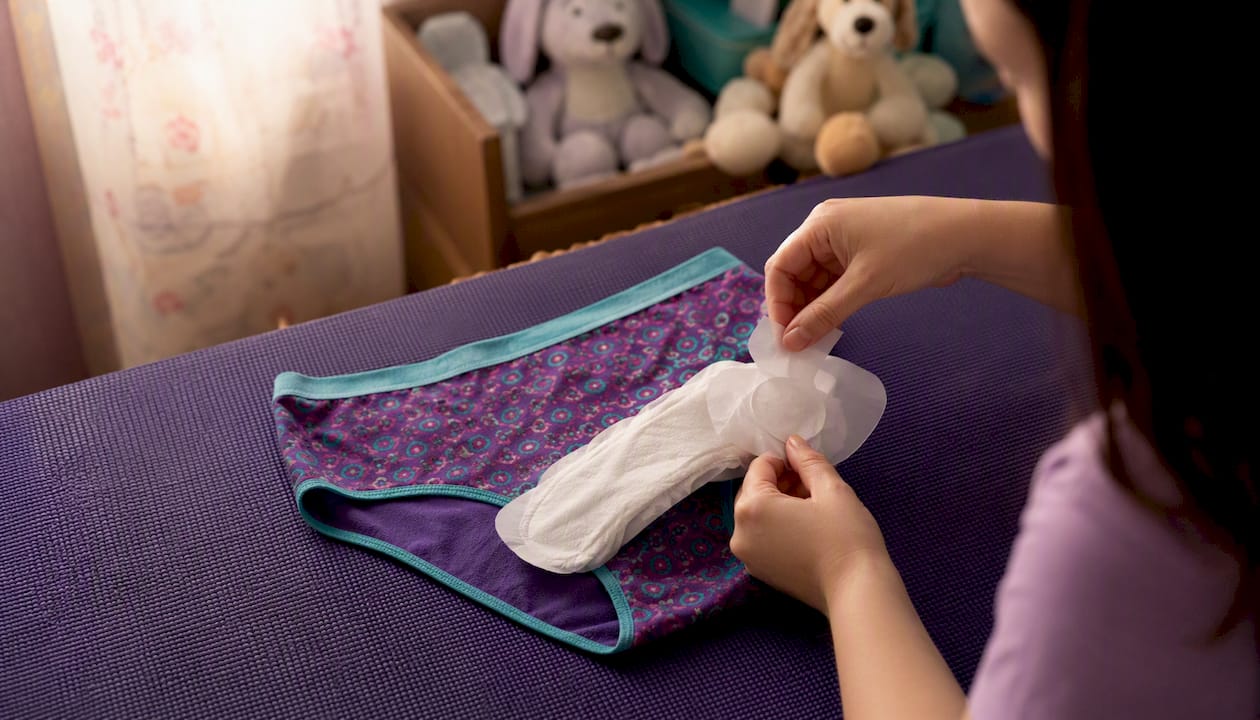
Show her how to peel the backing off a pad and attach it to underwear. Let her try period underwear on over regular underwear so it feels familiar. Keep the tone light and matter-of-fact. Planned Parenthood recommends these hands-on practice runs as a way to reduce anxiety before the first period arrives.
Pro Tip: Don’t do the whole practice session in one sitting. A five-minute demo today and a quick question check-in next week works better than one long talk.
What to pack in her school pouch and what to tell her teachers
A discreet school pouch gives your daughter independence when you are not there. Keep it small enough to slip into a backpack pocket without drawing attention.
School pouch checklist:
- a small number of regular pads
- 1 spare pair of underwear in a small zip bag
- 1 resealable bag for soiled items
- A few unscented wipes
- Hand sanitizer
- Mini pain reliever (if you have approved it and it is stored safely)
For more guidance on managing periods at school, Themonthliesbox has a dedicated parent guide worth bookmarking.
Practice this script with her: “I got my period and I need to go to the nurse’s office. Can you write me a pass?”
For teachers and caregivers, a short text or note works well: “[Child’s name] has a small period kit in her backpack. If she asks to go to the nurse, please let her go without drawing attention to it. Thank you.”
If she is away from home when her period starts, the steps are: find a private restroom, use her kit, text or call you, and ask a trusted adult for help if needed.
Product safety and health cautions every parent should know
A few rules matter more than the rest.
Do not include:
- Scented pads, liners, or wipes near the vulva
- Douches or vaginal deodorant sprays
- Strongly fragranced body wash used internally
These products can irritate sensitive skin and disrupt the vagina’s natural pH balance. First period hygiene guidance from Themonthliesbox covers this in detail.
Do not practice tampon insertion before bleeding begins. Wait until she has had her period and feels ready, and always introduce tampons with clear instructions.
Pro Tip: If you include reusable period underwear, wash it in cold water and air dry. Hot water and dryers break down the absorbent layers faster.
See a clinician if she experiences:
- Severe cramps that ibuprofen or acetaminophen does not relieve
- Soaking through a pad in an hour or less
- Unusual odor or discharge alongside bleeding
- Fever during her period
This article is general health guidance. A pediatrician or adolescent health provider is the right resource for any medical questions specific to your daughter.
When to give the kit and how to follow up after
Most families introduce a puberty kit before the first period, often when early signs of puberty appear, rather than after it starts. The kit works best as a low-pressure conversation starter, not a reaction to a surprise.
A simple follow-up plan:
- One week after gifting: Ask casually, “Have you looked through your kit? Anything you want to swap out or add?”
- One month later: Check supplies and replenish what she has used or outgrown.
- After her first period: Sit down together. Ask what worked, what felt awkward, and what she wants to try differently next time.
- Ongoing: Keep a small stash of her preferred products at home and let her take the lead on what she likes.
Conversation prompts that invite real answers:
- “What felt easy to figure out?”
- “Was there anything that surprised you?”
- “Is there anything you wish you had known sooner?”
After her first period, help her note the date so she can start tracking her cycle. A simple paper calendar works fine. Knowing roughly when to expect the next one reduces anxiety significantly.
Why the Amethyst Box and On-The-Go Kit match this checklist
Wirecutter found that no single prepackaged kit fits every family, which is why the best ready-made options are the ones built around customization and emotional support, not just product quantity. Themonthliesbox’s Amethyst Box was designed with exactly that balance in mind.
| Kit feature | How it maps to the checklist |
|---|---|
| Practical period supplies | Pads sized for tweens, chosen for comfort and absorbency |
| Affirmation cards | Replaces the handwritten note with a designed, reusable version |
| Educational materials | Age-appropriate reading built into the box |
| Discreet travel pouch | The On-The-Go Kit covers the school-pouch checklist directly |
The Amethyst Method, Themonthliesbox’s three-phase framework, structures the experience around affirm, understand, and equip. That sequence mirrors the presentation advice in this article: start with emotional reassurance, build understanding through education, then hand over the practical tools.
When to buy vs. build:
- Buy if you want a ready, consistent presentation with affirmation materials already included
- Build together if your daughter wants ownership over what goes in her kit
- Both work. Many families buy the Amethyst Box and then add one or two personal items on top
The Bestie Bundle is worth considering if you want to gift two kits at once, for a sibling or a close friend.
Why presentation matters more than the products inside
The kit is not really about the pads. It is about the message underneath them: “You are not alone in this, and your body is not something to be embarrassed about.” That message lands through repetition, not through one perfectly wrapped box.
The Amethyst Method reflects this well. Affirming her feelings first, building her understanding gradually, and then equipping her with practical tools is the order that actually works. A kit handed over without conversation is just a bag of supplies. A kit paired with a calm, open exchange becomes something she remembers.
Center her comfort and her pace. Let her choose which products to try first. If she wants to skip tampons entirely for now, that is fine. If she wants to try period underwear before anything else, start there. Consent and gradual exposure are not just nice ideas; they are what make the experience feel safe rather than overwhelming.
The Amethyst Box is ready when you are
Themonthliesbox built the Amethyst Box to do the heavy lifting for you: tween-appropriate period supplies, affirmation cards, and educational materials, all in one cohesive package. No sourcing individual items, no guessing about sizing, no blank note card staring back at you.
The On-The-Go Kit handles the school-pouch checklist on its own. Grab one for her backpack and one for her locker, and she is covered. You can still add a personal note, a favorite snack, or a comfort item on top. Buying a curated box and building together are not opposites. They work well side by side.
Visit Themonthliesbox to choose the kit that fits your daughter’s needs and get it delivered before you need it.
Sources
- How a period kit helps prepare your tween for their first period | Planned Parenthood
- How to talk with your kids about puberty | Nationwide Children’s
- The Best First Period Kit Is the One You Make Yourself. Here’s What to Include. | Reviews by Wirecutter
- What can I put in a puberty kit for my daughter? | luna app
- How to Make a Puberty Kit for Your Daughter: 9 Steps | WikiHow
0 comments